
Sales & Engineering: +1 (866) 517-8400 [email protected]
0%

China Top 10 Programmable AC Power Sources Suppliers

China’s programmable power market has moved beyond basic voltage conversion. Today, Programmable AC Power Sources support testing for medical devices, solar inverters, electric vehicle chargers, appliances, and aerospace equipment. A laboratory bench may require 230 V at 50 Hz, then a controlled drop to 180 V within seconds. The source must respond accurately.

Small details matter.

A serious supplier should demonstrate waveform quality, frequency stability, transient response, output power, and protection functions. Buyers should also examine calibration records, software interfaces, factory testing, after-sales support, and compliance with relevant international standards. Product brochures can look impressive. Actual load performance may tell a different story.

Power-electronics researcher Dr. Robert W. Erickson describes the discipline as “the application of solid-state electronics for the control and conversion of electric power.” His point remains relevant here. Programmable AC Power Sources are not merely adjustable outlets. They are controlled instruments used to reproduce unstable grids, abnormal conditions, and demanding test sequences.

This article introduces ten notable Chinese suppliers and compares their practical strengths. The evaluation considers product range, output accuracy, customization ability, manufacturing experience, technical service, and industry coverage. Some companies excel in high-power systems. Others focus on compact laboratory equipment or automated testing platforms.

No ranking is flawless.

Supplier information changes, and published specifications do not always reveal long-term reliability. That is why engineers should request sample tests, inspect protection behavior, and confirm performance under realistic loads. A dependable supplier should answer difficult questions clearly, even when the answer is not perfect. This guide offers a useful starting point, not a substitute for technical verification.
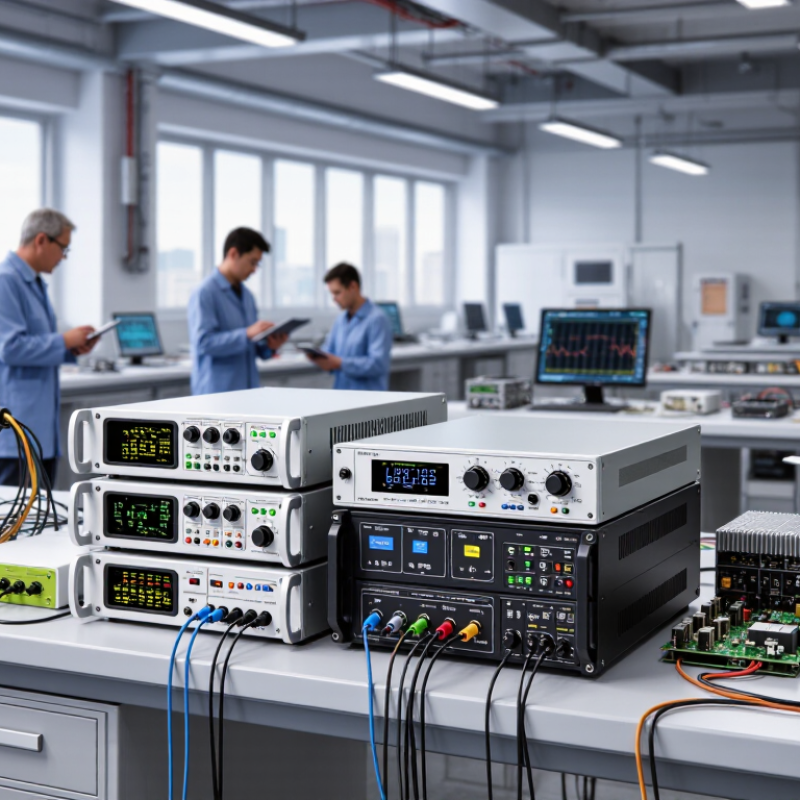
China Top 10 Programmable AC Power Sources Suppliers

Definition and Core Functions of Programmable AC Power Sources

A programmable AC power source is a laboratory instrument that generates controlled alternating voltage and frequency. Unlike a fixed wall supply, it can reproduce normal, unstable, or deliberately altered grid conditions. Engineers use it to evaluate chargers, motors, medical equipment, appliances, and renewable-energy interfaces.

Its core functions include voltage and frequency adjustment, waveform control, current limiting, and protection against overloads. Many models also simulate voltage dips, surges, interruptions, phase imbalance, and frequency changes. These tests reflect IEC 61000-4-11 immunity requirements. Harmonic testing may also reference IEEE 519, especially when equipment can distort the supply. The detail matters.

The IEA Electricity 2024 report estimates that data centers used about 460 TWh of electricity in 2022. It expects global data-center demand to exceed 1,000 TWh by 2026. This growth increases the need for repeatable power-quality testing. A programmable source helps engineers measure startup current, efficiency, power factor, and recovery behavior under controlled conditions. Remote interfaces can record voltage, current, and event timing for later review. Real laboratories still reveal uncomfortable gaps. A clean test waveform may not represent every local grid condition. Poorly chosen settings can also produce confident, but misleading, results. Calibration, documented test limits, and independent verification remain essential.

Programmable AC Power Sources: 230 V RMS, 50 Hz Output Waveform

A programmable AC power source generates controlled voltage and frequency profiles for equipment testing. This waveform represents one cycle of a nominal 230 V RMS, 50 Hz sinusoidal output, with a peak voltage of approximately 325.3 V.

Voltage
230 V RMS
Frequency
50 Hz
Peak Voltage
325.3 V
Core Functions
Regulation, sequencing, simulation

Core functions commonly include adjustable voltage and frequency, programmable ramps and sequences, waveform selection, current limiting, transient simulation, measurement feedback, and protection against overvoltage, overcurrent, and overheating.

Key Performance Criteria for Evaluating Chinese AC Power Suppliers

When evaluating Chinese programmable AC power source suppliers, start with output accuracy, not catalog size. A serious unit should maintain stable voltage and frequency under changing loads. Check regulation, waveform distortion, phase control, and transient response. These values affect test results for motors, adapters, medical electronics, and industrial equipment.

Look closely at the operating range. Confirm voltage, frequency, current, power factor, and continuous output ratings. Some specifications describe ideal conditions only. Ask for test data at low voltage, full load, and elevated temperature. A clean waveform matters. So does repeatability. A supplier should provide calibration records from traceable instruments, not only a polished factory report.

Control and service quality deserve equal attention. Ethernet, USB, or industrial communication should support clear command structures and error reporting. Request sample programming files before purchase. They reveal practical weaknesses quickly. Safety functions should include overvoltage, overcurrent, overheating, and emergency shutdown protection. During supplier assessment, review production inspection steps, component traceability, repair procedures, and spare-parts availability. Factory audits can verify these claims, although one short visit cannot prove everything. That limitation matters. Compare actual test videos, independent inspection results, warranty terms, and response times for technical questions. A low price may be useful, but unstable support can cost more than the equipment.

Market Overview of China’s Top 10 Programmable AC Power Sources Suppliers

China’s programmable AC power source market includes manufacturers serving laboratories, factories, universities, and certification facilities. The top ten suppliers are often compared through output range, waveform accuracy, response speed, and software usability. Product portfolios usually cover single-phase and three-phase systems, with ratings from compact bench units to industrial cabinets. Domestic production can shorten delivery times and simplify technical communication. However, ranking suppliers is not simple. It changes with voltage class, export experience, service coverage, and project scale.

Tips: Ask for recent test reports, calibration records, and load-response curves. Confirm whether specifications apply under real operating temperatures. Request a sample communication protocol before signing. Small details matter.

Reliable suppliers explain protection functions clearly, including overvoltage, overload, short-circuit, and thermal safeguards. They should also provide stable firmware updates and practical troubleshooting documents. In my experience, a polished brochure cannot replace a witnessed factory test. Some evaluations still overvalue maximum power while overlooking noise, transient recovery, and maintenance access. Buyers should compare complete ownership costs, not only the initial quotation. A local service team may reduce downtime, but its response promises should be written into the contract. Fancy data is not enough.

Product Portfolios, Technologies, and Industry Applications

China’s leading programmable AC power source suppliers offer broad portfolios for laboratory and production environments. Typical ranges include single-phase and three-phase models, compact bench units, and high-power cabinet systems. Capacities may extend from a few hundred volt-amperes to several hundred kilovolt-amperes. Output frequency, voltage, phase angle, and waveform shape are usually programmable.

Technology choices matter during evaluation. PWM conversion supports efficient operation and fast control, while linear designs may provide very clean waveforms at lower power levels. Advanced units include arbitrary waveform editing, harmonic injection, sequence testing, remote interfaces, data logging, and protection against overload or overtemperature. Some platforms also support regenerative operation, which can reduce energy loss during inverter testing. A wider range is not automatically better.

Industry applications are equally varied. Automotive laboratories simulate voltage dips, frequency changes, and unstable grid conditions. Aerospace teams test sensitive equipment across unusual frequency ranges. Appliance manufacturers examine motor starting, standby consumption, and harmonic response. Renewable-energy developers use these sources for inverter certification and grid-interaction studies. Medical equipment testing demands quiet output and careful isolation. In practice, software usability can decide productivity. Engineers often underestimate setup time. A perfect waveform is less useful when test sequences are difficult to repeat. Suppliers should therefore provide calibration records, clear manuals, responsive technical support, and interfaces that integrate with existing measurement systems.

Quality Standards, Support Services, and Supplier Selection Factors

China Top 10 Programmable AC Power Sources Suppliers

For the top 10 Chinese programmable AC power sources suppliers, quality standards should come before price. ISO Survey 2023 recorded over 1.2 million ISO 9001 certificates worldwide, showing how common formal quality systems have become. Yet certification alone proves little. Ask for calibration records, production traceability, and test results covering voltage accuracy, frequency stability, distortion, and protection response. IEC 61000-4-11 compliance is useful when testing equipment against voltage dips and interruptions. IEEE 519 guidance also helps assess harmonic performance in practical applications.

Support services often separate reliable suppliers from ordinary exporters. A strong supplier should provide remote diagnosis, firmware control, replacement planning, and clear response times. The IEA’s Electricity 2024 report expects global electricity demand to grow by an average 3.4% annually through 2026. This growth increases demand for precise grid simulation and product validation. However, some supplier claims remain vague. That deserves scrutiny. Request a sample test report, not only a brochure.

Tips: Compare three quotations using the same technical specification. Check whether calibration is traceable to national standards. Confirm service coverage, spare-part availability, and communication hours. Test the unit under low-voltage and unbalanced-load conditions before full deployment. A factory visit can reveal more than polished documents. Also, calculate total ownership cost. A cheaper source may require expensive downtime, shipping, or delayed technical support.

FAQS

What is a programmable AC power source?

It generates controlled alternating voltage and frequency for laboratory or production testing. It can reproduce stable, unstable, or deliberately changed grid conditions. Think of it as a controllable wall supply.

Which equipment can be tested with this type of source?

Engineers test chargers, motors, appliances, medical equipment, inverters, and industrial electronics. Tests may examine startup current, efficiency, power factor, and recovery behavior. Different equipment needs different settings.

What power conditions can programmable sources simulate?

They can create voltage dips, surges, interruptions, frequency changes, and phase imbalance. Many systems also control waveform shape and harmonic content. These events should match documented test limits.

Which performance specifications deserve close attention?

Check voltage accuracy, frequency stability, waveform distortion, transient response, current capacity, and continuous power ratings. Review results at low voltage, full load, and elevated temperature. Ideal-condition data is not enough.

How can a buyer evaluate supplier quality?

Request traceable calibration records, sample programming files, inspection procedures, and repair information. Check spare-parts availability and technical response times. A polished factory report proves little alone.

What safety features should the equipment include?

Important protections include overvoltage, overcurrent, overheating, overload, and emergency shutdown functions. Clear error reporting can prevent damaged test equipment. Safety settings still require human review.

Which communication and software functions are useful?

Ethernet, USB, or industrial interfaces can support remote control and data logging. Look for clear commands, repeatable test sequences, and event timing records. A perfect waveform becomes less useful when setup is confusing.

Should buyers choose a wider output range?

Not automatically. Choose voltage, frequency, phase, current, and power ranges that match real applications. Excess capacity may raise cost without improving results. Wider is not always better.

How reliable is a factory audit?

An audit can verify production steps, component traceability, and inspection records. One short visit cannot prove long-term support or consistent quality. That limitation matters.

Why is independent verification still necessary?

Clean laboratory power may not represent every local grid condition. Poor settings can create confident but misleading conclusions. Use calibration, documented limits, and independent checks before trusting final results.

Conclusion

This article provides a practical overview of China’s Programmable AC Power Sources industry, beginning with their definition and core functions. These systems are designed to generate adjustable AC voltage, frequency, phase, and waveform conditions, making them valuable for product testing, laboratory research, manufacturing, energy equipment, transportation, and other demanding applications. The discussion also explains key performance criteria, including output accuracy, stability, response speed, load capacity, waveform quality, protection functions, control interfaces, and system scalability.

It then presents a market-oriented review of ten leading types of Chinese suppliers without focusing on specific brand names. Their product portfolios, technical capabilities, customization options, and industry applications are compared to help readers understand differences in design and service value. Finally, the article examines quality certifications, testing procedures, warranty policies, technical support, delivery capabilities, and after-sales service. These factors provide a structured basis for selecting a reliable supplier according to application requirements, operating environment, budget, and long-term development plans.

Seraphina

Seraphina

Seraphina is a seasoned marketing professional and a trusted voice behind the company’s growing library of expert blog content. With a strong understanding of the company’s products, services, and customer needs, she transforms complex information into clear, practical, and engaging insights for......