Procurement & Market Intelligence
Global Procurement Trends in High Power Frequency Conversion (2025–2030)
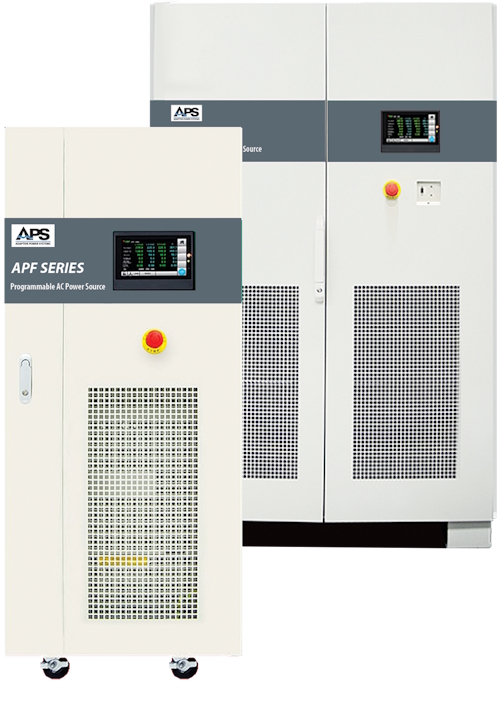
The global market for high power frequency converters is undergoing a fundamental transformation driven by three macroeconomic trends: rapid electrification of commercial aviation ground support, microgrid integration of renewable assets, and the globalization of industrial export manufacturing lines. Procurement directors and engineering managers must evaluate technical specifications through the lens of long-term operational resilience and multi-standard compliance.
1. Expansion of 400 Hz & 800 Hz Aerospace Ground Power Infrastructures
Modern commercial airliners (such as Boeing 787 and Airbus A350) and military aircraft demand highly stable 400 Hz AC power for avionics, environmental control systems, and flight radar servicing while on the tarmac or in maintenance hangars. Procurement teams are replacing aging centralized rotary converters with distributed solid-state high power frequency converters. Distributed cabinet converters isolate power faults to individual bays, offer N+1 redundancy, and deliver dramatically lower total cost of ownership (TCO) through reduced idle power losses.
2. Multi-Region Export Production Line Standardization
Global original equipment manufacturers (OEMs) building industrial HVAC machinery, medical imaging suites, robotics, and commercial appliances face a challenge: products manufactured in 60 Hz regions (such as North America) must be fully load-tested under 50 Hz European or Asian grid standards before shipment (and vice-versa). Procurement strategy now favors versatile high power frequency converters with programmable output voltages up to 600 Vln and seamless 50Hz/60Hz frequency toggling, eliminating the need for dedicated regional test stations.
3. Rigorous Grid Interconnection & Microgrid Simulation
As microgrids incorporate solar photovoltaics, wind turbines, and energy storage systems (ESS), industrial facility equipment must withstand severe grid voltage dips, frequency transients, and phase imbalances. Advanced high power frequency converters serve as Hardware-in-the-Loop (HIL) power simulators, allowing test engineers to reproduce real-world grid anomalies under controlled laboratory conditions in accordance with IEEE 1547 and IEC 61000-4-11 standards.