High-Density Multi-Channel Channel Isolation
Advanced multi-layer board layouts and galvanically isolated digital communication channels prevent ground loops in multi-channel ATE systems, ensuring sub-millivolt measurement accuracy.

An authoritative engineering evaluation framework for specifying high-density multi-channel programmable DC load systems across EV battery modules, AI server power architectures, and automated test equipment (ATE).
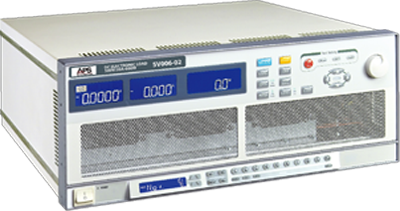
As power conversion topologies transition toward higher switching frequencies (SiC/GaN), multi-output power management ICs (PMICs), and high-current low-voltage server VRMs, traditional monolithic single-channel electronic loads impose severe CapEx and rack-space inefficiencies.
Modern Automated Test Systems (ATE) demand flexible, multi-channel dynamic loading capable of evaluating multiple outputs simultaneously under synchronized transient conditions. A Modular DC Electronic Load system consists of a multi-slot rack-mountable mainframe housing independently programmable plug-in load modules. This architecture decouples system control, power dissipation, and measurement channels, delivering unmatched reconfigurability for R&D validation and high-volume production testing.
When global procurement teams evaluate capital equipment purchases for test labs, understanding the total cost of ownership (TCO) and operational flexibility is paramount. The table below details the performance parameters and financial trade-offs:
| Evaluation Metric | Modular DC Electronic Loads (e.g., APS 4 Series) | Monolithic High-Power Loads (e.g., APS 5VPxC) |
|---|---|---|
| Channel Density & Flexibility | High density: Up to 8 or 12 isolated channels per mainframe. Mix & match power/voltage modules. | Single-channel focus. Optimized for monolithic high-voltage or high-current power sources. |
| Reconfigurability (CapEx Risk) | Near-zero risk. Change or swap individual plug-in modules as DUT requirements change. | Fixed envelope. Requires complete unit replacement if voltage/current envelope expands. |
| Multi-Output Power Supply Testing | Simultaneous synchronized dynamic testing across 4, 8, or more outputs within 1 U/3U chassis. | Requires multiple racked instruments, complex GPIB/LAN bus wiring, and aggregated latency. |
| Mean Time to Repair (MTTR) | Low MTTR: Swap out a faulty module in minutes without dismantling the entire ATE rack. | Moderate MTTR: Requires pulling the full instrument out of the chassis for service or calibration. |
| Maximum Power Capability | Scalable per chassis (up to several kW per mainframe, parallelable across channels). | Massive power absorption (up to 60 kW per single chassis, expandable via master/slave up to 600 kW+). |
Adaptive Power Systems engineers a scalable range of programmable DC loads, from modular multi-channel mainframes to ultra-high-power battery pack dischargers.
The APS 4 Series Modular DC Electronic Load family is engineered specifically for high-density multi-channel applications, including AC/DC power supply burn-in, multi-channel DC-DC converter evaluation, and automotive ECU testing. Featuring multi-slot mainframes with high-speed internal synchronization buses, the 4 Series allows engineers to plug in user-selectable load modules operating in Constant Current (CC), Constant Voltage (CV), Constant Resistance (CR), Constant Power (CP), and Dynamic Load modes.
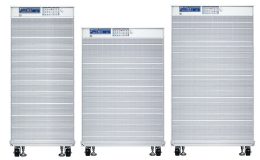
When load requirements scale from individual modules to high-voltage EV battery packs, fuel cell stacks, and solar array simulators, the 5VPxC Series delivers up to 60 kW per chassis with operational capability up to 1000 Vdc. Utilizing a modular internal power module array, the 5VPxC provides master/slave parallel operation, enabling test engineers to scale load capacity up to hundreds of kilowatts effortlessly.
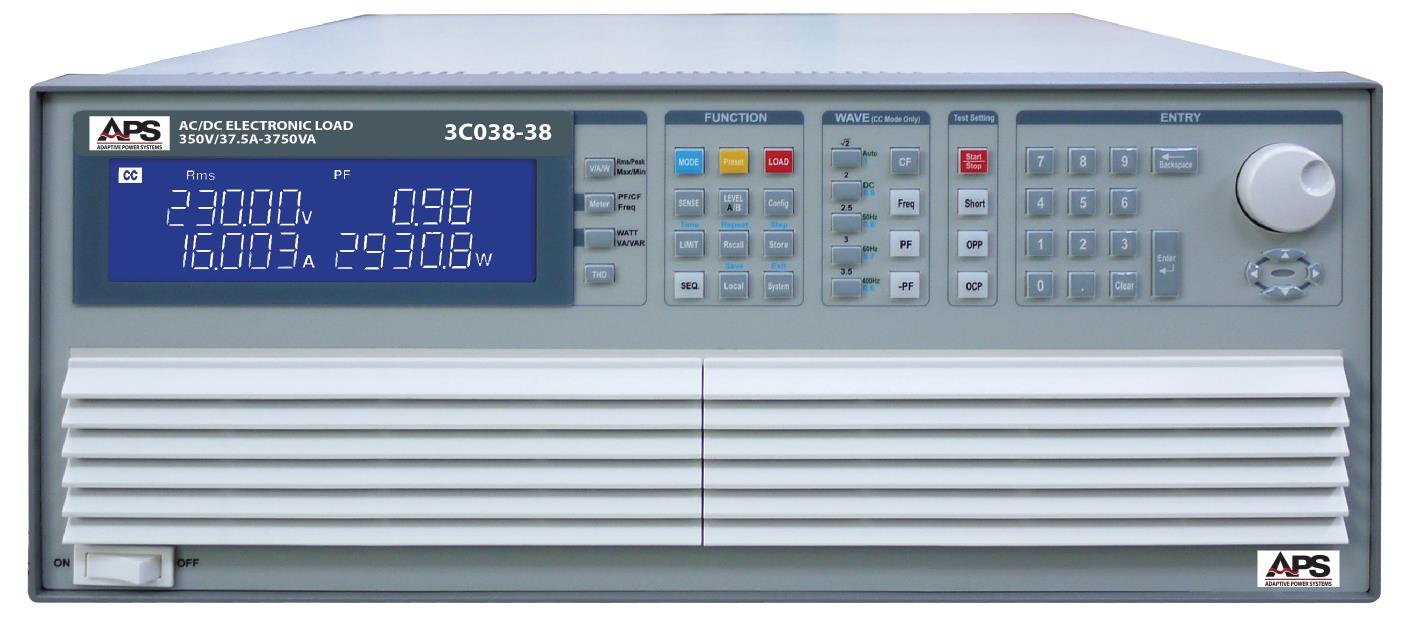
For applications demanding cross-domain versatility—such as testing microgrid inverters, uninterruptible power supplies (UPS), and onboard chargers (OBC)—the 3C and 3D Series provide dual AC and DC loading modes in a single robust chassis. Featuring programmable power factor (leading/lagging), crest factor control, and dedicated rectifier test modes, these loads reduce test bench complexity.
Get CatalogBelow is a comparative breakdown of key operational parameters across APS modular and programmable DC load product lines, enabling test system architects to match instrument capabilities directly to their Device Under Test (DUT):
| Product Family | Voltage Range | Max Current / Power | Control Modes | Key Features & Applications |
|---|---|---|---|---|
| APS 4 Series Modular | 0V – 600V (Module dependent) | Up to 300A / 600W per module channel | CC, CV, CR, CP, CZ, Dynamic, Short | Multi-channel power supply testing, PMIC validation, ATE integration, zero-volt loading capabilities. |
| APS 41S / 41T Series | 60V – 500V | 150W – 1500W benchtop/rack units | CC, CV, CR, CP, Dynamic | R&D bench testing, low-to-medium power DC power supply testing, burn-in stations. |
| APS 5VPxC High Power | 60V – 1000V | Up to 2000A / 60 kW per chassis | CC, CV, CR, CP, Battery Discharge Profile | EV battery pack testing, fuel cell characterization, server rack DC bus verification, high-power ATE systems. |
| APS 3C / 3D Series AC+DC | 50V – 350Vac / 500Vdc | 1,875 VA/W – 22,500 VA/W | CC, CR, CP, Linear/Non-Linear AC, DC | UPS testing, solar inverter evaluation, AC/DC rectifier burn-in, programmable crest/power factor loading. |
The rapid acceleration of electric mobility, wide-bandgap (WBG) power semiconductors, and hyperscale AI infrastructure is fundamentally transforming the performance envelope demanded of electronic load test equipment.
Hyperscale AI server racks are shifting from legacy 12V backplanes to 48V and 800V DC distribution architectures to mitigate ohmic losses ($I^2R$). Consequently, voltage regulator modules (VRMs) and point-of-load converters must step down 48V to sub-1V power rails delivering hundreds of amperes with step slew rates exceeding tens of thousands of amps per second. Procurement teams must select modular DC electronic loads capable of Zero-Volt loading and low-inductance connection topologies to evaluate transient response without corrupting measurement waveforms.
Automotive OEMs are rapidly deploying 800V EV battery platforms to double DC fast-charging rates. Test facilities require scalable modular loads capable of enduring continuous 1000V operating ceilings while offering high-resolution dynamic battery discharge profiles. Furthermore, the convergence of Vehicle-to-Grid (V2G) power electronics necessitates hybrid AC/DC loading equipment capable of validating bidirectional inverter topologies.
Silicon Carbide (SiC) and Gallium Nitride (GaN) power switches operate at switching frequencies upwards of hundreds of kilohertz to megahertz regimes. This dramatically narrows step-response margins. Test systems equipped with legacy programmable loads lack the bandwidth needed to evaluate transient recovery time. Modern modular DC loads integrate high-bandwidth analog control loops and fast DSP front-ends to faithfully reproduce real-world high-frequency step loads.
Investing in a mainframe-based modular DC electronic load platform protects capital expenditure. When testing requirements transition from 60V power supplies to high-voltage automotive sensor modules, engineers simply acquire new plug-in load modules rather than procuring entirely new chassis instrumentation.
Advanced multi-layer board layouts and galvanically isolated digital communication channels prevent ground loops in multi-channel ATE systems, ensuring sub-millivolt measurement accuracy.
Modern modular DC loads incorporate onboard arbitrary waveform generators, allowing engineers to play back complex real-world drive cycles or microgrid load spikes directly on the load module.
Ultra-low latency control interfaces (Ethernet, USB, GPIB, and optional EtherCAT/CANbus) enable real-time hardware-in-the-loop simulation for automotive ECUs and microgrid controllers.
Intelligent forced-air cooling algorithms dynamically adjust fan speeds based on internal power transistor junction temperatures, maximizing MTBF and minimizing acoustic noise in lab environments.
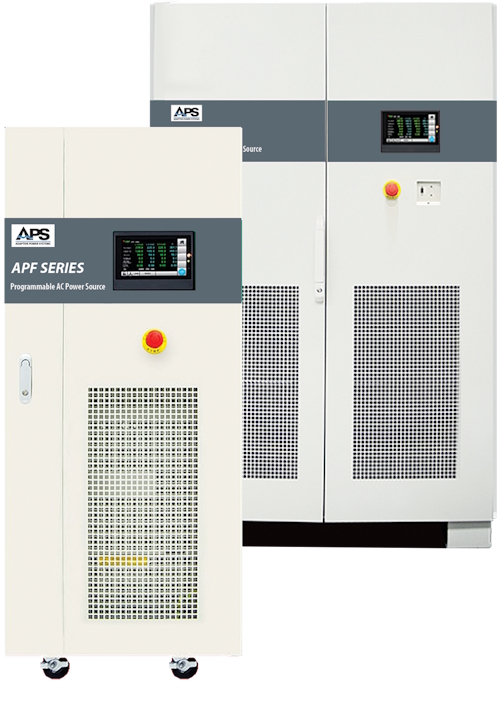
Founded in 2003, Adaptive Power Systems, Inc. (APS) has established an international reputation as a leading manufacturer and distributor of programmable AC power sources, DC electronic loads, solid-state frequency converters, and precision digital power analyzers.
Our commitment to high reliability, technical expertise, and rigorous quality control adheres to strict E-E-A-T (Experience, Expertise, Authoritativeness, and Trustworthiness) standards:
Modular DC electronic loads utilize a multi-slot mainframe architecture housing independent plug-in load modules. The key benefits include:
APS modular loads utilize low-inductance power MOSFET circuit paths combined with high-speed analog and digital control loops. By optimizing control loop bandwidth and phase margin, our load modules achieve programmable slew rates (up to 20+ A/µs) while eliminating parasitic inductance effects, preventing voltage overshoot and ringing during fast transient load steps.
Yes. Mainframes like the APS 4 Series feature internal control and sync buses that permit multiple load channels to operate in synchronized Master/Slave parallel modes. This allows test engineers to aggregate power and current absorption capabilities across multiple slots while managing parameters through a single software command or front-panel interface.
All APS electronic load modules incorporate comprehensive hardware-level protection mechanisms, including Over Current Protection (OCP), Over Voltage Protection (OVP), Over Power Protection (OPP), Over Temperature Protection (OTP), and Reverse Polarity Protection. Additionally, programmable upper/lower threshold limits instantly trip load inputs to safeguard delicate DUTs such as fuel cells, battery cells, and semiconductor PMICs.
APS instruments support standard ATE communication buses including USB, Ethernet (LAN), and GPIB using standard SCPI command sets. Native LabVIEW drivers, Python libraries, and free Windows GUI control software packages are provided for immediate bench operation, automated battery discharge profiling, and long-term data logging.
Adaptive Power Systems maintains a factory-trained network of independent sales representatives, regional distributors, and authorized service centers across North America, Europe, and Asia. All equipment is backed by comprehensive factory warranties and access to certified NIST-traceable calibration services to guarantee continuous compliance.
Whether you require a multi-channel ATE mainframe for SMPS testing or high-voltage electronic loads for EV battery evaluation, our senior application engineers are ready to assist with system sizing, custom wiring configurations, and technical quotations.
Get Catalog Talk to an Engineer