
Sales & Engineering: +1 (866) 517-8400 [email protected]
0%

Choosing High Power Frequency Converters is not simply a matter of selecting the largest rating. The right unit must match the motor, supply, operating profile, and installation environment. A converter feeding a 500 kW pump, for example, faces different demands from one driving a crane with frequent starts and braking. Those details matter.

Power-electronics pioneer Dr. Bimal K. Bose is a respected authority in this field. I cannot verify a verbatim quotation from him about converter selection, so I will not invent one. A practical maxim for this guide is: “Match the converter to the real duty, not just the nameplate.” It is a useful starting point, not a complete engineering rule.

Review continuous and peak power, overload duration, input voltage, output frequency, harmonics, cooling, and protection requirements. Check how the load behaves during startup, speed changes, and faults. A dusty plant room or restricted airflow can change the thermal choice. So can a long motor cable. Shortcuts here may look efficient on paper, yet cause trips, heat, or premature wear in service.

This guide explains how to compare specifications, confirm system compatibility, and assess supplier support. It also highlights questions worth asking before purchase, including commissioning, spare parts, and lifecycle costs. No checklist replaces a detailed load study. Some operating data may be incomplete, and that uncertainty should be made visible rather than hidden. A sound choice balances measurable performance with the conditions the converter will actually face.
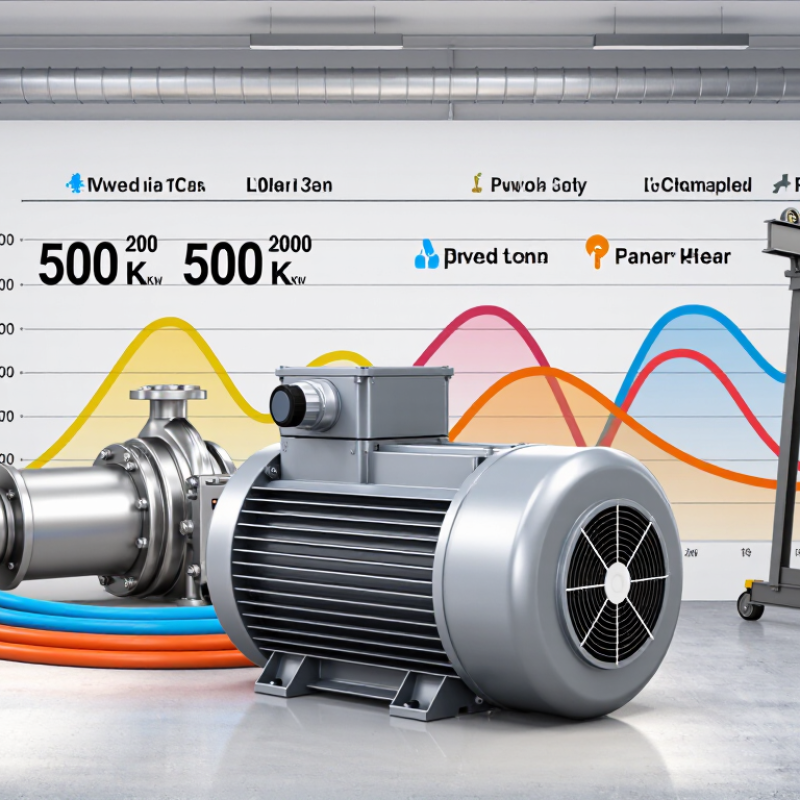
How to Choose High Power Frequency Converters?

Define the Application and Load Requirements

Define the application before comparing converter ratings. Is it driving a pump, compressor, conveyor, or test bench? Each creates a different load profile. Record the motor’s rated power, voltage, phase, frequency, starting current, and expected speed range. Then map normal operation, startup, short overloads, and daily duty cycle. That detail matters. A pump may run steadily, while a loaded conveyor can demand sharp starting torque. The U.S. Department of Energy’s 2014 motor systems sourcebook estimates that motor-driven systems use about 54% of electricity in U.S. manufacturing. The figure highlights why matching the drive to the actual duty—not just the nameplate—deserves attention.

Check the load’s peak demand and its duration. A converter sized only for continuous kilowatts may trip during acceleration or brief torque surges. Ask whether the load can return energy during deceleration, and verify the converter can handle that operating condition. Also confirm input voltage and frequency, output range, cooling, enclosure conditions, and any harmonic limits in the facility. For a real assessment, measure current during startup and a representative production shift; estimates can miss an awkward peak. Leave suitable capacity for documented overloads, but avoid oversized equipment without a clear reason. It adds cost, and may reduce efficiency at light load. A neat specification sheet can still hide a messy duty cycle. That is worth checking.

Determine the Input, Output, and Power Rating

A high-power frequency converter should be selected from actual electrical conditions, not a catalog headline. Record incoming voltage, phase count, and frequency at the installation point. Measure variation too. A unit designed for three-phase input may not accept single-phase power, even when the voltage seems close. Confirm grounding, input tolerances, and expected supply dips against the equipment documentation.

Define the output requirements of the connected load. Check voltage, frequency range, phase configuration, and whether the load needs a stable waveform. Motors deserve extra attention: starting current can briefly exceed running current, while pumps and fans may change load as they speed up. Do not size the converter from motor kilowatts alone. A small mismatch in assumptions can become a hot cabinet and nuisance trips.

Compare the load’s continuous demand with the converter’s rated output, using kilowatts or kilovolt-amperes as appropriate. Account for power factor, overload duration, ambient temperature, altitude, and cooling space. Leave practical capacity for startup and likely expansion, but avoid excessive oversizing, which can reduce efficiency at light loads. A calculation can still be wrong if it uses ideal conditions; verify nameplate data and operating patterns before choosing a rating. Check the duty cycle carefully.

Compare Converter Topologies and Control Features

Choosing a high power frequency converter starts with its topology and the demands of the connected load. A voltage-source inverter is widely used and suits many motor-drive applications. It can provide responsive speed control, though switching behavior and output filtering need careful attention.

A current-source inverter controls output current directly and may suit applications with steady, high-power loads. Its DC-link inductor can add size and weight. Multilevel converters create smoother output waveforms, which can reduce motor stress and filtering needs, but their greater component count can complicate maintenance. No topology wins everywhere. A long motor cable, frequent load changes, or limited cabinet space can shift the choice.

Control features matter just as much. Scalar V/f control is straightforward for pumps and fans with modest speed demands. Vector control offers tighter torque and speed response, useful when a conveyor starts under load. Direct torque control can respond quickly, but commissioning may require more care. Check current limits, braking options, fault records, and performance during low-speed operation. A neat specification sheet is not a substitute for testing the actual load.

Tips: Compare efficiency across the expected speed range, not only at full load. Ask for a site-specific test. Review harmonic and motor-cable requirements, too; these details are easy to overlook.

Assess Cooling, Protection, and Compliance Needs

A high power frequency converter can run reliably on paper and still overheat in a cramped electrical room. Check the expected load, room temperature, dust, and airflow before comparing cooling options. For example, a cabinet beside a warm boiler room may need more clearance or forced ventilation. Confirm the converter’s derating guidance at your actual ambient temperature, not just its rated output. Cooling is easy to underestimate.

Protection should match the equipment and installation. Review overcurrent, overtemperature, phase-loss, and short-circuit protections, then check how faults are indicated. A clear alarm can help technicians identify a blocked air inlet before shutdown. Confirm grounding and cable arrangements with a qualified installer. Requirements vary by site and application, so verify relevant electrical, electromagnetic compatibility, and safety standards for the intended market. Keep test records and installation documents accessible. A checklist can miss details; revisit it during commissioning.

Tips: Leave room for airflow, clean filters on schedule, and test alarms under controlled conditions. Ask the supplier for derating curves and compliance documents. If the room layout changes, reassess cooling rather than assuming the original choice still fits.

How to Choose High Power Frequency Converters? - Assess Cooling, Protection, and Compliance Needs
Selection Dimension What to Assess Practical Selection Guidance Verification Before Purchase
Continuous power and load Motor rated power and current, duty cycle, starting torque, overload duration, and load profile. Size the converter using the motor current and required overload capability, not power alone. Heavy-duty loads such as crushers or loaded conveyors may need a higher current-rated unit than a centrifugal pump of similar power. Compare the converter’s continuous and short-time output-current ratings with the motor nameplate and the load’s documented overload requirements.
Cooling method Heat dissipation, installation space, ambient conditions, dust, humidity, and access to cooling water. Air cooling is generally simpler to install but requires suitable airflow and clean ventilation paths. Liquid cooling can help manage heat in high-power or space-constrained installations, but adds coolant-system and maintenance requirements. Check the manufacturer’s specified airflow or coolant flow, inlet-temperature limits, heat-rejection data, and required service clearances.
Ambient temperature and derating Maximum enclosure temperature, altitude, solar or nearby equipment heat, and ventilation conditions. Output capability may need to be reduced when temperature or altitude exceeds the converter’s specified operating conditions. Do not assume the full rated output is available in every installation. Review the model-specific temperature and altitude derating curves and apply them to the actual site conditions.
Enclosure protection Exposure to dust, water, washdown, conductive contamination, and accidental contact. Select an ingress-protection rating appropriate to the location. For example, IP54 indicates protection against harmful dust ingress and water splashes; it does not mean the enclosure is dust-tight or suitable for high-pressure washdown. Confirm the rating applies to the complete installed enclosure, including doors, cable entries, and cooling openings. Check IEC 60529 definitions and the site’s cleaning method.
Electrical protection Overcurrent, short circuit, ground fault, overtemperature, overvoltage, undervoltage, and phase loss. Confirm that required protective functions are provided and coordinated with upstream protection and the driven equipment. Converter protection does not automatically replace installation-level circuit protection. Review protection functions, trip settings, fault ratings, recommended upstream devices, and the installation instructions.
Motor and cable effects Motor insulation, cable length, switching behavior, bearing-current risk, and output-filter requirements. Long motor cables and fast voltage transitions can increase electrical stress. Depending on the motor and installation, an output reactor or suitable dv/dt or sine-wave filter may be required. Check allowable motor-cable lengths, motor insulation guidance, filter recommendations, and any bearing-protection measures.
Harmonics and power quality Supply-system strength, input-current distortion, other sensitive loads, and project power-quality limits. Input reactors, passive filters, or active front ends may be considered when required by the installation’s harmonic limits or regenerative-energy needs. The appropriate solution depends on the system, not just converter power. Request harmonic data for the proposed configuration and compare it with the applicable site specification and grid-connection requirements.
EMC requirements Radio-frequency emissions, immunity, cable routing, grounding, and the surrounding electrical environment. EMC performance depends on the converter configuration and installation practices, including cable shielding and grounding. A compliance claim for a product may be subject to specified installation conditions. Review applicable IEC 61800-3 requirements, the declared environment or category, and the manufacturer’s EMC installation instructions.
Electrical safety and local rules Electrical hazards, protective earthing, isolation, safe maintenance, and jurisdiction-specific requirements. Use equipment designed and installed for the intended voltage and application. Safety functions and safeguards must be selected according to the machine risk assessment and local regulations. Check applicable IEC 61800-5-1 requirements, local electrical codes, conformity documentation, and project-specific certification needs.
Regeneration and braking Deceleration frequency, overhauling loads, stopping time, and energy returned to the DC bus. Braking resistors may dissipate energy during deceleration; regenerative converters can return energy to the supply when the application and system support it. Calculate braking energy and duty cycle, then verify resistor or regenerative-system ratings and protection requirements.
Installation and maintenance Panel dimensions, lifting and access, ventilation paths, filter cleaning, coolant service, and spare parts. Allow adequate clearance for airflow and maintenance. High-power equipment may require dedicated lifting provisions and planned inspection of fans, filters, or coolant circuits. Confirm installation drawings, service access, maintenance intervals, and environmental limits before finalizing the layout.

Evaluate Efficiency, Reliability, and Lifecycle Cost

Choosing a high-power frequency converter starts with the load, not the largest rating on a datasheet. Record the motor’s voltage, current, power, starting torque, and expected duty cycle. A pump running steadily places different demands on a converter than a crusher with repeated heavy starts. Check efficiency at the operating points you actually use, not just at peak load. Even a small efficiency gap can mean noticeable heat in a continuously running cabinet. Measure it. Review cooling needs, harmonic performance, and overload capacity against site conditions such as dust, altitude, and ambient temperature. A room that feels cool can still trap heat inside a tightly packed panel.

Reliability depends on more than component ratings. Ask how the converter handles voltage dips, frequent starts, vibration, and planned maintenance. Accessible fans, clear fault logs, and replaceable wear parts can shorten a night-shift repair. Confirm that protection settings suit the driven equipment and that service support is available when needed. Then estimate lifecycle cost: purchase price, energy use, cooling, labor, spare parts, and likely downtime. Use measured load profiles where possible; a spreadsheet based on a perfect 24-hour duty cycle may mislead. That assumption is easy to miss. The best choice is not always the most efficient unit on paper. It should remain stable in real operating conditions and allow service without extended production stops.

FAQS

How should I choose a converter topology for a motor?

Match the topology to the load, cable length, and cabinet space. Voltage-source inverters suit many motor drives. Multilevel converters can produce smoother waveforms, but add components. There is no universal winner.

When might a current-source inverter be suitable?

It may suit steady, high-power loads that need direct current control. Its DC-link inductor can increase size and weight. Check whether your cabinet has room.

Which control method works well for pumps and fans?

Scalar V/f control is straightforward for applications with modest speed demands. Test it at the speeds your equipment actually uses. Simple can be enough.

What control features help a loaded conveyor start?

Vector control can provide tighter torque and speed response when a conveyor starts under load. Direct torque control responds quickly, but commissioning may need more care. Test the real conveyor.

What operating details should I check before choosing a converter?

Record motor voltage, current, power, starting torque, and duty cycle. Also check current limits, braking options, fault records, and low-speed performance. Small details matter.

How can I compare converter efficiency fairly?

Compare efficiency across your expected speed range, not only at full load. Use measured load profiles where possible. A perfect 24-hour assumption may mislead.

What site conditions can affect converter reliability?

Review dust, altitude, ambient temperature, vibration, voltage dips, and frequent starts. Check cooling needs and harmonic performance. A cool room can still trap heat inside a crowded panel.

What should I include in lifecycle cost?

Include purchase price, energy, cooling, labor, spare parts, and likely downtime. Accessible fans and clear fault logs may shorten repairs. The spreadsheet may still miss something.

Conclusion

Choosing High Power Frequency Converters starts with a clear understanding of the application and its load, including operating conditions, load behavior, and any peak or variable demand. Next, match the converter’s input and output requirements to the available power supply and connected equipment, allowing suitable capacity for continuous operation and expected fluctuations. Comparing converter topologies and control features can help identify an option that provides the required performance, flexibility, and ease of integration.

Selection also depends on how the unit manages heat, responds to faults, and meets relevant safety and compliance requirements. Consider efficiency across typical operating conditions, as well as reliability, maintenance needs, and expected service life. Looking at these factors together—not just the initial purchase price—helps reveal the overall lifecycle cost and supports a practical, dependable choice for the intended application.

Amelia

Amelia

Amelia is a highly skilled marketing professional with a strong understanding of the company’s products, customers, and industry landscape. With a thoughtful, research-driven approach, she transforms complex product information into clear, practical, and engaging content that helps readers make......