
Sales & Engineering: +1 (866) 517-8400 [email protected]
0%

Choosing the top AC Electronic Loads in 2026 takes more than comparing power ratings. A bench unit may look capable on paper, yet struggle when a test requires a distorted waveform, a sudden load step, or stable operation across a wide frequency range. The useful details are concrete: current crest factor, phase control, transient response, measurement accuracy, and how quickly an engineer can set up repeatable tests. Small differences matter. So does the manual.

This guide compares leading options by application, not by one headline specification. It considers laboratory characterization, production testing, and validation of inverters, UPS systems, and other AC sources. A higher rating is not automatically a better fit. Cooling noise, interface quality, protection behavior, and software support can shape daily use just as much. Even the strongest shortlist deserves a second look.

David J. Perreault, an MIT power-electronics researcher, is a relevant expert voice for evaluating power-conversion tests. However, no source article or verified quotation was provided, so I cannot responsibly present a sentence as his exact words. The guiding principle here is simple: “A test is only useful when its conditions reflect the real application.” Treat that as an editorial summary, not a quotation from Perreault. And check the evidence. Product rankings change as models, firmware, and support evolve; a careful buyer should confirm current specifications and test requirements before choosing.
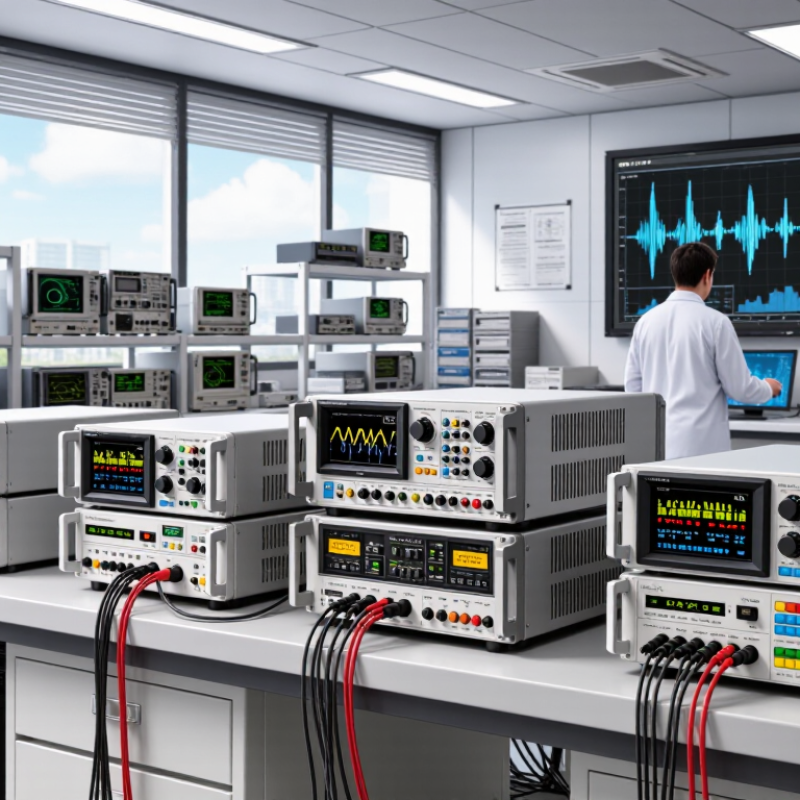
What Are the Top AC Electronic Loads in 2026?

What an AC Electronic Load Is and How It Works

An AC electronic load is a programmable instrument that draws controlled power from an AC source. It lets engineers test equipment such as inverters, UPS units, and generators without relying on a changing real-world load. Think of it as a controllable appliance with no useful output. Not just a resistor.

The operator sets conditions such as current, power, or resistance. Depending on the model, the load can also imitate nonlinear devices, such as a rectifier drawing sharp current pulses. Internally, switching circuits adjust the current drawn during each part of the AC waveform. Sensors measure voltage and current, allowing the instrument to report power, power factor, and harmonic distortion. Some units dissipate the absorbed energy as heat; regenerative designs return it to the electrical supply. That distinction matters.

The IEA’s Electricity 2024 report says global electricity demand grew 2.2% in 2023 and forecasts average annual growth of 3.4% for 2024–2026. That rising demand makes dependable equipment testing increasingly important, though it does not explain every test requirement. A load’s settings and measurement accuracy still need careful checking. A convenient preset can hide a poor match between the test waveform and the equipment’s actual operating conditions. That is easy to overlook.

Key Specifications Used to Compare AC Electronic Loads

What Are the Top AC Electronic Loads in 2026?
Key Specifications Used to Compare AC Electronic Loads

Compare more than rated power. Check voltage and current ranges, frequency range, phase configuration, and accuracy across the full operating envelope. A 10 kW rating may look ample, yet a high crest-factor waveform can hit the current limit before the average power limit. Confirm crest-factor capacity, harmonic measurement, and transient response against the loads your device actually draws. IEC 61000-4-7 provides measurement guidance for harmonics and interharmonics; IEC 61000-4-11 defines voltage-dip and interruption test methods. These standards help frame test needs, but they do not replace a clear specification review.

Grid disturbances matter, too. The U.S. Energy Information Administration’s Electric Power Annual 2022 reported average interruption durations of about 5.5 hours per customer, including major events, and about 2.3 hours excluding them. Those figures describe outages, not waveform quality, but they underline why repeatable disturbance testing matters. Ask whether the load can reproduce dips, frequency changes, and nonlinear current profiles, and whether its control bandwidth and data logging capture short events. No single number settles it.

Tips: Match the load’s current and crest-factor limits to measured device waveforms, not just nameplate watts. Check accuracy at low as well as high settings. A small mismatch can distort results. Also verify cooling and continuous-duty ratings; these are easy to overlook.

What Are the Top AC Electronic Loads in 2026?

Key specifications used to compare AC electronic loads, illustrated by representative power levels across common system configurations.

How to read this: These representative ratings show the different capacity classes available, not a ranking of specific products. When comparing equipment, also check AC voltage and frequency ranges, current, crest factor, power factor, measurement accuracy, operating modes, and whether energy can be regenerated to the grid. Confirm exact ratings against the product datasheet.

Major Types of AC Electronic Loads Available in 2026

AC electronic loads in 2026 are best understood by their operating modes and energy handling. Common programmable modes include constant current, constant resistance, constant power, and constant impedance. Each creates a different demand on the source under test.

Constant power, for example, can draw more current when voltage falls, revealing whether a supply remains stable.

Dynamic loads switch between settings to simulate changing equipment demand. A brief current step can expose a slow response that steady testing misses.

Another useful distinction is between regenerative and dissipative loads. Dissipative models turn absorbed energy into heat, so ventilation and rated power matter during long tests. Regenerative models return energy to the grid or a local system, where supported.

AC loads may also be designed for single-phase or three-phase testing, with some systems offering both. Check frequency range, crest factor, phase balance, and harmonic control against the test plan. These details affect whether a load can reproduce a motor drive, inverter, or other nonlinear demand.

Categories overlap. A tidy label does not guarantee a realistic waveform, and that is easy to overlook. Compare measured behavior, not just the feature list.

How to Choose an AC Electronic Load for Your Application

Choosing an AC electronic load starts with the source you need to test. Check its voltage, frequency range, maximum current, and power before comparing models. Leave headroom above normal operating conditions; a load running near its limit may not reproduce demanding tests reliably. Consider whether you need constant-current, constant-power, or constant-resistance operation. Different modes reveal different weaknesses in an inverter, UPS, or power supply.

Look beyond headline power ratings. Crest factor and power factor affect how closely a load can reproduce a real appliance, especially one with a sharp current peak. If your application involves motor starts or sudden load changes, check transient response and programmable waveforms. Small details matter. A control interface should fit your workflow, while clear measurements of voltage, current, frequency, and power make results easier to review. I would not treat a long feature list as proof of better testing.

Cooling, protection, and test setup deserve equal attention. Confirm that the unit can dissipate heat during sustained operation, and review its overcurrent and overtemperature protections. For multi-unit testing, verify synchronization and load sharing rather than assuming they will work smoothly. A datasheet can narrow the field, but it cannot show every practical limitation. Match the specifications to your test plan, then validate the setup with a representative source and load profile. A little uncertainty is useful; it can expose assumptions before they become test failures.

What Are the Top AC Electronic Loads in 2026? - How to Choose an AC Electronic Load for Your Application

The categories below are representative selection ranges, not rankings or specifications for individual products. Actual capabilities vary by model, operating voltage, and configuration; confirm the datasheet before purchase.

AC load category Typical power range Typical input configuration Common load capabilities Best suited for What to check when choosing
Benchtop, single-phase About 0.5–3 kVA Typically programmable AC input up to 300 V RMS; often 40–70 Hz, with wider frequency options on some models Constant-current, constant-resistance, and constant-power modes are common; some models offer crest-factor and harmonic-current functions Power-supply development, laboratory evaluation, and low-power product testing Maximum RMS and peak current, voltage range, frequency range, measurement accuracy, and cooling requirements
Rack-mounted, single-phase About 3–15 kVA per unit Commonly up to 300 V RMS; frequency capability depends on the model and may extend beyond the standard mains range Often includes CC, CR, and CP modes, programmable load steps, and selectable current waveforms Automated production testing and higher-power single-phase supplies or converters Rack space, input current, load-step behavior, control interfaces, and whether multiple units can operate in parallel
Three-phase, high-power About 15–100 kVA per system; larger systems may be modular Common system voltages include 208 V, 400 V, or 480 V three-phase, depending on the configuration May support balanced or independently controlled phase loading, programmable power, and selected nonlinear-load profiles UPS systems, inverters, industrial power equipment, and three-phase power-source testing Per-phase versus total power rating, phase imbalance limits, installation supply, cooling, and protection requirements
High-crest-factor or nonlinear-load model Varies widely; available in low-, medium-, and high-power configurations Single-phase or three-phase, depending on the intended test system Designed to reproduce current waveforms with higher peak-to-RMS ratios; maximum crest factor is model- and current-dependent Testing supplies that feed rectifier-capacitor inputs or other nonlinear loads Crest factor at the required RMS current, peak-current limit, waveform programming, and harmonic measurement capability
Transient and dynamic-load model Available across several power classes; rating depends on the required transient current Single-phase or three-phase; frequency range is model-specific Programmable load changes, sequences, and time-based profiles; transition speed and settling behavior vary by model Testing response to changing demand, startup behavior, and dynamic regulation of AC sources Transition time, overshoot, minimum dwell time, synchronization, and test-sequence software
Regenerative AC load Commonly offered from several kVA to high-power system ratings Usually requires a compatible AC grid connection; voltage and phase configuration are system-specific Can return a portion of absorbed energy to the grid instead of dissipating all of it as heat Long-duration, high-power testing where energy use and heat load matter Regeneration efficiency, grid-interface requirements, permitted operating modes, and installation approvals

Selection tip: Start with the device under test’s maximum voltage, RMS and peak current, phase count, frequency, and required waveform. Then verify continuous power, transient performance, measurement accuracy, control interfaces, and facility cooling or grid requirements.

Leading AC Electronic Load Options to Consider in 2026

In 2026, the leading AC electronic load options depend on the equipment under test, not a universal ranking. Regenerative AC loads suit longer tests because they return energy to the facility supply. Programmable AC loads with resistive, inductive, and capacitive modes help reproduce changing power-factor conditions. Modular systems can be useful when several phases or test stations need independent control. Small details matter.

The International Energy Agency’s Electricity 2024 report estimated that data centres, artificial intelligence, and cryptocurrency together used about 460 TWh in 2022, with demand potentially exceeding 1,000 TWh by 2026. That forecast makes reliable testing of UPS units and power-conversion equipment increasingly relevant. It does not, however, tell engineers which load is best; test requirements still decide that.

Before choosing, check voltage and current ranges, phase configuration, crest-factor capability, harmonic control, and measurement accuracy. For example, a load that handles a steady sinusoidal waveform may not reproduce a sharply peaked current drawn by a real power supply. Ask for measured performance across the operating range, not just a headline rating. Also consider heat, noise, and whether returned energy is supported by the site. I would compare the vendor’s test data with a representative bench setup; specifications alone can miss awkward behavior.

FAQS

Why is rated power not enough when comparing AC electronic loads?

A 10 kW rating may seem sufficient, but peaked current can reach the limit first. Check voltage, current, frequency, and phase ranges too.

What does crest-factor capability tell me?

It shows whether the load can handle sharply peaked current waveforms. Compare its limit with measured device behavior, not just nameplate watts. Small mismatches matter.

Which waveform features should I verify?

Check harmonic measurement, harmonic control, and transient response. A steady sine wave may not represent a real power supply.

Why check accuracy at different settings?

Accuracy can vary between low and high operating levels. Ask for results across the full range. One headline figure may hide gaps.

When are regenerative AC loads useful?

They can return energy to the facility supply during longer tests. Confirm that the site supports returned energy, and check cooling needs.

When might a modular AC load be practical?

It can suit test setups with several phases or stations needing independent control. Check how each section is controlled. Details can get awkward.

Can an AC electronic load reproduce power disturbances?

Ask whether it can create voltage dips, interruptions, and frequency changes. Control bandwidth and data logging affect whether short events are captured.

How can standards help define test requirements?

IEC 61000-4-7 gives guidance for harmonic and interharmonic measurement. IEC 61000-4-11 describes voltage-dip and interruption tests. They do not replace reviewing the load’s specifications.

How should I choose among AC electronic load types?

Match the load to the equipment and test conditions. Programmable resistive, inductive, and capacitive modes can reproduce changing power factors. I would still compare test data with a representative bench setup; specifications alone can miss things.

Conclusion

This guide explains what AC Electronic Loads are and how they work, including how they draw controlled power from an AC source to help evaluate its performance under different conditions. It outlines the key specifications used to compare models, such as voltage and current ranges, power capacity, frequency support, measurement accuracy, operating modes, and control features. Understanding these factors can help readers distinguish between instruments suited to basic testing and those designed for more demanding or specialized applications.

The article also reviews major types of AC electronic loads available in 2026 and offers a practical framework for choosing one based on the equipment being tested, required load conditions, accuracy needs, safety features, and budget. It concludes with leading options to consider, focusing on capabilities and application fit rather than brand names, so readers can make a well-informed comparison for their testing requirements.

Evelyn

Evelyn

Evelyn is a dedicated marketing professional with a strong understanding of the company’s products, services, and customer needs. Through a combination of industry knowledge, clear communication, and thoughtful market analysis, Evelyn helps present the company’s value in a practical and engaging......