
China has become a significant source of High Power DC Electronic Loads for laboratories, factories, and energy developers. This guide examines leading Chinese manufacturers through practical engineering criteria, not marketing claims alone. It considers power range, voltage flexibility, current accuracy, dynamic response, and long-term thermal stability.
Experienced engineers often begin with the application. A battery test bench may require fast load transitions and precise discharge control. A power supply manufacturer may need continuous operation at several kilowatts. Renewable energy projects often demand programmable profiles, remote monitoring, and reliable protection systems. These details can separate a suitable model from an expensive mismatch.
Look closely at specifications.
A credible manufacturer should explain calibration methods, cooling design, communication interfaces, and overload protection. Certifications and documented factory testing also matter. So does technical support after delivery. Some suppliers provide strong hardware but limited software integration. Others offer responsive service but incomplete test data. This guide weighs both strengths and weaknesses.
The discussion also considers rack systems, regenerative options, parallel operation, and application-specific customization. Factory experience can reveal practical issues, such as fan noise, connector heating, or unstable readings during rapid transitions. These problems may not appear in a short demonstration.
No ranking is perfect. Supplier capabilities change, and published specifications may require independent verification. Buyers should request sample reports, clarify warranty terms, and test representative units before large purchases. With careful comparison, this overview can help international users identify dependable Chinese High Power DC Electronic Loads manufacturers and make decisions grounded in performance, transparency, and real operating needs.
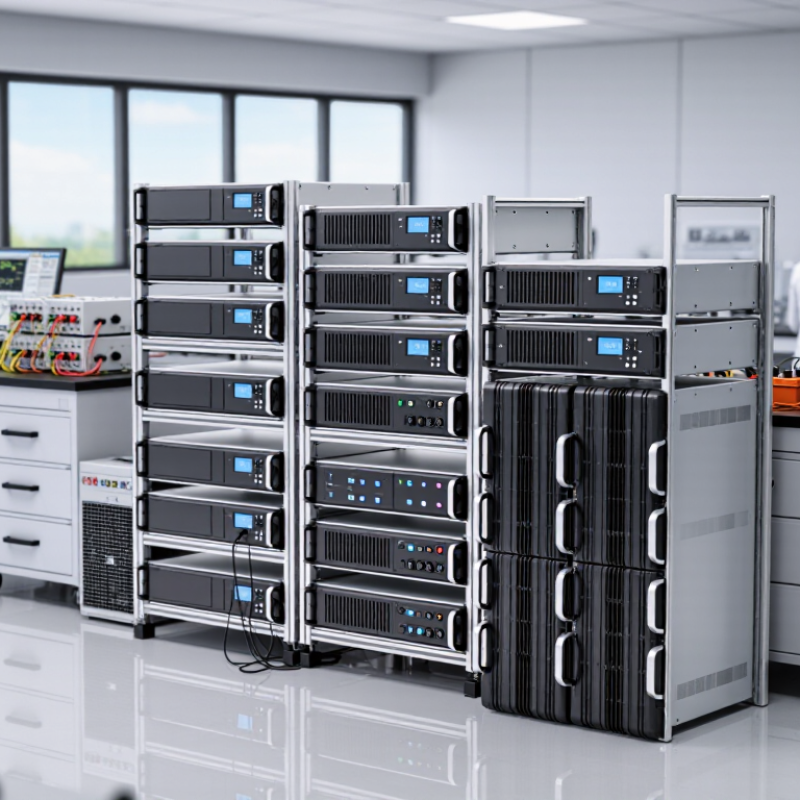
High-power DC electronic loads are programmable devices that safely absorb direct-current energy during testing. They simulate batteries, motors, converters, charging systems, and other electrical equipment. Unlike passive resistors, they can control constant current, voltage, resistance, or power.
An engineer may set 400 volts and 250 amps. That equals 100 kilowatts.
Real work is less tidy. Voltage can overshoot, cooling can weaken, and cables may heat unevenly.
Reliable systems therefore need fast protection, accurate measurement, and stable thermal management. IEC 61010-1 provides a relevant safety framework for laboratory electrical equipment.
Demand is becoming more practical, not merely theoretical. The International Energy Agency’s Global EV Outlook 2024 recorded more than 14 million electric car sales worldwide in 2023. Its Electricity 2024 report also projected global electricity demand growth of about 4% in 2024.
These figures increase pressure on manufacturers to validate high-current equipment under repeatable conditions. Regenerative loads can return energy to the grid, reducing heat and operating costs.
Dissipative loads remain simpler, but they require substantial cooling capacity.
Selection should consider continuous power, pulse duration, voltage range, current accuracy, and fault response. A large rating alone proves little.
Field testing often reveals limitations that brochures miss.
China’s high-power DC electronic load manufacturing landscape is shaped by demanding test applications. These include battery systems, power converters, charging equipment, and industrial supplies. Manufacturers commonly build modular platforms from 10 kW to several hundred kilowatts. Parallel operation supports larger test capacity without replacing the entire system.
At production sites, engineers inspect copper busbars, cooling channels, power semiconductors, and insulation clearances. A loose connection can create heat during continuous discharge. That detail matters. Air-cooled units suit compact laboratories, while liquid-cooled systems handle dense cabinet layouts more effectively. Cooling is decisive. Engineers also tune control loops to manage constant-current, constant-power, and resistance modes. Calibration should use traceable instruments and documented procedures. However, some factories still treat software verification as secondary hardware work. This remains a weakness, especially when fast load changes expose control instability.
Export-oriented Chinese manufacturers increasingly provide remote monitoring, fault records, communication interfaces, and customized fixtures. Production teams may test each cabinet under thermal stress before shipment. They also verify protective functions, including over-temperature, over-voltage, and emergency shutdown responses. Documentation still varies. Buyers should request circuit diagrams, calibration records, test reports, and component traceability before acceptance. Field feedback often reveals practical issues, such as fan noise, connector wear, or delayed alarm messages. These details deserve attention because laboratory performance does not always predict factory-floor reliability.
Modern DC electronic loads are becoming more precise as battery, solar, and power-conversion testing expands. The International Energy Agency reported that global electric car sales exceeded 17 million in 2024. This growth increases demand for equipment that can safely reproduce charging cycles, sudden current changes, and long discharge periods.
Digital control is central to this work. High-speed processors adjust constant-current, constant-voltage, constant-power, and resistance modes within milliseconds. Feedback loops measure voltage and current continuously. They also detect instability before a battery cell overheats. Wide-bandgap switching devices, including silicon carbide and gallium nitride, can improve switching speed and reduce heat losses. Cooling remains critical. A 10 kW load may need forced airflow, liquid cooling, or both. Small thermal errors can distort test results.
Regenerative technology returns absorbed energy to the grid instead of wasting it as heat. Industry forecasts from MarketsandMarkets have projected strong growth in electronic load demand through 2028, driven by electric mobility and renewable-energy equipment. However, forecast figures vary by research method. That uncertainty matters. Engineers should verify efficiency, response time, ripple, isolation, and protection ratings under real operating conditions. A clean laboratory test is not enough. Dust, cable inductance, connector heating, and repeated overloads can expose weaknesses that a specification sheet misses.
The chart compares three widely used operating modes in DC electronic loads. Constant-current mode maintains a fixed current, constant-resistance mode follows Ohm’s law, and constant-power mode adjusts current according to P = V × I. The curves use physically calculated values for a 20 A constant-current load, a 10 Ω resistance load, and a 100 kW constant-power load.
China’s high-power DC electronic load manufacturers are gaining attention as battery, charging, and power-conversion testing expand. The International Energy Agency reported that China represented more than 60% of global electric-car sales in 2023. China’s automotive industry also recorded 9.59 million new-energy vehicle sales that year, according to the China Association of Automobile Manufacturers. These figures create sustained demand for reliable load testing.
Leading Chinese manufacturers commonly offer 10 kW to megawatt-level systems. Their strengths include constant-current, constant-voltage, constant-resistance, and constant-power modes. Many platforms support fast dynamic changes, parallel expansion, and regenerative operation. Regenerative loads can return energy to the grid, reducing heat and laboratory electricity use. That matters during repeated battery cycling. However, actual efficiency depends on installation quality and grid conditions.
Practical details often separate capable suppliers from average ones. Engineers look for low ripple, short response times, accurate voltage measurement, and stable operation near zero voltage. Digital interfaces such as CAN, Ethernet, and SCPI simplify automated testing. Modular cabinets also make maintenance easier when a power unit fails. The China Electricity Council reported rapid growth in renewable and electric-power infrastructure, strengthening this equipment market. Still, published specifications may not reflect performance under long-duration, high-temperature testing. Factory acceptance tests, calibration records, and independent verification remain necessary. Small gaps matter.
| Capability Profile | Typical DC Power Range | Typical Voltage Range | Typical Current Range | Core Product Strengths | Common Applications |
|---|---|---|---|---|---|
| Profile A High-Voltage Battery Testing |
30 kW–500 kW per system | Up to approximately 1,500 V DC | Up to approximately 1,000 A, depending on voltage and power rating | Wide operating voltage range, regenerative discharge options, programmable battery profiles, and high-accuracy voltage and current control | Electric-vehicle batteries, energy-storage systems, battery packs, and power-battery production lines |
| Profile B High-Current Low-Voltage Testing |
10 kW–300 kW per system | 0–150 V DC | Hundreds to several thousand amperes | Very high current density, low-voltage resolution, strong busbar design, rapid transient loading, and scalable parallel operation | Automotive starter batteries, low-voltage battery modules, fuel-cell stacks, supercapacitors, and DC power supplies |
| Profile C Regenerative DC Load Systems |
30 kW–1 MW per cabinet or cabinet group | Up to approximately 1,000–1,500 V DC | Up to approximately 2,000 A per system configuration | Energy recovery to the grid, reduced heat generation, lower cooling demand, high continuous-load capability, and modular expansion | Battery cyclers, EV powertrain testing, charging equipment, industrial DC supplies, and renewable-energy converters |
| Profile D Industrial DC Power Testing |
20 kW–600 kW per system | Up to approximately 1,200 V DC | Up to approximately 1,500 A | Constant-current, constant-voltage, constant-resistance, and constant-power modes with robust overload and short-circuit protection | Rectifiers, telecommunications power systems, server power supplies, industrial converters, and aerospace DC systems |
| Profile E Automated Production-Line Loads |
5 kW–200 kW per unit | Up to approximately 800 V DC | Up to approximately 600 A | Fast test sequencing, digital I/O, barcode and MES integration, programmable limit protection, and repeatable test results | Power-module manufacturing, battery assembly, charger production, adapter testing, and end-of-line inspection |
| Profile F Modular Rack-Mounted Loads |
3 kW–100 kW per module or rack | Up to approximately 1,000 V DC | Up to approximately 300 A per module | Compact installation, hot-swappable or replaceable power modules, flexible capacity upgrades, and convenient laboratory integration | Research laboratories, certification testing, prototype development, telecom equipment, and education facilities |
China’s high-power DC load sector supports battery, automotive, aerospace, and power-conversion testing. The IEA Global EV Outlook 2024 reported nearly 14 million electric car sales in 2023. This growth increases demand for stable discharge testing and regenerative load systems.
Do not select a manufacturer from catalog power ratings alone. Request independent test records for voltage accuracy, current ripple, thermal stability, and protection response. A reliable supplier should explain its calibration process and provide traceable certificates. Check compliance with IEC 61010-1 and verify whether its quality system follows ISO 9001. Factory audits should examine burn-in rooms, thermal chambers, incoming inspection, and repair records. Ask for a live test at your required voltage and load step. Brochures can look perfect.
Tips: Compare three suppliers using the same test sheet. Measure recovery time after a sudden load change. Confirm continuous power, not only short-duration peak power. Review software logs and communication protocols before signing. Also inspect spare-part availability and engineer response times.
MarketsandMarkets has forecast continued growth in battery testing equipment as electrification expands, but market reports use different definitions and should not replace technical evidence. I would also question unusually low prices. They may reflect weaker sensors, limited cooling, or software that needs manual correction. That judgment can be wrong. Therefore, require a sample evaluation, written acceptance criteria, warranty terms, and customer references from similar power levels. Reliability is demonstrated under heat, noise, and repeated cycling.
Many systems begin around 10 kW and scale to several hundred kilowatts. Parallel cabinets can reach megawatt-level capacity. Modular growth reduces replacement costs.
Common applications include battery cycling, power-converter testing, charging-equipment verification, and industrial power-supply testing. They can reproduce long discharges and sudden current changes.
Typical modes include constant current, constant voltage, constant power, and constant resistance. Fast transitions help simulate changing electrical conditions. Control stability still needs careful testing.
A 10 kW load can generate substantial heat during continuous operation. Air cooling suits compact laboratories, while liquid cooling handles dense cabinets better. Cooling matters.
Inspect copper busbars, cooling channels, power semiconductors, insulation clearances, and connectors. A loose connection may heat during continuous discharge. Small gaps matter.
Regenerative systems return absorbed energy to the grid instead of releasing it as heat. This may reduce laboratory electricity use and cooling demand. Actual savings depend on installation and grid conditions.
CAN, Ethernet, and SCPI interfaces can support automated testing and remote monitoring. Useful records include alarms, faults, voltage, current, and temperature. Delayed messages remain a practical concern.
No. Buyers should request circuit diagrams, calibration records, test reports, and component traceability. Factory tests should include thermal stress and protection responses. A clean laboratory result may not predict dusty factory conditions.
High Power DC Electronic Loads are essential testing instruments used to simulate real-world power consumption and evaluate the performance, stability, and safety of DC power sources such as batteries, adapters, power supplies, and energy systems. China has developed a broad manufacturing landscape for these devices, supported by strong electronics production capabilities, engineering expertise, and flexible customization services. Modern products commonly use constant current, constant voltage, constant resistance, and constant power operating modes, together with digital control, precise measurement, fast dynamic response, efficient cooling, and comprehensive protection functions.
When selecting a Chinese DC electronic load manufacturer, buyers should consider power range, voltage and current accuracy, response speed, thermal design, control software, communication interfaces, calibration procedures, and after-sales support. It is also important to assess production consistency, customization capability, product testing standards, delivery reliability, and technical service. A suitable supplier should provide stable performance, clear specifications, dependable quality control, and solutions that match the intended laboratory, industrial, or energy-testing application.