
Sales & Engineering: +1 (866) 517-8400 [email protected]
0%

Choosing the top Three Phase AC Power Sources in 2026 depends on the work they must perform. A laboratory testing motor drives needs precise voltage and frequency control. A factory may care more about continuous output, overload capacity, and service access. An energy-storage developer may need a regenerative source that returns power to the grid. The same product rarely excels at every task.

Dr. Thomas A. Lipo is a recognized electric-machines researcher whose work informs power-conversion engineering. A careful paraphrase of the practical lesson behind that field is: “Judge a source by its behavior under real load, not by its nameplate alone.” This is a paraphrase, not a verified verbatim quotation. It points to an important detail: a clean waveform on a specification sheet means little if voltage sags when a test load starts.

This guide compares three leading source categories for 2026: programmable AC power supplies, regenerative grid simulators, and high-power industrial three-phase supplies. Each serves a different need. We’ll look at output stability, frequency range, protection features, efficiency, and integration demands. Small details matter, such as whether the unit fits a standard rack or needs dedicated cooling. Rankings can also mislead; a capable laboratory source may be a poor choice for a production line. The best option is the one that matches the application, budget, and operating conditions. And sometimes, the trade-off is less tidy than a product page suggests.
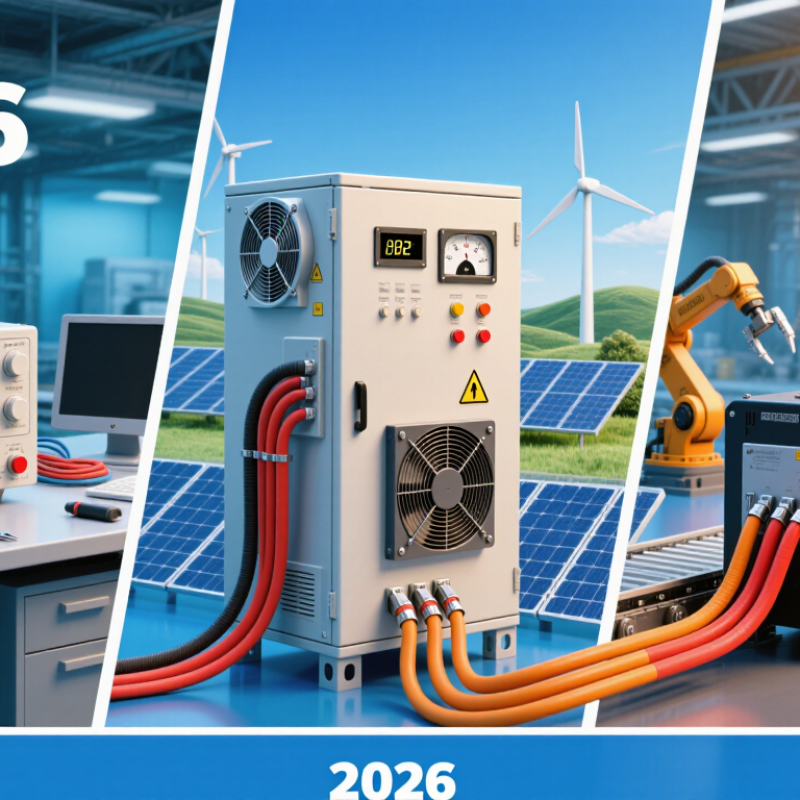
What Are the Top Three Phase AC Power Sources in 2026

Three-Phase AC Power: Definition and Key Characteristics

Three-phase AC is an electrical system that carries power through three alternating voltages. Each waveform shares the same frequency and usually has equal voltage. Its peak arrives one-third of a cycle after the previous phase. This 120-degree spacing creates a more continuous transfer of power. On an oscilloscope, the three smooth curves appear evenly offset across the screen. No single phase carries the whole story. Not quite.

In a balanced system, phase currents are also evenly distributed. This helps motors produce steady torque and reduces power pulsation compared with single-phase operation. Line-to-line voltage is measured between two conductors; phase voltage is measured across one phase. For a balanced load, real power can be estimated as the square root of three times line voltage, line current, and power factor. A neutral conductor may be used, depending on the connection and load. Real installations can drift from ideal balance. Uneven equipment use can change current readings, so check measurements rather than trusting a neat diagram.

Criteria for Comparing Three-Phase AC Power Sources in 2026

Comparing three-phase AC power sources in 2026 means matching the source to the actual load, not just comparing its rated kilowatts. The utility grid is often practical for steady, continuous demand. Engine-driven generators can support sites with limited grid access, while programmable AC sources suit controlled testing. Different jobs, different trade-offs. Check rated voltage, frequency range, phase balance, and continuous output before comparing purchase or operating costs.

Power quality matters at the equipment terminals. Measure voltage and frequency under changing loads, not only at idle. A motor starting beside a sensitive control cabinet can reveal voltage dips or waveform distortion that a nameplate will not show. Ask for test data, overload behavior, and protection details. Small imbalances matter. They can increase motor heating and shorten component life. Still, one clean test result may not reflect every site condition.

Include efficiency, noise, maintenance, and service access in the comparison. For generators, estimate fuel use at the load you expect, since light-load operation can change the economics. For inverters and test sources, examine cooling needs and response to sudden load steps. Confirm that alarms, isolation, and emergency shutdown are clearly documented. A practical trial with representative equipment is useful; it may also expose assumptions that looked sound on paper.

Utility Grid Supply: The Main Source of Three-Phase AC Power

For many commercial and industrial buildings, the utility grid is the main source of three-phase AC power. Three alternating voltages reach their peaks at different times, typically separated by 120 degrees. This arrangement delivers steady power to motors, pumps, compressors, and larger heating systems. At a facility, the supply may pass through a nearby substation and a service transformer before reaching the main switchboard. The transformer adjusts voltage to suit the building’s electrical system. Exact voltages and connection practices vary by region and site.

A maintenance technician might check a switchboard meter during a routine inspection, comparing phase voltages and looking for signs of imbalance. Unequal loading can cause motors to run hotter or vibrate more than expected. Small clues matter. A warm cable connection or an unfamiliar hum deserves attention, though neither proves a fault on its own. Grid supply is generally dependable, but storms, equipment failures, and local demand can interrupt it. That assumption can be wrong. Facility operators should review their actual supply conditions and protection settings with qualified electrical professionals, rather than relying on a generic voltage figure or a single observation.

Utility Grid Supply: Three-Phase AC Waveforms

A typical North American utility service is shown: three balanced phase-to-neutral voltages, each at 120 V RMS and 60 Hz, separated by 120° electrical. The waveform peak is approximately 170 V.

The three phases together provide continuous power transfer. In a typical 120/208 V wye system, the line-to-line voltage is approximately 208 V RMS.

Generator Sets: Independent Three-Phase AC Generation

What Are the Top Three Phase AC Power Sources in 2026
Generator Sets: Independent Three-Phase AC Generation

Generator sets provide independent three-phase AC power when utility service is unavailable or unreliable. An engine turns an alternator, producing three voltage waveforms spaced 120 degrees apart. This arrangement can run equipment such as pumps, air compressors, and workshop motors. It can also supply single-phase circuits when the system is designed for them. Real loads vary. A set’s usable output depends on its rated capacity, operating conditions, and how evenly loads are distributed across the phases.

Tips: Compare both kW and kVA ratings with the equipment’s needs. Allow for motor-starting surges, which can briefly exceed normal running demand. Check voltage and frequency under load, and keep fuel, ventilation, and routine maintenance in the plan.

A generator set offers control over where power is available, but it requires careful setup. An undersized unit may struggle when several motors start together. An oversized unit may operate inefficiently at light loads. Measure actual demand where possible, including startup behavior, rather than relying only on nameplate totals. Use appropriately rated connection and transfer equipment, and have installation and commissioning checked by a qualified professional. Monitoring readings over time can reveal changes in load or performance. Small details matter. A forgotten seasonal load can change the sizing decision.

What Are the Top Three Phase AC Power Sources in 2026? Generator Sets for Independent Three-Phase AC Generation

Generator Set Type Typical Three-Phase Capacity Common AC Output Key Advantages Important Considerations Typical Applications
Diesel generator set Small units commonly start around 5–10 kW; industrial sets can reach several megawatts. Often configured for 400/230 V at 50 Hz or 480/277 V at 60 Hz. Exact voltage and frequency depend on the alternator and configuration. Well suited to sustained loads, high starting demands, and locations without a gas supply. A broad range of output sizes is available. Requires on-site fuel storage and planned fuel management. Exhaust emissions, noise, maintenance, and local permitting requirements must be considered. Construction sites, industrial facilities, data centers, hospitals, and standby or prime-power installations.
Natural-gas generator set Commonly available from tens of kilowatts to multi-megawatt installations; available capacity depends on the model and gas supply. Common configurations include 400/230 V at 50 Hz and 480/277 V at 60 Hz. Can use a piped fuel supply, reducing the need for routine liquid-fuel deliveries and on-site diesel storage. Suitable for standby and continuous-duty designs. Operation depends on adequate gas pressure and supply continuity. Output can be affected by fuel quality, altitude, temperature, and engine configuration. Commercial buildings, campuses, combined heat and power systems, and sites with reliable natural-gas service.
Propane (LPG) generator set Small and medium-sized three-phase units are commonly available; larger capacities depend on the equipment and fuel-storage design. Typically configurable for standard three-phase systems, including 400/230 V at 50 Hz or 480/277 V at 60 Hz. Stored fuel can support sites without a gas pipeline. Propane can be stored for extended periods in properly maintained, compliant tanks. Tank capacity, vaporization rate, ambient temperature, refueling logistics, and local storage rules affect usable output and runtime. Remote facilities, farms, backup-power installations, and locations where propane storage is practical.

Note: Capacity ranges are indicative, not guaranteed specifications or a market ranking. Confirm rated output, voltage, frequency, duty rating, fuel requirements, and applicable emissions rules with the generator-set supplier for the intended installation.

Inverters and UPS Systems: Controlled Three-Phase AC Supply

Three-phase inverters and uninterruptible power supply systems provide controlled AC when equipment needs stable voltage and frequency. In an online double-conversion UPS, incoming AC is rectified to DC, then an inverter rebuilds the output waveform. Batteries can support the DC link during an outage. The result is a managed supply for sensitive loads, not merely a backup socket.

That control matters. Motors, pumps, and data-center equipment can react poorly to voltage dips or phase imbalance. Engineers should check load balance, harmonic limits, bypass behavior, and battery runtime against real operating conditions. A UPS may look adequately sized on paper, yet fail to cover a sharp startup surge. Details matter.

The Uptime Institute’s 2024 Global Data Center Survey reported an average data-center PUE of 1.58 for 2023. PUE measures facility energy overhead, not UPS efficiency, so it cannot prove that one power design performs better. Still, it shows why conversion losses deserve attention. Specify efficiency across likely load levels, and test transfer behavior with the actual load. One caveat: batteries age, and operating conditions rarely stay perfect.

FAQS

What should I compare when choosing a three-phase AC power source in 2026?

Match the source to the actual load. Check rated voltage, frequency range, phase balance, and continuous output. Kilowatts alone are not enough.

When is utility power a practical choice?

The utility grid often suits steady, continuous demand. Check how voltage and frequency behave under changing loads, not only at idle.

When might a generator set be useful?

A generator can supply power where grid access is limited or unreliable. It can run pumps, air compressors, and workshop motors. Fuel and maintenance need planning.

How should I size a generator for motor loads?

Compare both kW and kVA ratings with equipment needs. Allow for brief starting surges, especially when several motors may start together. Nameplate totals can mislead.

Why does phase balance matter?

Uneven loads can increase motor heating and shorten component life. Check how single-phase circuits are distributed across the phases. Small imbalances matter.

What power-quality checks are useful?

Measure voltage and frequency during changing loads. A motor starting beside a control cabinet may reveal dips or waveform distortion. Idle readings may miss them.

What costs and operating details should I consider?

Compare efficiency, noise, maintenance, and service access. Estimate generator fuel use at the expected load. Light-load operation can change the economics.

How can I check whether a source will suit my site?

Request test data, overload behavior, and protection details. Try representative equipment under realistic conditions. One clean test may not tell the whole story.

Conclusion

Three Phase AC Power Sources are essential wherever equipment needs a steady supply of three-phase electricity. In 2026, the main options are utility grid supply, generator sets, and inverters or uninterruptible power supply systems. Each provides power in a different way, and the best choice depends on factors such as availability, reliability, capacity, operating cost, and the need for backup or power conditioning.

The utility grid is generally the primary source for homes, facilities, and businesses with a suitable connection. Generator sets can provide independent power when grid service is unavailable or when additional resilience is needed. Inverters and UPS systems offer a controlled supply, helping support sensitive equipment and maintain power during interruptions. Comparing these options by load requirements, runtime, installation needs, and continuity goals helps users select a practical three-phase solution for their application.

Amelia

Amelia

Amelia is a highly skilled marketing professional with a strong understanding of the company’s products, customers, and industry landscape. With a thoughtful, research-driven approach, she transforms complex product information into clear, practical, and engaging content that helps readers make......