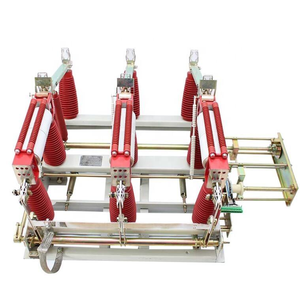

Explore our premium lineup of high-precision AC/DC load banks, solid-state frequency converters, and high-voltage vacuum circuit breakers optimized for international compliance and extreme operational durability.
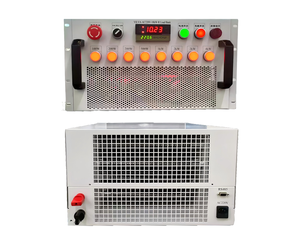
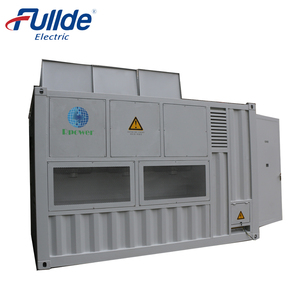
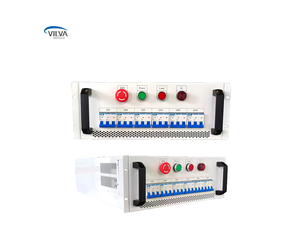
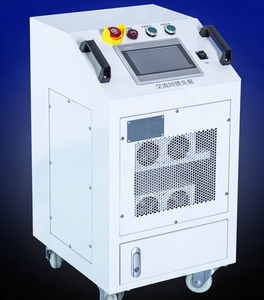
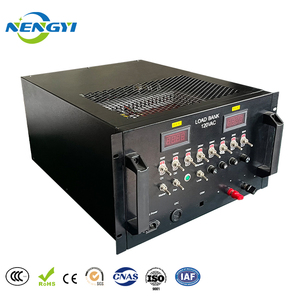
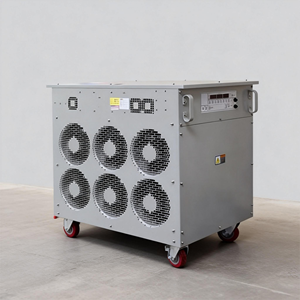
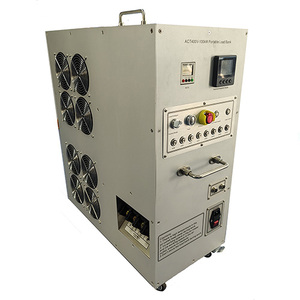
Why leading industrial manufacturers, defense contractors, and testing laboratories choose our CE-certified power conversion ecosystem.
Founded on over two decades of engineering design excellence (since 2003), our solid-state frequency converters eliminate mechanical wear associated with traditional rotary converters. Utilizing advanced IGBT pulse-width modulation (PWM), our systems deliver instantaneous dynamic response and pristine voltage regulation under non-linear loads.
Every frequency converter and AC/DC load bank undergoes strict compliance verification against European Union directives. Certified under the Low Voltage Directive (LVD 2014/35/EU) and Electromagnetic Compatibility (EMC Directive 2014/30/EU), our equipment fulfills EN 61000-6-2 (Industrial Immunity) and EN 61000-6-4 (Industrial Emissions) criteria.
Backed by an expansive network of independent sales representatives, field application engineers, and authorized regional service centers across North America, Europe, and Asia-Pacific. We provide on-site commissioning, factory acceptance testing (FAT), and rapid spare parts dispatch to prevent operational downtime.
Selecting an industrial-grade frequency converter supplier requires deep scrutiny of internal electrical topologies, galvanic isolation design, and electromagnetic interference (EMI) mitigation techniques. In global export environments, utility grid standards vary dramatically: 50Hz grid utilities dominate Europe, Asia, and South America, while 60Hz grids prevail in North America. Furthermore, military, aerospace, and naval electronics demand specialized 400Hz and 28VDC power supply architectures.
Modern electrical engineering overwhelmingly favors Solid-State Double-Conversion Topology. Incoming AC power (whether 50Hz or 60Hz) is first rectified into a regulated DC bus voltage. High-speed Insulated Gate Bipolar Transistors (IGBTs) then invert the DC energy back into a synthesized AC pure sine wave at the required target frequency (e.g., 50Hz, 60Hz, or 400Hz).
A legitimate CE mark signifies rigorous compliance with European safety and electromagnetic standards. Procurement officers must demand complete Technical Construction Files (TCF) validating compliance with:
| Standard / Directive | Scope & Technical Requirements | Engineering Impact on Procurement |
|---|---|---|
| LVD 2014/35/EU (EN 62040-1 / EN 61010-1) | Electrical insulation clearance, creeping distances, shock protection, and thermal runaway prevention. | Ensures operator safety, prevents electrical fires, and guarantees high dielectric withstand voltages. |
| EMC Directive 2014/30/EU (EN 61000-6-4) | Limits conducted and radiated electromagnetic emissions generated by high-frequency IGBT switching. | Prevents radio frequency interference (RFI) with nearby SCADA systems, telecommunications, and laboratory instrumentation. |
| EN 61000-6-2 (Industrial Immunity) | Mandates immunity against electrostatic discharge (ESD), surge transients, and voltage sags. | Guarantees continuous, uninterrupted frequency conversion even in harsh industrial environments prone to heavy grid disturbances. |
| IEC 60068-2 Environmental Testing | Vibration, shock, and thermal endurance profiling across extended operational temperatures (-10°C to +50°C). | Validates structural reliability for mobile military deployment, containerized test cells, and tropical maritime installations. |
Key market shifts driving next-generation power equipment selection for procurement managers, facility planners, and system integrators.
The transition from traditional Silicon IGBTs to Silicon Carbide (SiC) MOSFETs is accelerating. SiC devices allow switching frequencies up to 50 kHz+, drastically downsizing passive filter components (inductors and capacitors), reducing cabinet weight by 35%, and driving conversion efficiency above 96%.
Forward-thinking enterprises are replacing passive resistive burn-in load banks with Regenerative AC & DC Load Systems. During long-duration endurance testing of variable frequency drives (VFDs) and EV battery packs, regenerative units feed up to 93% of absorbed energy back into the local facility grid, yielding massive carbon footprint reductions and fast ROI.
Modern production facilities require frequency converters that do more than output fixed 50/60Hz voltage. High-end units now integrate Hardware-in-the-Loop (HIL) software modules capable of simulating grid disturbances, frequency sags, phase imbalances, voltage harmonics, and renewable solar/wind intermittency.
How modern frequency converters are evolving to meet specialized sector challenges in aviation, EV manufacturing, data centers, and renewable energy.
Shift towards 400Hz Fixed-Power Ground Support (GPUs) and 28.5VDC power systems. Modern solid-state converters provide precise 115V/200V 400Hz power for avionics radar, flight control testing, and hangar maintenance without noisy diesel generators.
High-voltage battery pack discharge and powertrain inverter burn-in demand dual AC/DC modular loads. Modern converters integrate with SCADA networks via CANbus, Ethernet/Modbus TCP, and RS485 for real-time telemetry.
Commissioning hyper-scale data centers requires rigorous step-load validation. Portable and high-capacity 1000kW+ load banks paired with 50Hz/60Hz frequency converters ensure seamless transition during utility power grid dropouts.
Commercial ships operating on 60Hz marine grids require shore-to-ship power conversion (Cold Ironing) when docked in 50Hz international ports. CE certified heavy-duty converters reduce harbor emissions significantly.
Essential answers for electrical engineers, quality assurance managers, and global sourcing teams evaluating CE certified frequency converters.
While both alter AC frequency, a Variable Frequency Drive (VFD) is specifically engineered to control electric motor speed, outputting a raw PWM voltage waveform that relies on motor inductance to smooth out current. In contrast, a Static Frequency Converter produces a high-precision, low-distortion pure sine wave voltage (THD < 1.5%) with strict voltage regulation. It is designed to act as a utility grid simulator to power complete electronic products, facility bays, or sensitive lab instruments, regardless of load power factor.
Inductive devices (such as compressors, electric motors, transformers, and pumps) exhibit high starting inrush currents—often 3 to 7 times their rated full-load RMS current. When sizing a solid-state frequency converter:
The CE Mark guarantees that power equipment complies with European safety, environmental, and electromagnetic compatibility standards. Without verified LVD (Low Voltage Directive) and EMC compliance, equipment cannot legally enter the European Economic Area (EEA). Furthermore, global buyers outside Europe use CE certification as a trusted benchmark for superior insulation safety, component quality, and low electromagnetic noise generation.
Yes. Our industrial three-phase frequency converters feature independent three-phase inverter control circuits. This allows for 100% phase-unbalanced load operation without shifting phase angles or causing voltage drift, maintaining stable 120° phase separation across L1, L2, and L3 under all load distributions.
Comprehensive protection logic includes: Input Over/Under Voltage, Output Short Circuit Protection, Output Overload Limiters, Over-Temperature Thermal Cutoffs (IGBT heatsink monitoring), Phase Loss Detection, Reverse Power Protection, and Galvanic Over-Voltage Surge Suppressors (SPD).
Before issuing a RFP/RFQ for commercial power converters, ensure your supplier satisfies all seven critical engineering metrics:
Need custom voltage ranges (up to 600Vln / 1039Vll), specialized 400Hz avionics outputs, or high-capacity parallel load bank systems? Our engineering team is ready to configure your precise solution.