
Explore our export-grade line of AC resistive/inductive load banks, regenerative testing cabinets, and vacuum circuit breakers engineered for data center, microgrid, generator, and UPS validation.
In the rapidly evolving global electrical infrastructure landscape, China's leading AC load manufacturers have transitioned from low-cost assembly hubs into global technology benchmark providers. Modern mission-critical facilities—including hyperscale AI data centers, renewable microgrids, marine vessel power plants, and high-voltage substation networks—demand unparalleled precision, dynamic transient responsiveness, and operational efficiency during load testing and commissioning.
As power conversion topologies transition toward wide-bandgap semiconductors (Silicon Carbide and Gallium Nitride), the expectations placed on AC artificial load testing instruments have amplified. Chinese OEMs lead the industry in implementing advanced solid-state load control, digital pulse-width modulation (PWM) feedback, and grid-tied energy regeneration systems. By procuring high-power AC load banks directly from top-tier Chinese manufacturing factories, global EPC contractors, data center operators, and power utility enterprises achieve significant total cost of ownership (TCO) reductions alongside state-of-the-art technological performance.
Selecting an optimal AC load supplier involves evaluating capital investment, heat dissipation thermal overhead, footprint efficiency, and energy recycling capabilities. Regenerative AC loads engineered in top Chinese facilities allow up to 92% of tested electrical energy to be fed back into the internal plant grid, converting load-testing operations from a major energy expense into a sustainable, cost-neutral procedure.
Understanding the core technical taxonomy of AC artificial load banks is essential for procurement specialists and power system engineers to properly specify hardware matching their precise test protocols.
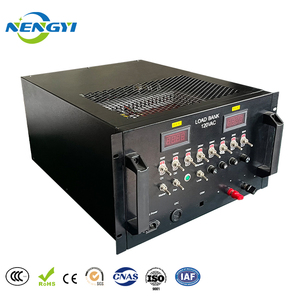
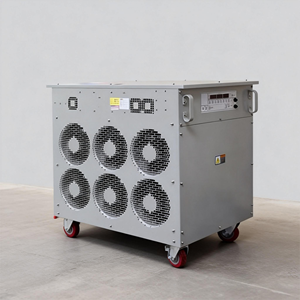
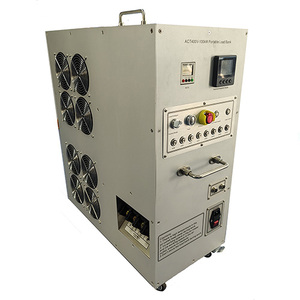
Resistive load banks utilize advanced alloy heating elements (such as stainless steel alloy resistors enclosed in nickel-chromium sheaths) to simulate real-power electrical loads (kW). They are primarily deployed for prime mover diesel generator commissioning, UPS battery capacity discharge tests, and server rack emulation in data center rack validation. Models ranging from portable 1kW dummy loads to massive multi-megawatt (1000kW – 1500kW) trailer-mounted racks provide discrete power stepping with forced-air cooling.
To test commercial and industrial power distribution systems under realistic operational stresses, combined RLC (Resistive-Inductive-Capacitive) load banks are required. By incorporating copper-wound iron-core reactors and high-end power capacitors, these load banks allow continuous adjustment of power factor (leading or lagging from 0.0 to 1.0). This capability is crucial for verifying generator voltage regulation response, transformer saturation, and inverter anti-islanding protection (IEEE 1547 / UL 1741 standards).
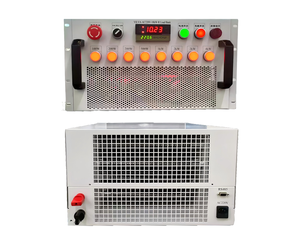
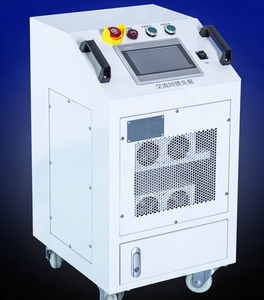
Representing the pinnacle of modern power electronics, regenerative electronic AC loads replace passive resistive elements with active IGBT or SiC inverter bridges. Instead of dissipating energy as ambient heat, the load absorbs AC power, converts it to an internal DC bus, and synchronizes the energy back into the local utility grid with under 3% Total Harmonic Distortion (THD). This technology is essential for burn-in testing of PV inverters, energy storage system (ESS) power conversion systems (PCS), and EV charging stations.
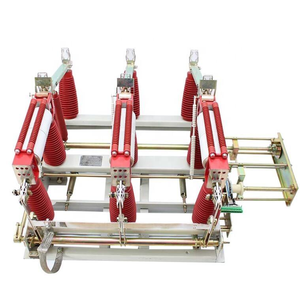
In high-voltage grid validation, equipment such as the CNXE FZRN21-40.5D/T630-31.5 Outdoor High-Voltage Vacuum Load Switch plays a critical role. Designed for three-phase AC 60Hz/50Hz power distribution systems rated up to 40.5kV, these vacuum switch units provide reliable load breaking, short-circuit current protection, and isolation capabilities, guaranteeing safe operation during extreme load-testing transient events.
| Load Category | Primary Voltage Range | Power Factor Range | Key Application Scenario | Energy Recovery |
|---|---|---|---|---|
| Portable Resistive Load | 120V / 220V / 380V AC | 1.0 (Fixed) | Data Center Server Rack Validation & UPS Testing | No (Dissipated as Heat) |
| High-Power RLC Load Bank | 380V – 690V / 10kV AC | 0.2 – 1.0 (Lagging/Leading) | Turbine & Diesel Generator Set Acceptance Tests | No (Forced Air Cooled) |
| Regenerative Electronic Load | 115V – 600V AC (Phase) | Programmable (-1.0 to +1.0) | PV Inverter, EV Battery Charger & ESS PCS Aging | Yes (Up to 92% Efficiency) |
| HV Vacuum Switch Circuit Breaker | Up to 40.5kV AC | System Dependent | Outdoor Substation & Grid Protection Isolation | N/A (Switching Gear) |
Procurement directors and engineering executives must anticipate technological shifts when making capital investments in testing infrastructure. Over the next decade, four key macro-trends will dominate the AC load bank manufacturing ecosystem:
Manual load stepping via mechanical switches is rapidly being replaced by fully automated test equipment (ATE) environments. Modern Chinese factories equip AC load banks with high-speed digital communication interfaces (Modbus TCP, CANbus, Ethernet/IP, and SCADA protocols). Integrated microprocessors allow automated script execution, dynamic waveform transient playback, microsecond-level data logging, and cloud-connected remote diagnostics.
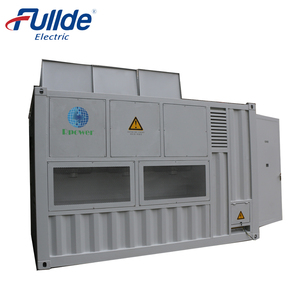
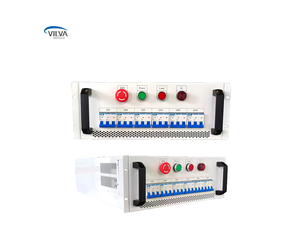
Space constraints in testing laboratories and urban data centers have accelerated demand for ultra-compact modular load systems. Standardized rack-mountable chassis (such as 3U/6U power modules) allow engineers to parallel power units seamlessly, scaling test capacity from 10kW bench setups up to multi-megawatt containerized system configurations without redesigning busbar structures.
With international regulatory frameworks enforcing strict Scope 1 and Scope 2 emissions limits, energy-wasting resistive load banks are being scrutinized. Sourcing managers are mandated to prioritize grid-tied regenerative AC load systems that recapture kinetic and electrical energy during prolonged endurance tests, aligning enterprise operations with global Net-Zero carbon targets.
The convergence of microgrids, solar PV installations, battery energy storage systems (BESS), and electric vehicle mega-charging stations requires hybrid testing solutions. Enterprise procurement is shifting toward flexible platforms capable of switching dynamically between programmable AC loads, DC loads, AC sources, and precision power analyzers within a unified master control interface.
China's power equipment manufacturing sector has undergone a profound industrial upgrade over the past two decades. Supported by robust supply chain clusters in Guangdong, Zhejiang, and Jiangsu provinces, leading Chinese manufacturers possess unmatched advantages in raw material sourcing, specialized magnetic component fabrication, power semiconductor integration, and precision sheet-metal enclosure assembly.
Key manufacturing breakthroughs include:
Partnering with our factory guarantees direct access to tier-one power testing engineering expertise, customizable software firmware, and robust quality management systems.
Fully compliant with EN 61010-1 safety and EN 61326-1 EMC international guidelines.
Eliminate intermediary markups with custom OEM configurations built to project specs.
Micro-step power resolution down to 0.1kW with programmable slew rates.
24/7 technical hotline, remote commissioning assistance, and overseas spare parts supply.
Our manufacturing facility operates in full accordance with ISO 9001:2015 Quality Management Systems, ISO 14001:2015 Environmental Management Standards, and ISO 45001 Occupational Health and Safety Protocols. Every AC load bank shipped overseas includes comprehensive factory calibration reports, circuit schematics, interface software drivers, and user operations manuals.
Below are detailed responses to the most critical technical and logistical queries submitted by international procurement teams and power utility engineers.
Consult with our technical engineering team today to custom-configure your AC load bank, regenerative test system, or high-voltage switchgear. Gain direct access to detailed engineering drawings, software APIs, and factory export pricing.
Get Catalog