Executive Whitepaper: Strategic Engineering Advances in China's Aviation Power Manufacturing Sector
As the global aerospace and defense industries accelerate modernization toward the More-Electric Aircraft (MEA) architecture, the demand for precision-engineered ground power systems, solid-state frequency converters, dynamic load banks, and high-voltage vacuum isolation equipment has surged. China has emerged as a powerhouse manufacturing and export hub for advanced power testing infrastructure, bridging the gap between rigorous compliance standards (such as MIL-STD-704F, ISO 6858, and EN 2282) and cost-effective, scalable production.
Aviation power supply systems differ fundamentally from standard industrial grids. Aircraft electrical infrastructure relies on high-frequency power—typically 400 Hz AC (115V/200V phase/line) or 28V DC—to minimize magnetic core weight and maximize power density within airframes. Consequently, ground support equipment (GSE), testing facilities, and maintenance facilities require specialized frequency conversion and dummy load verification apparatus to ensure zero-fail reliability before operational deployment.
400Hz Avionics Simulation
Ultra-stable frequency converters providing low THD (< 2%) output to replicate worldwide aircraft power buses under real duty cycles.
Regenerative Load Technology
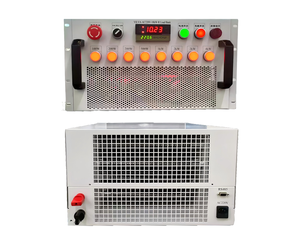
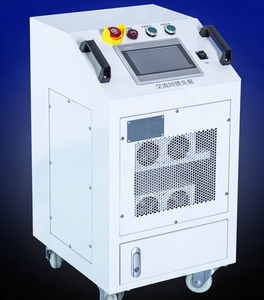
Energy-saving AC load banks feeding back up to 92% of dissipated testing energy to the local facility grid during burn-in cycles.
High-Voltage Protection
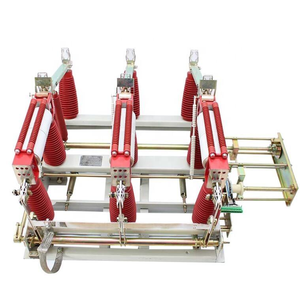
Vacuum circuit breakers engineered for up to 40.5kV system isolation, ensuring arc suppression and grid protection during transient faults.
Architectural Breakdown: Power Generation, Conversion & Load Testing
In modern commercial and military aviation support, testing involves three distinct functional layers: Source Power Generation/Conversion, Distribution & Circuit Protection, and Absorptive Load Simulation. Chinese manufacturers have optimized each tier to deliver seamless interoperability.
Programmable AC & DC Sources: Utilizing IGBT pulse-width modulation (PWM) topologies, these sources convert standard 50Hz/60Hz grid power into variable-voltage, variable-frequency outputs (up to 600V line-to-neutral, frequencies spanning 45Hz to 500Hz). This allows simulation of harsh power anomalies, such as phase unbalance, voltage sags, and frequency transients.
High-Voltage Vacuum Switching (CNXE Series): Outdoor vacuum load switches (e.g., FZRN21-40.5D) integrate high dielectric vacuum interrupters capable of handling up to 630A continuous current and 31.5kA short-circuit breaking. These are essential for primary substations feeding large-scale hangar complexes and aerospace testing facilities.
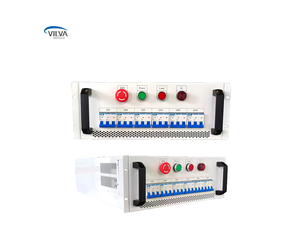
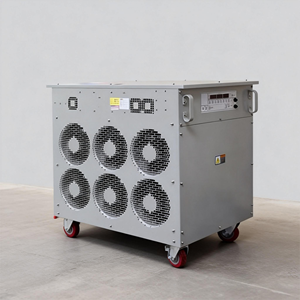
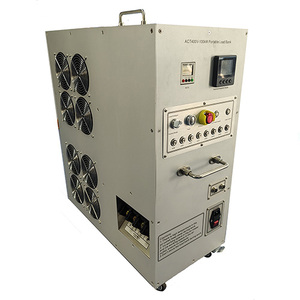
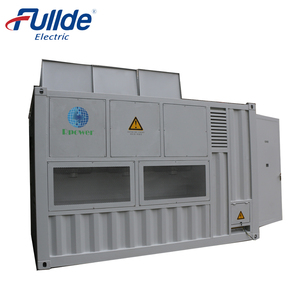
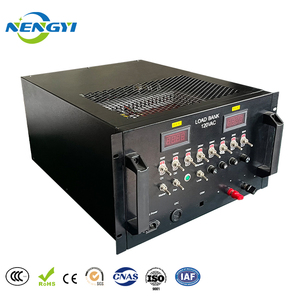
Multi-kW Resistive & Reactive Load Banks: Ranging from 1kW portable units for on-site maintenance to 1500kW high-capacity containerized systems. These load banks apply controlled electrical loads to test airborne generators, diesel ground power units (GPUs), and uninterruptible power supplies (UPS) under full capacity without risk to operational aircraft.
Equipment Category
Primary Voltage Range
Frequency / Slew Capabilities
Core Application Domain
400Hz Frequency Converters
115V / 200V / 400V AC
400 Hz ± 0.1 Hz (Fixed/Adjustable)
Aircraft Hangar Maintenance, Avionics R&D
Regenerative AC Load Banks
120V to 690V AC (3-Phase)
Energy Recovery > 90%, Dynamic Stepping
Factory Aging Test, Power Supply Burn-In
Portable Resistive Load Banks
115V / 220V / 380V / 440V
50Hz / 60Hz / 400Hz Neutral Support
Data Center UPS Test, Mobile Field Support
Outdoor Vacuum Breakers
up to 40.5 kV
31.5 kA Breaking Capacity / 60Hz
Substation High-Voltage Circuit Protection
Global Procurement & Technology Trends in Aviation Power (2025–2035)
International buyers and EPC contractors sourcing aviation power equipment from China are operating in an environment shaped by rapid technological shifts. Understanding these emerging trends is vital for long-term capital equipment planning:
1. Transition to Hybrid-Electric & 800V High-Voltage DC Architecture
Commercial aerospace is witnessing a transition toward higher DC bus voltages. While 28V DC has long been the standard for smaller aircraft, next-generation eVTOL (electric Vertical Take-Off and Landing) craft and hybrid airliner designs utilize 270V DC and up to 800V DC power architectures to dramatically reduce cable weight. Consequently, procurement strategies are shifting toward dual-output AC/DC power sources and high-voltage DC electronic loads capable of handling up to 1000V DC continuously.
2. Smart Digital Telemetry & Automated Test Equipment (ATE) Integration
Manual load testing and analog meter logging are obsolete in modern aerospace manufacturing. Procurement specifications now mandate standard inclusion of GPIB, Ethernet (Modbus-TCP), USB, and RS485 communication protocols. Modern programmable load banks feature automated sequencing firmware, allowing engineers to program standardized battery discharge tests, generator step-load response, and thermal limit evaluations with single-click telemetry output for ISO/AS9100 quality compliance.
3. High Energy-Density & Forced-Air Heat Dissipation Optimization
Footprint efficiency is paramount in hangar and lab environments. Chinese manufacturers have pioneered ultra-compact load bank designs utilizing nickel-chromium (NiCr) alloy resistor elements featuring low temperature coefficients of resistance (TCR). Coupled with intelligent, forced-air cooling fans featuring dynamic speed control based on internal temperature sensors, modern 100kW load banks now occupy less than half the floor area compared to legacy systems manufactured a decade ago.
With corporate ESG (Environmental, Social, and Governance) targets tightening globally, testing facilities can no longer afford to waste megawatt-hours of power as pure heat during 100-hour equipment burn-in trials. Regenerative load banks—which convert load energy back into clean AC power synchronized with the facility grid—have evolved from a premium option to a procurement necessity, yielding payback periods under 18 months in continuous production settings.
Need Customized Aviation Power Specifications?
Consult with our engineering team for customized voltage ranges, 400Hz ground power units, or high-power regenerative load bank configurations. Fast export clearance & worldwide technical support.
Enterprise Manufacturing Strengths & Global Compliance Framework
Rooted in over two decades of electrical power instrumentation development since 2003, our manufacturing consortium stands at the forefront of power testing innovations. Our facilities integrate complete vertically integrated production lines—from precision sheet metal enclosure fabrication and PCB surface-mount assembly (SMT) to high-voltage isolation testing and environmental stress screening.
CE & ISO Certified Quality
Rigorous quality control frameworks compliant with ISO 9001, certified by CE markings for electrical safety and electromagnetic compatibility (EMC).
Worldwide Export Support
Dedicated sales engineering hubs, international shipping logistics, and custom packing standards ensuring safe transit to over 80 countries worldwide.
Custom Engineering (OEM/ODM)
Tailored firmware algorithms, customizable step-load resolution (down to 100W increments), dynamic environmental protection, and multi-cabinet master-slave configuration.
Every system leaving our manufacturing plant undergoes a comprehensive 72-hour continuous burn-in procedure under full load capacity, accompanied by factory calibration certificates traceable to international measurement standards. Whether supplying ground support maintenance tools for civil airports or complex automated test bays for defense contractors, our commitment to technical precision and operational reliability remains uncompromised.
Technical clarity and procurement guidelines for global engineering teams and sourcing managers.
What voltage and frequency ranges do your aviation AC power sources support?
Our programmable AC power sources cover output voltages up to 600V line-to-neutral (1039V line-to-line) with adjustable frequency ranges spanning 45 Hz to 500 Hz. This enables precise replication of standard 50Hz/60Hz commercial grids, 400Hz avionics power systems (MIL-STD-704F), and variable 360Hz–800Hz frequency aircraft buses. Capacity ranges from 1kW bench-top units up to 150 kVA parallelable cabinet installations.
How do your AC/DC electronic load banks support EV battery and PV inverter testing?
High-power series (such as our 5VPxC and 3C Series) provide up to 60 kW per single chassis with master/slave parallel capability up to 300 kW. They support input voltages up to 1000V DC and 350V AC. Firmware includes built-in battery discharge profiles (Constant Current, Constant Power, Constant Resistance, Constant Voltage), dynamic dynamic transient stepping, and dedicated test modes for UPS rating and PV inverter efficiency verification.
What is the technical advantage of a Regenerative Load Bank over traditional Resistive Load Banks?
Traditional resistive load banks dissipate 100% of tested electrical energy as thermal heat, requiring substantial cooling energy and creating facility thermal load. Regenerative load banks utilize an inverter bridge to return over 90% of absorbed electrical power back to the facility's local AC power grid with less than 3% total harmonic distortion (THD). This yields massive electricity cost savings, reduces cooling infrastructure demands, and aligns with green manufacturing guidelines.
Are your high-voltage circuit breakers (CNXE FZRN21 Series) suitable for harsh outdoor installations?
Yes. The CNXE FZRN21-40.5D outdoor high-voltage vacuum load switch circuit breaker is housed in an IP65-rated, weather-proof enclosure engineered to withstand ambient temperatures from -40°C to +40°C, high humidity, and coastal salt mist environments. It features vacuum arc-extinction technology with high dielectric strength and long mechanical life (over 10,000 operations).
What remote communication protocols and software GUIs are available for automated testing?
All programmable sources and electronic loads come standard with RS232 and RS485 interfaces, with optional GPIB (IEEE 488.2), USB, and Ethernet (LAN) modules. We provide standard SCPI command syntax sets for seamless LabVIEW, C#, or Python integration, along with complimentary Windows-based GUI software for real-time data logging, waveform rendering, and test sequence automation.
What lead times, warranties, and international after-sales services are offered?
Standard catalog load banks and sources are typically dispatched within 2 to 3 weeks, while custom-engineered containerized load systems require 4 to 6 weeks. All equipment carries a comprehensive 12-month factory warranty (extendable to 36 months). Technical support is available 24/7 via remote diagnostics, with spare parts kits and authorized service representatives accessible across North America, Europe, the Middle East, and Asia-Pacific.
Ready to Upgrade Your Power Testing Infrastructure?
Download our complete technical catalog, request detailed CAD dimensional drawings, or speak directly with an application engineer today.