Sales & Engineering: +1 (866) 517-8400 [email protected]

China Top Battery Cycler Factories & Exporters

High-Precision Battery Test Systems, Regenerative Power Loads & Grid Simulation Infrastructure

Verified Industrial Fleet

Precision Battery Cyclers & High-Power Testing Equipment

Direct factory supply of high-voltage vacuum load switches, regenerative electronic loads, and custom dummy load banks for energy storage, data centers, and EV testing.
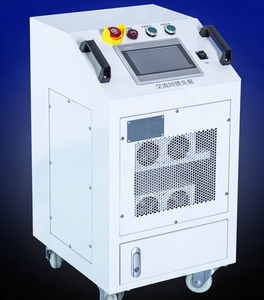
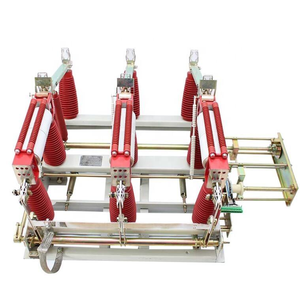
CNXE FZRN21-40.5D/T630-31.5 Outdoor High-voltage Vacuum Load Switch Circuit Breaker
CNXE FZRN21-40.5D/T630-31.5 Outdoor High-Voltage Vacuum Load Switch Circuit Breaker
Send an Inquiry
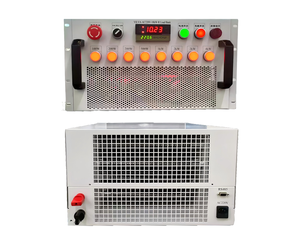
10KW Resistive Load Bank Indoor UPS Test Use
10KW Resistive Load Bank (Indoor) - UPS Test Use, 220V 50/60Hz Dummy Load
Send an Inquiry
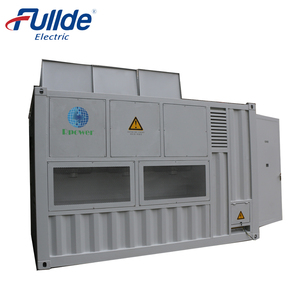
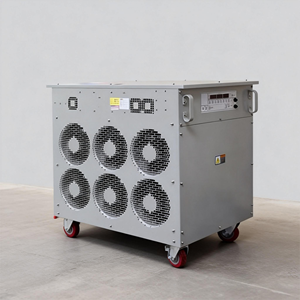
1000KW 3 Phase AC Load Bank
1000KW 3 Phase 440V/380V/220V AC Industrial Load Bank System
Send an Inquiry
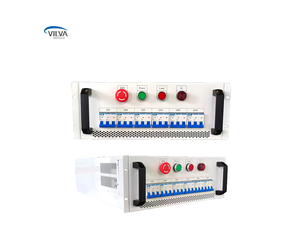
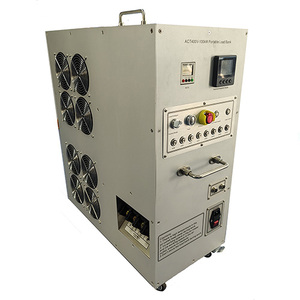
1KW Portable Resistive AC Load Bank
1KW Portable Resistive AC Load Bank - 380V Dummy Load for Data Center Testing
Send an Inquiry
Customizable AC Regenerative Load Bank
High Power Energy Saving Customizable AC Regenerative Load Bank with Communication Feedback
Send an Inquiry
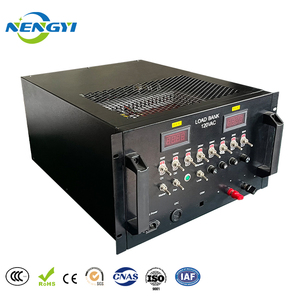
6kw 120vac Load Bank Data Center Test
6KW 120VAC Portable Load Bank for Data Center Rack Testing & Power Commissioning
Send an Inquiry
1500KW Factory Direct AC Load Bank CE Certified
1500KW Heavy Industrial CE Certified AC Load Bank 115V to 690V Multi-Voltage
Send an Inquiry
Portable 100kW AC Load Bank 380V Resistive Load
Portable 100kW AC Load Bank 380V Resistive Load For Generator & UPS Testing
Send an Inquiry
20+
Years R&D Excellence
95%+
Regenerative Efficiency
150 kVA
Max Cabinet Capacity
1000 Vdc
High Voltage Testing

Executive Summary: The Evolution of Battery Cycler Sourcing in China

The global shift toward electrification—spanning Electric Vehicles (EVs), grid-scale Energy Storage Systems (ESS), aerospace power conversion, and mission-critical data center infrastructure—has shifted battery testing from a routine quality check to an integrated strategic capability. Modern lithium-ion, solid-state, and sodium-ion chemistry dynamics require test protocols capable of simulating complex, microsecond-transient real-world duty cycles.

As the epicenter of global battery cell manufacturing, China’s industrial ecosystem has fostered a sophisticated tier of battery cycler manufacturers and exporters. Chinese factories no longer provide just passive resistive load boxes; they deliver energy-regenerative bi-directional DC battery cyclers, multi-channel cell formation systems, and high-voltage grid simulators engineered to international compliance frameworks including CE, IEC, IEEE, and UL standards.

Technical Information Gain: Advanced battery cyclers manufactured by leading Chinese OEMs now incorporate SiC (Silicon Carbide) power electronics. This design achieves energy feedback efficiencies exceeding 95%, drastically slashing operational electricity costs and thermal cooling overhead in large-scale test labs.

This technical whitepaper provides procurement directors, test bench managers, and OEM engineering leads with an exhaustive analysis of China's top battery cycler supply chain, key technical selection criteria, future technology trends, and enterprise qualification frameworks.

Technical Architecture of Modern Battery Cyclers & Load Systems

A battery cycler functions as a precision-controlled bi-directional power supply and electronic load. During the charge phase, the unit operates as a ultra-low ripple DC source; during the discharge phase, it acts as a programmable load, absorbing energy from the cell, module, or pack and returning clean AC power to the facility grid.

Core Subsystems & Performance Metrics

When evaluating high-capacity battery test equipment, procurement teams must analyze performance across four core architecture pillars:
  • High Slew Rate & Fast Response: Dynamic step responses under 1 millisecond enable realistic simulation of regenerative braking and rapid throttle acceleration in electric vehicle testing.
  • Wide Voltage & Current Range: Support for voltages up to 1000 Vdc per channel, catering to 800V EV architectures and high-density ESS containerized battery arrays.
  • Multi-Channel Synchronization: Parallel channel configuration allows seamless scaling from individual cell characterization (0-5V) to full module and pack validation.
  • Harmonic Distortion Control: Active Front End (AFE) technology keeps Total Harmonic Distortion (THD) under 3%, ensuring grid compliance during energy feedback.
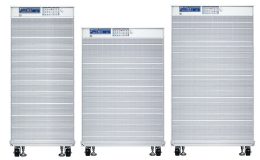
APS High Power Programmable DC Electronic Load Chassis

Comparative Technical Specifications Matrix

The table below summarizes standard technical specifications across primary battery cycler and electronic load tiers manufactured by top Chinese exporters:

System Category Voltage Range Power Scaling Regenerative Efficiency Typical Applications
Cell-Level Cyclers 0V – 6V DC 100W – 1.5kW / Ch N/A (Bench Top / Passive) Cell R&D, Coulombic Efficiency, Solid-State Research
Module Test Systems 10V – 100V DC 5kW – 30kW / Ch 90% – 93% Energy Feedback E-Bike Packs, Power Tool Battery Testing, Battery Management System (BMS) Calibration
High-Voltage Pack Cyclers 50V – 1000V DC 60kW – 500kW+ Parallel 94% – 96% Grid Feedback EV Battery Pack Validation, ESS Container Commissioning, Dynamic Drive-Cycle Simulation
AC/DC Hybrid Load Banks Up to 600Vac / 500Vdc 1kW – 1500kW Industrial Resistive / Regenerative Optional Data Center UPS Testing, High-Voltage Switchgear Commissioning, Generator Set Testing

Future Sourcing & Procurement Trends (2025–2030)

Strategic buyers evaluating Chinese manufacturing partners must align their procurement criteria with long-term technological shifts. Over the next decade, three key trends will redefine global battery cycler sourcing:

1. Transition to Wide-Bandgap Semiconductors (SiC & GaN)

Traditional Silicon-based IGBT cyclers are being rapidly replaced by Silicon Carbide (SiC) power switching devices. SiC architecture allows higher switching frequencies, smaller footprint transformers, reduced thermal dissipation, and response speeds down to tens of microseconds.

2. Hardware-in-the-Loop (HIL) & Digital Twin Integration

Procurement teams are prioritizing cyclers with native CAN-FD, EtherCAT, and Modbus TCP interfaces. This hardware compatibility enables direct integration with Real-Time Digital Simulators (RTDS) for advanced Battery Management System (BMS) testing and digital twin modeling.

3. Modular & Containerized Plug-and-Play Test Bays

To reduce facility commissioning timelines, buyers are turning away from fixed lab installations in favor of turnkey containerized test bays. These integrate climate chambers, high-power cyclers, liquid cooling loops, and safety isolation switchgear into standardized 20ft/40ft ISO footprints.

Industry Development Trends: Ultra-High Power & Multi-Physics Testing

The rapidly escalating energy density of next-generation batteries (targeting >400 Wh/kg at the cell level) requires testing infrastructure to evolve simultaneously across multiple engineering dimensions:
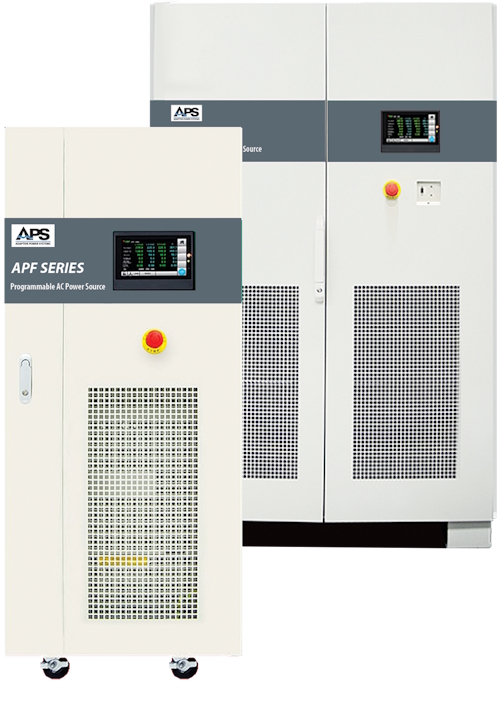
APS APF Series High Power Programmable AC Power Source Cabinets

Key Technological Vectors

  • Bi-directional Grid Emulation: Modern test facilities require AC sources that double as programmable grid simulators. These units replicate global utility voltage/frequency anomalies, 400 Hz avionics buses, and shipboard power grids.
  • Integrated Electrochemical Impedance Spectroscopy (EIS): Advanced battery cyclers now incorporate online EIS capabilities to track internal cell resistance changes over thousands of charge-discharge cycles without removing cells from the test rack.
  • Automated Safety & Fire Suppression Isolation: With thermal runaway risks present during high-C-rate testing, modern cyclers interface directly with environmental chamber safety relays, nitrogen purge systems, and emergency disconnect circuit breakers.

Enterprise Advantages & Manufacturing Excellence

Building on over two decades of power instrument engineering (dating back to 2003), leading Chinese exporters offer substantial institutional and technical advantages to international OEMs and test facilities:

20+ Years Expertise

Decades dedicated exclusively to high-power programmable AC/DC sources, electronic loads, and power analyzers.

CE & ISO Certified

Full international compliance with safety, electromagnetic compatibility (EMC), and ISO 9001 quality control processes.

Global Service Network

Independent representatives, technical distributors, and authorized service centers spanning North America, Europe, and Asia.

Turnkey Customization

Direct factory engineering support to tailor voltage envelopes, communication protocols, and physical cabinet dimensions.

Rigorous Factory Acceptance Testing (FAT)

Every battery cycler, load bank, and vacuum switch circuit breaker undergoes rigorous multi-stage burn-in testing prior to export shipment. Test reports include dynamic load step response logs, temperature rise curves under continuous full load, and insulation dielectric withstand verification.
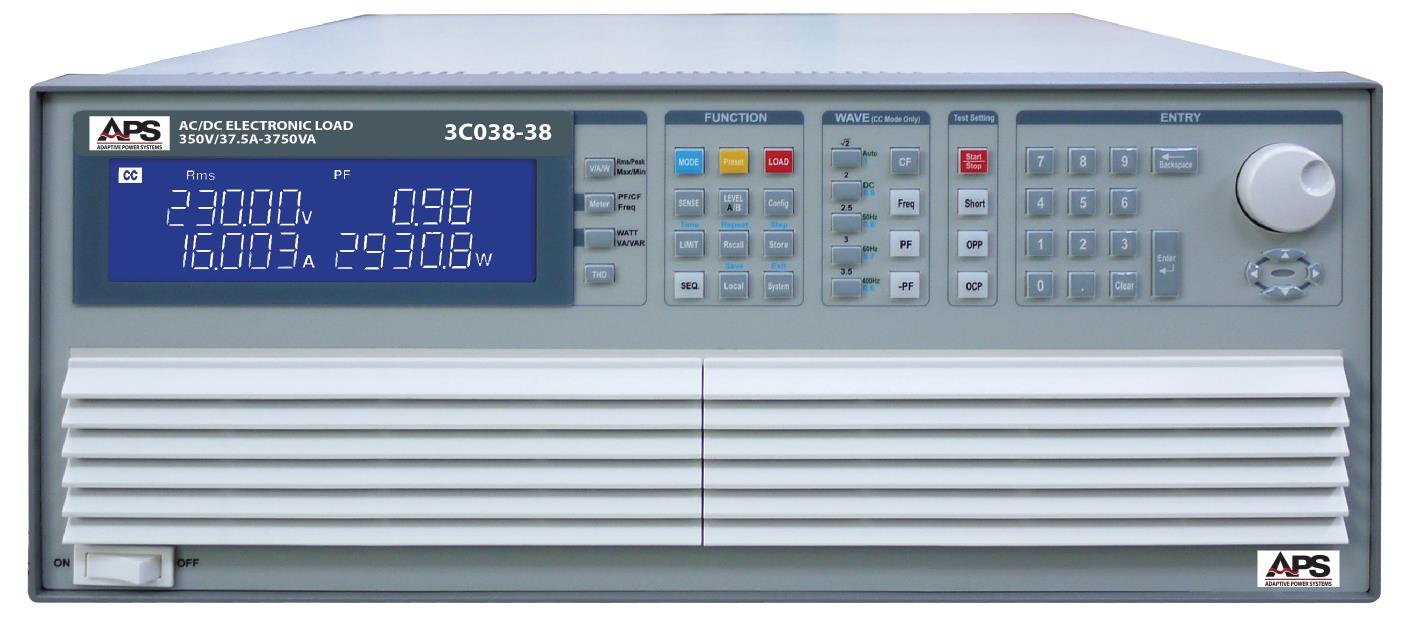
APS 3C Series Programmable AC and DC Electronic Load Front Panel

Procurement & Sourcing FAQ: Critical Buyer Insights

Answers to common technical, logistics, and compliance questions asked by global procurement teams when sourcing battery cyclers and power test equipment from China.

Q1 What output voltage and current ranges do your high-power battery cyclers and AC sources cover?
Our power equipment portfolio supports programmable AC output voltages up to 600V line-to-neutral (1039V line-to-line) and customizable DC voltage ranges up to 1000V DC. Single-cabinet capacities range from compact benchtop units up to 150 kVA / 60 kW modules, with master-slave paralleling capability to scale into multi-megawatt installations.
Q2 How does energy regeneration work in high-power battery discharge testing?
During discharge cycles, energy absorbed from the battery pack is converted back into clean 50Hz/60Hz AC electricity by an Active Front End (AFE) inverter. This energy is fed directly back into your facility’s main electrical grid with an efficiency of 94% to 96%, drastically reducing electricity bills and facility air-conditioning requirements compared to traditional resistive heat dissipation loads.
Q3 Are your load banks and battery test systems certified for deployment in North America and Europe?
Yes. All standard exported equipment holds CE certification, adhering to Low Voltage Directive (LVD) and Electromagnetic Compatibility (EMC) standards. On request, systems can be built to conform with UL 1973, IEEE 519 grid interconnect limits, and CSA standards for seamless local authority approval.
Q4 Can these battery cyclers execute drive-cycle profiles like FUDS, DST, and WLTP?
Absolutly. Our software control suite allows users to import standard CSV dynamic drive-cycle files (including FUDS, DST, US06, and WLTP profiles). The system's fast millisecond transient response ensures faithful tracking of steep current spikes and rapid charging/discharging switching.
Q5 What communication interfaces are integrated for automated test benches (ATE)?
Systems are equipped standard with Ethernet (LAN), RS485, and USB interfaces supporting standard SCPI and Modbus protocols. Optional CAN 2.0B, CAN-FD, EtherCAT, and GPIB interfaces are available for high-speed integration into automated factory test environments or LabVIEW control software.
Q6 What lead times and warranty terms are standard for OEM export orders?
Standard modular systems typically carry a manufacturing lead time of 3 to 4 weeks, while custom high-power multi-megawatt systems range from 6 to 8 weeks. All products include a standard 12-month factory warranty, extendable up to 36 months, supported by spare parts kits and global remote engineering support.

Request Technical Specifications & Factory Direct Quotations

Partner with a trusted China exporter for high-precision battery cyclers, regenerative electronic loads, and power conversion test infrastructure. Our application engineers are available to review your test envelope.

Send an Inquiry