
Factory-direct programmable AC/DC power sources, dynamic load banks, and frequency converters optimized for EV, aerospace, grid, and data center testing.
An authoritative guide for procurement directors, test engineers, and ATE system integrators evaluating high-power AC sources, DC electronic loads, and frequency converters.
The global demand for high-density, intelligent, and energy-efficient programmable power instrumentation has accelerated dramatically. As industries transition toward electrification—spanning Electric Vehicle (EV) powertrain validation, renewable energy microgrids, data center uninterruptible power supply (UPS) stress testing, and 400 Hz defense/avionics simulation—the requirements placed on test equipment have evolved beyond basic resistive load shedding and fixed AC transformation.
Modern automated test equipment (ATE) environments demand programmable precision, high dynamic slew rates, bidirectional power regeneration, and multi-protocol software control. Chinese manufacturing clusters—centered in Guangdong, Zhejiang, and Jiangsu—have transformed from low-cost assembly hubs into global technology epicenters for power electronics R&D. Leveraging advanced Silicon Carbide (SiC) and Gallium Nitride (GaN) switching topologies, high-speed DSP processing, and robust OEM/ODM engineering support, leading Chinese OEMs now manufacture equipment matching or exceeding traditional Western instrumentation standards at significantly optimized Total Cost of Ownership (TCO).
From benchtop FC300 series frequency converters to massive 150 kVA APF3000 cabinet systems, Chinese state-of-the-art AC power sources reproduce worldwide utility grids. Featuring adjustable voltage up to 600 V line-to-neutral (1039 V line-to-line) and output frequencies from 15 Hz to 1000 Hz, these units allow seamless simulation of commercial 50/60 Hz grids, 400 Hz military avionics buses, and isolated shipboard power networks.
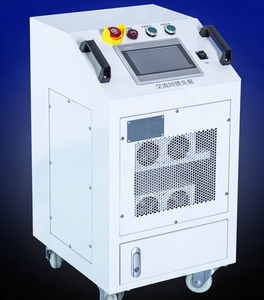
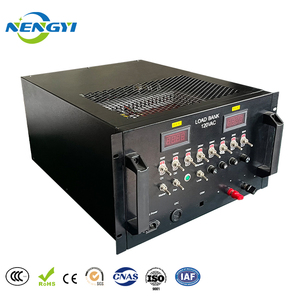
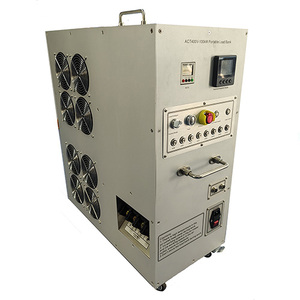
Advanced load simulation requires flexible operational modes. Leading 3C and 3D Series AC/DC load banks deliver up to 350 Vac and 500 Vdc input ranges with power capacities spanning 1,875 VA/W to 22,500 VA/W per unit. Racked chassis systems, such as the 5VPxC Series high-power DC loads, provide up to 60 kW per chassis with active master-slave paralleling to test EV battery packs up to 1000 Vdc under transient load profiles.
Precise instrumentation requires synchronous data acquisition. Multi-channel digital power analyzers (such as the M2000 series) close the testing loop by capturing total harmonic distortion (THD), crest factor, inrush current spikes, and real-time efficiency metrics. Integrated instrument GUI software modules enable automated SCPI, GPIB, USB, and LAN communication for turnkey ATE integration.
Key architectural breakthroughs driving efficiency, dynamic speed, and density in top-tier Chinese power test equipment.
Traditional electronic load banks operate by converting electrical energy directly into waste heat via resistive element grids, requiring immense cooling fans, substantial HVAC installation, and heavy utility power consumption. Next-generation AC/DC Regenerative Load Banks utilize active front-end (AFE) PWM inverter topologies that feed up to 94%–96% of absorbed power back into the facility’s AC grid with low harmonic distortion (THD < 3%). This innovation reduces operational electricity expenditure, eliminates thermal stress in testing bays, and significantly reduces carbon footprint during long-duration battery cycle and UPS burn-in testing.
When evaluating programmable power sources and electronic loads, international engineering procurement teams must evaluate hardware capabilities across four critical vectors:
| Product Category | Voltage Range | Power / Frequency Envelope | Target Application & Standards | Primary Advantages |
|---|---|---|---|---|
| APF3000 Series AC Sources | 0–600 Vln / 1039 Vll | 10 kVA to 150 kVA (Cabinet); 45–500 Hz | Global Utility Grid Sim, Export Line Testing, Facility Power | Colour touch-screen, high overload capacity, seamless 1Ø/3Ø switching |
| 5VPxC High-Power DC Loads | 0–1000 Vdc | 15 kW to 60 kW / Chassis (Parallel to 600 kW) | EV Battery Packs, Energy Storage Systems (ESS), Fuel Cells | 5 built-in battery discharge profiles, high slew rate dynamic stepping |
| 3C / 3D AC & DC Load Banks | 350 Vac / 500 Vdc | 1.875 kVA/kW to 22.5 kVA/kW per rack | UPS, PV Inverter, AC Rectifier & Generator Testing | Dual AC+DC capability, programmable power factor (0.0–1.0 leading/lagging) |
| FC300 Benchtop Converters | 0–300 Vac | 500 VA to 5 kVA; 47–500 Hz (Fixed/Adjustable) | R&D Benchtop, Appliance QA, 400 Hz Avionics Repair | Compact bench footprint, low THD (<0.5%), intuitive front panel controls |
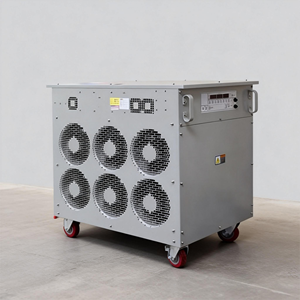
| Regenerative AC Load Banks | 115–690 Vac Multi-range | 10 kW to 1500 kW Megawatt Scale | Data Center commissioning, Large Generator Burn-in | >94% energy feedback efficiency, low THD to grid, CE certified safety |
Strategic insights for international buyers sourcing Chinese power test instruments.
Engineering teams are turning away from monolithic, fixed-capacity test benches in favor of modular rack-mount designs. Buying modular programmable loads ensures that testing facilities can scale power capacity incrementally as DUT (Device Under Test) voltage levels increase—such as the automotive industry's shift from 400V to 800V EV battery architecture.
Integration of real-time simulation interfaces (such as EtherCAT, CANopen, and Modbus-TCP) allows programmable AC power sources to respond to digital twin software models. This enables hardware-in-the-loop (HIL) testing of microgrid controllers, solar inverters, and smart transformers under simulated extreme climate and grid disturbance events.
Capital expenditure (CapEx) is no longer the sole procurement metric. Buyers are assessing long-term operational expenditures (OpEx), where energy-regenerative power loads drastically reduce heat output, facility cooling utility bills, and power consumption during 24/7 continuous factory burn-in testing schedules.
Expert technical answers addressing common compliance, custom configuration, and operational inquiries.
Standard industrial-grade Chinese programmable AC power sources cover output voltages up to 600 V line-to-neutral (1039 V line-to-line) with adjustable frequencies spanning 15 Hz to 1000 Hz. This wide operating window allows a single system to reproduce worldwide commercial utility power (50/60 Hz), 400 Hz defense/avionics buses, and 16.67 Hz railway electrification grids. Systems range from compact bench-top converters (such as the FC300 series) through scalable 150 kVA APF3000 Series power cabinets.
Yes. Specialized high-power DC electronic loads (such as the 5VPxC Series) support pack voltages up to 1000 Vdc with up to 60 kW capacity per single chassis. Master/slave active current sharing enables parallel racking up to 600 kW. These loads feature built-in firmware algorithms designed specifically for EV battery pulse discharge profiling, constant current (CC), constant voltage (CV), constant resistance (CR), and constant power (CP) testing under real-world dynamic driving profiles.
Regenerative AC load banks convert absorbed electrical load back into clean AC electrical power that is synchronized and fed directly back into your facility’s main grid with high efficiency (typically >94%) and minimal harmonic distortion (THD < 3%). Compared to traditional resistive load banks that waste 100% of energy as heat, regenerative loads dramatically reduce electrical bills, lower HVAC cooling loads in testing labs, eliminate high-temperature safety hazards, and smaller operational footprints.
Modern programmable instruments are equipped with standard Ethernet (LAN/LXI), USB, RS232, and RS485 interfaces, with GPIB (IEEE-488) available for legacy ATE rack integration. Standard command syntax follows SCPI (Standard Commands for Programmable Instruments) rules. Manufacturers also supply standalone GUI control software for Windows platforms, enabling real-time waveform graphing, automated test sequencing, data logging, and virtual instrument control without custom coding.
Leading Chinese manufacturers maintain ISO 9001:2015 certified quality management systems and produce equipment compliant with CE mark safety directives (EN 61010-1) and EMC standards (EN 61000-6-2/4). Factory acceptance testing (FAT) includes 100% full-load thermal burn-in under elevated ambient temperatures. Instrumentation calibration is traceable to international standards (such as NIST or ISO/IEC 17025 accredited calibration laboratories), providing certified calibration sheets with every shipment.
Standard bench-top sources and electronic load modules are typically stocked for dispatch within 1 to 2 weeks. Custom high-power multi-cabinet systems (100 kVA to 1500 kW megawatt load banks) require 4 to 6 weeks for fabrication, assembly, and rigorous testing. Global technical support is provided via dedicated application engineering teams, remote diagnostic access, local sales representatives, and spare part replacement dispatch centers worldwide.
Connect directly with our application engineers to request a technical proposal, custom power topology design, or competitive factory quote tailored to your exact testing standards.
Send an Inquiry