
Direct factory supply, engineered to compliance standards including IEC 60904-9, CE, and ISO9001. Contact our application engineers for custom power ratings.
The global renewable energy infrastructure has reached a pivotal juncture. As photovoltaic (PV) cell technologies rapidly migrate from conventional P-type PERC (Passivated Emitter and Rear Cell) structures to N-type TOPCon (Tunnel Oxide Passivated Contact), Heterojunction (HJT), and perovskite-silicon tandem architectures, the operational demand on artificial solar testing instrumentation has intensified exponentially. When global EPC contractors, PV panel manufacturers, and research laboratories search for a China top solar simulator factory & supplier, their procurement intent extends far beyond mere component purchasing. Procurement teams are seeking high-fidelity spectral accuracy, long-term temporal stability, dynamic load handling, and verified compliance with stringent international standards such as IEC 60904-9 Edition 3 (2020).
China has solidified its position as the world's primary manufacturing hub for photovoltaic test systems, high-power AC/DC electronic load banks, solid-state frequency converters, and precision digital power analyzers. Chinese original equipment manufacturers (OEMs) and original design manufacturers (ODMs) now provide advanced solid-state LED solar simulators, high-intensity Xenon flashers, and integrated power testing suites at highly competitive capital expense profiles without compromising spatial uniformity or spectral match.
Building upon over two decades of engineering excellence established since 2003, our partner manufacturing facilities in China integrate state-of-the-art power electronics, precision optics, and proprietary digital control firmware. Operating as an industry-leading manufacturer and global distributor, our technological platform spans programmable AC power sources, AC and DC electronic loads, solid-state frequency converters, and precision digital power analyzers serving aerospace, defense, renewable energy, and data center validation labs worldwide.
To evaluate solar simulator suppliers objectively, procurement engineers must evaluate performance against the IEC 60904-9 Edition 3 (2020) standard, which expanded the traditional Class AAA rating to include Class A+ parameters across six distinct spectral intervals. A high-tier Chinese solar simulator supplier must meet or exceed these metrics:
Evaluates how closely the output light spectrum matches natural sunlight under Air Mass 1.5 Global (AM1.5G) conditions. Class A+ limits spectral deviation within 0.875 to 1.125 across all 6 spectral bandwidths (400-1100nm).
Measures irradiance consistency across the entire active target area. Class A+ spatial non-uniformity demands less than 1% variance, preventing localized hot-spots and measurement distortions during large-panel IV testing.
Quantifies the steady-state noise or pulse-to-pulse repeatability over time. Short-Term Instability (STI) and Long-Term Instability (LTI) under Class A+ remain strictly within <0.25%, ensuring repeatable measurements.
Traditional pulsed Xenon flashers are increasingly being replaced by multi-channel programmable LED solar simulators. LED-based light engines offer distinct technological advantages: controllable spectral tuning (allowing simulation of AM0 space spectrum, indoor lighting, or water-filtered spectra), sub-millisecond response times, zero warm-up period, and working lifetimes exceeding 50,000 operational hours compared to 100,000 flashes for gas-discharge Xenon tubes.
As solar cell efficiency thresholds push past 29% for tandem devices, the global procurement landscape for solar simulators and peripheral electrical testing equipment is undergoing five fundamental transformations:
Perovskite-on-silicon tandem cells feature dual bandgap absorption profiles requiring precise light spectrum balancing. Standard single-source solar simulators cannot independently adjust the blue wavelength spectrum (absorbed by perovskite top cells) versus the near-infrared spectrum (absorbed by silicon bottom cells). Leading Chinese manufacturers are deploying multi-channel LED arrays (incorporating up to 24 discrete LED center wavelengths ranging from 365 nm UV to 1200 nm NIR). This spectral freedom enables researchers to analyze current-matching phenomena and mitigate degradation mechanisms in real time.
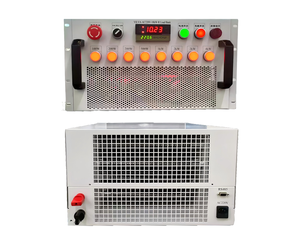
Utility-scale PV solar farms have universally migrated from 1000 V DC architectures to 1500 V DC system topologies to reduce balance-of-plant (BOP) cabling losses. Consequently, procurement teams are actively sourcing high-power DC electronic loads capable of continuous 1000V–1500V DC input operations with automated maximum power point tracking (MPPT) emulation, dynamic slew rates up to 10 A/µs, and isolated RS485/CAN/Ethernet communication protocols.
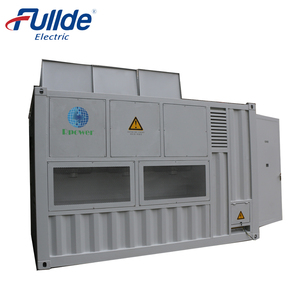
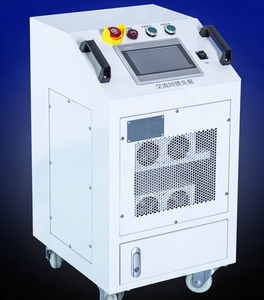
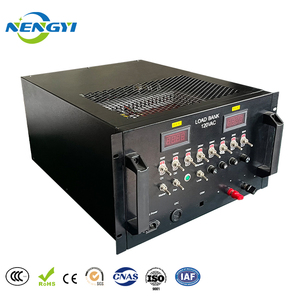
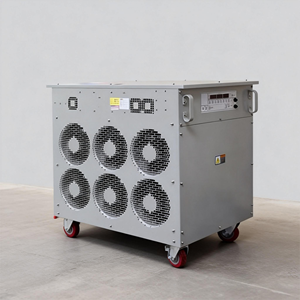
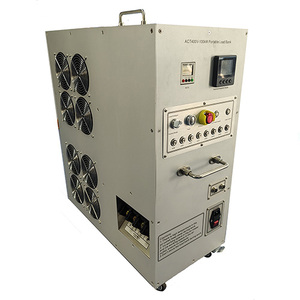
Factory burn-in testing of central solar inverters and energy storage system (ESS) power conversion systems (PCS) historically wasted megawatts of electrical energy through conventional resistive heater banks. Modern procurement mandates specify Regenerative AC Load Banks (such as our high-power energy-saving customizable series), which recapture up to 95% of test energy and feed it back into the factory's AC grid, turning a massive operational cost into a sustainable utility offset.
Simulating light spectrum alone is no longer adequate for modern bankability testing. Global buyers are demanding integrated environmental test chambers that combine Class AAA solar simulation with temperature-controlled thermal plates (-40°C to +120°C) and relative humidity control (20% to 98% RH). This allows simultaneous Light-Induced Degradation (LID), Potential-Induced Degradation (PID), and thermal cycling stress testing.
High-throughput automated production lines now require continuous flash solar simulators capable of 15-second cycle times per module. Smart Chinese factory systems incorporate embedded AI algorithms to automatically detect micro-cracks via Electroluminescence (EL) imaging while instantaneously calculating series resistance ($R_s$), shunt resistance ($R_{sh}$), fill factor ($FF$), and temperature coefficients.
Selecting a reliable supplier for high-precision solar simulators and electronic load systems requires rigorous auditing across multiple operational metrics. Buyers should utilize the following decision matrix during factory audits and technical RFP reviews:
Verify that the supplier provides accredited third-party calibration certificates (e.g., CNAS, ISO/IEC 17025, TÜV, or NREL traceability) for spectral match and spatial uniformity mapping using calibrated reference solar cells.
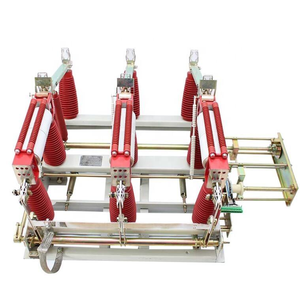
Ensure load switch gear, vacuum circuit breakers, and resistive elements utilize industrial-grade components (IGBTs, forced air/water cooling, high-voltage insulation) with CE, UL, or CSA safety certifications.
Confirm the manufacturer operates an established global support network, offering regional technical assistance, spare parts inventories, on-site commissioning, and remote diagnostic capabilities.
Below are authoritative technical responses to common questions encountered by global procurement managers and test lab directors when specifying solar simulation equipment and AC/DC load systems from China:
Whether you require a Class AAA LED Solar Simulator, a 1500kW high-voltage AC load bank, or custom solid-state frequency converters, our application engineers provide complete end-to-end technical configuration and factory-direct support.