
Explore our industrial-grade, custom-engineered programmable load banks, high-voltage switches, and AC power sources manufactured for defense, data centers, UPS validation, and green energy test environments.
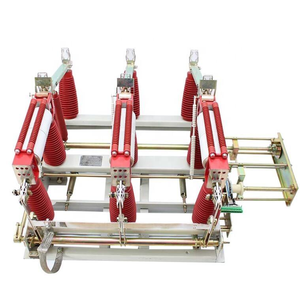
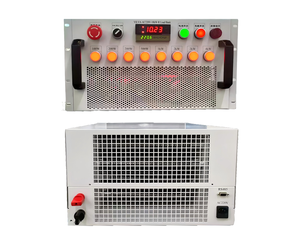
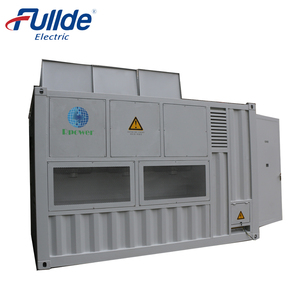
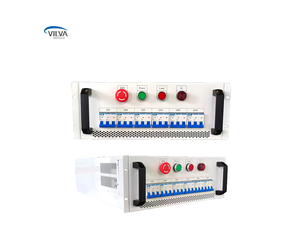
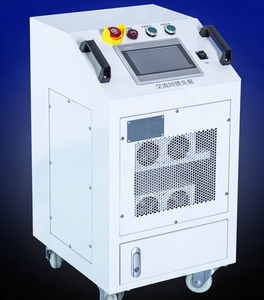
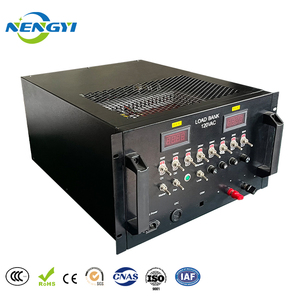
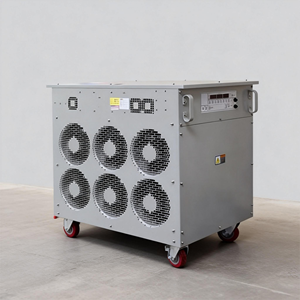
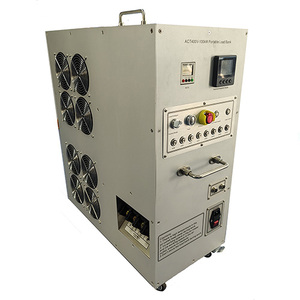
Founded with a core focus on advanced electrical test instrumentation, our enterprise stands as a premier global OEM custom manufacturer and exporter. We bridge the critical gap between laboratory precision standard calibrators and high-power industrial load banks, delivering turnkey test systems engineered to perform under extreme operational demands.
Whether servicing tier-1 aerospace defense contractors requiring 400 Hz avionics simulation, hyperscale data centers demanding 1500kW continuous heat dissipation testing, or EV battery pack manufacturers requiring dynamic 1000V DC discharge profiles, our engineering team supplies full-spectrum solutions customized from circuit topologies to ATE remote protocol firmware.
Solid-state switching, high-frequency PWM inversion, and isolated channel architectures delivering ultra-low Total Harmonic Distortion (THD < 0.5%) and microsecond transient response times.
Complete flexibility across mechanical enclosures (benchtop, 19-inch rack, mobile trailer, outdoor IP55/NEMA 4X cabinets), custom voltage/frequency ranges, and SCPI/LabVIEW software integration.
All calibrators and load banks undergo multi-stage Factory Acceptance Testing (FAT) with NIST and ISO/IEC 17025 traceable calibration certificates, CE safety mark, and EMC compliance.
An authoritative analysis of signal fidelity, dynamic load transient response, regenerative energy recovery, and compliance validation for mission-critical power architectures.
Modern electrical calibration requires absolute precision. Our programmable AC power calibrators utilize Direct Digital Synthesis (DDS) coupled with high-speed Field Programmable Gate Arrays (FPGA) to output clean, pure sine waves with adjustable phase angles, programmable voltage sags, harmonics injection (up to 50th order), and frequency stability within ±0.01 Hz. This provides the exact baseline required for testing precision power meters, transducers, and protective relays.
Evaluating standby diesel generators, UPS units, and inverter switches requires simulate real-world stress conditions. Our 1kW to 1500kW load bank series feature non-inductive stainless steel alloy resistors housed in forced-air cooling tunnels. Combined with microsecond-level load stepping, engineers can simulate sudden step-up and step-down loads without inductive reactance distortion, ensuring accurate voltage dip and frequency recovery analysis.
Traditional dummy load banks dissipate thousands of kilowatts as waste thermal energy, driving up operational and HVAC costs. Our state-of-the-art AC/DC regenerative load banks incorporate bi-directionally active front-end (AFE) inverters that capture discharge energy during burn-in testing and feedback clean grid-compliant AC power with >93% efficiency and a power factor greater than 0.99.
| System Category | Operating Envelope | Basic Calibration Accuracy | Control & Bus Interfaces | Primary Industrial Application |
|---|---|---|---|---|
| Programmable AC Power Sources | 0–600 Vln (1039 Vll), 15 Hz – 1200 Hz, up to 150 kVA | ±0.05% Voltage / ±0.01% Freq. | GPIB, USB, Ethernet LAN, RS485 (SCPI) | Avionics (400Hz MIL-STD-704F), Shipboard 60Hz, EMC Compliance Test |
| High-Power DC Electronic Loads | 0–1000 Vdc, Current up to 2400A, 60 kW/chassis | ±0.1% + 0.1% F.S. Current | CanBUS, Modbus RTU, Ethernet, Analog I/O | EV Battery Pack Cycling, Fuel Cell Stack Burn-in, Solar PV Inverters |
| AC/DC Regenerative Load Banks | 115V–690Vac / 1000Vdc, Power up to 1.5 MW | >93% Feedback Efficiency, PF > 0.99 | Profinet, Ethernet/IP, Optical Isolated GPIB | High Power Energy Storage Aging, Grid-tie Inverter Certification |
| Portable & Rackmount Load Dummy Banks | 1kW to 100kW Portable, 120V/220V/380V/440V | Resistive Tolerance ±2% | Manual Step Switches + Remote Touchscreen GUI | Data Center Server Rack Validation, On-site Generator Commissioning |
Strategic insights for procurement directors, test laboratory managers, and OEM system integrators navigating the next generation of power electronics testing standards.
Environmental regulations and corporate ESG mandates are reshaping procurement specifications worldwide. Facilities testing high-power EV powertrains, industrial drives, and grid utility scale battery energy storage systems (BESS) are banning purely resistive heat-dissipating load banks. Procurement is prioritizing regenerative systems that feed energy back to the plant grid, slashing energy consumption by hundreds of megawatt-hours annually and minimizing thermal footprints in cleanroom test bays.
The global adoption of Silicon Carbide (SiC) and Gallium Nitride (GaN) power semiconductors enables unprecedented switching speeds (>100 kHz) and power densities. However, high dV/dt and dI/dt rates introduce high-frequency ringing and transient voltage spikes. Future-ready calibrators and electronic loads are being manufactured with ultra-fast sampling rates (up to 1 MS/s continuous) and ultra-low internal parasitic capacitance to measure and load high-frequency power converters accurately without dampening real-world circuit behavior.
Procurement strategies are moving away from monolithic fixed-capacity load cabinets toward scalable, modular power systems. Modern laboratories require test racks that can function as independent 10kW benchtop loads for daily engineering tasks, or be connected in automated parallel master-slave configurations to deliver 1MW+ for heavy industrial testing. This modular flexibility lowers total cost of ownership (TCO) and prevents equipment redundancy.
Automated Testing Equipment (ATE) environments are rapidly integrating cloud telemetry and Real-Time Hardware-in-the-Loop (RT-HIL) simulation platforms (such as Opal-RT and RTDS). Modern custom OEM power calibrators are built with high-speed digital communications (EtherCAT, CANopen, Ethernet/IP) to mirror simulated microgrid disturbances or vehicle drive cycles in real-time, matching physical electrical load behavior directly against digital twins.
From detailed electrical schematic co-development to overseas commissioning, explore how our structured manufacturing pipeline ensures exact alignment with client specifications.
In-depth consultation on voltage/current envelopes, dynamic slew rates, physical enclosure limits, cooling airflow, and interface protocols.
Custom PCB layout, DSP algorithm programming for specialized load profiles (e.g., constant power, constant resistance, battery discharge curves), and thermal simulation.
Precision sheet metal fabrication, transformer winding, busbar assembly, followed by exhaustive 100% burn-in test and safety certification.
Export-grade shockproof crating, global freight logistics handling, customs documentation, and remote or on-site engineering commissioning.
Addressing essential technical, operational, and commercial questions for engineering buyers and procurement professionals.
A standard load bank acts primarily as an electrical energy sink (resistive, inductive, or capacitive) to stress test power sources like generators, UPS units, and batteries. A programmable power calibrator, conversely, is an ultra-precise source instrument capable of outputting tightly regulated voltages, currents, phase angles, and frequencies with low harmonic distortion. It is used to calibrate measuring instruments (like power analyzers, energy meters, and protection relays) or synthesize complex grid anomalies.
Yes. Our 5VPxC and custom high-power load series accommodate voltages up to 1000 Vdc and chassis capacities up to 60 kW, expandable via parallel master-slave architecture to multi-hundred kilowatt setups. Firmware includes dedicated battery discharge profiling algorithms (Constant Current, Constant Power, Constant Resistance, dynamic transient stepping, and automated cut-off voltage protection).
All programmable sources and electronic load instruments support standard SCPI (Standard Commands for Programmable Instruments) protocol. Physical interface options include Ethernet LAN (LXI compliant), USB 2.0, isolated RS232/RS485, and legacy GPIB (IEEE-488). We also provide native LabVIEW drivers, Python API packages, and Windows-based GUI software for quick setup and data acquisition.
Conventional resistive load banks convert 100% of testing power into heat, requiring significant secondary electrical power to run massive cooling fans and facility air conditioning. A regenerative load bank converts the tested electrical energy back into clean, grid-synchronized AC power with efficiencies exceeding 93%. This drastically lowers facility electricity bills, eliminates thermal load in engineering bays, and reduces carbon footprints.
Every OEM unit manufactured in our facility is certified compliant with CE marking (Low Voltage Directive and EMC Directive) and ISO 9001:2015 quality standards. Instruments ship with factory acceptance test reports and calibration certificates directly traceable to NIST (National Institute of Standards and Technology) or ISO/IEC 17025 accredited standards.
Standard product configurations ship within 2 to 4 weeks. Custom OEM projects—involving specialized mechanical dimensions, outdoor weatherproof enclosures, specialized high-voltage transformers, or unique firmware protocols—typically range from 6 to 10 weeks including prototyping, FAT verification, and export packaging.
Whether you require standard benchtop calibrators or complex 1.5 MW custom-built regenerative load testing systems, our engineering application team is ready to analyze your device under test (DUT) requirements and provide a detailed technical proposal.