
Factory-direct OEM/ODM manufacturing of ultra-wideband GaN modules, counter-UAS electronic warfare amplifiers, and tactical protection gear engineered to MIL-STD standards.

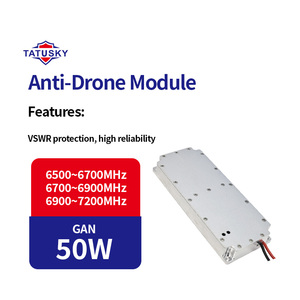
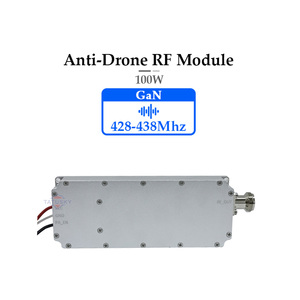
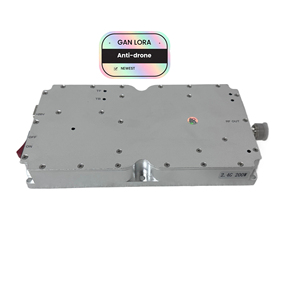
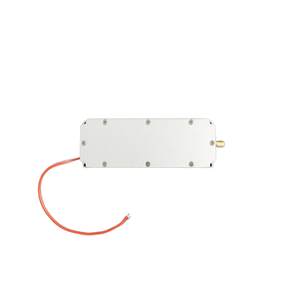
Backed by decades of power system engineering, high-capacity programmable power sources, electronic load testing labs, and precision digital analyzers.
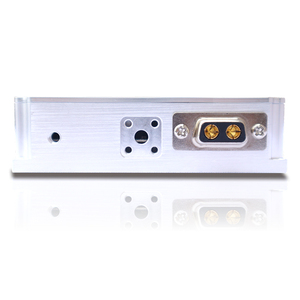
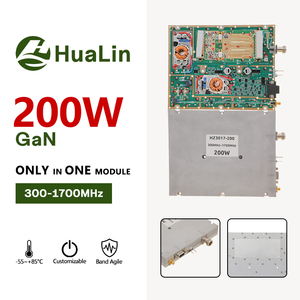
We leverage next-generation Gallium Nitride (GaN on SiC) technology to manufacture ultra-compact, high-efficiency RF power modules. Our SMT production lines feature automated optical inspection (AOI) and precision wire bonding for sub-6GHz and X-band defense applications.
Every defense power module undergoes rigorous screening: high-temperature operational life (HTOL), thermal shock cycling (-40°C to +85°C), vibration resistance, and burn-in testing using high-power programmable electronic DC loads to guarantee zero operational field failures.
Engineered to maximize Size, Weight, Power, and Cost (SWaP-C) efficiency. Our dedicated R&D division customizes mechanical form factors, liquid-cooled or pure copper heatsink assemblies, and multi-band power combine topologies for airborne, vehicular, and man-portable counter-UAS platforms.
In modern electronic warfare (EW), Counter-Unmanned Aerial Systems (C-UAS), and tactical communications, the demand for robust, high-efficiency radio frequency (RF) power amplifiers (PPA) has grown exponentially. As small unmanned aerial vehicles (sUAVs) and First-Person View (FPV) drones transition to multi-band frequency hopping and commercial off-the-shelf (COTS) control links across 433MHz, 900MHz, 1.2GHz, 2.4GHz, 5.2GHz, and 5.8GHz spectrums, traditional defense suppliers must deliver continuous, wideband RF suppression capabilities.
Legacy defense systems relied heavily on Silicon LDMOS (Laterally Diffused Metal Oxide Semiconductor) devices. While reliable, LDMOS exhibits severe power density limits above 3 GHz and low drain efficiency. As a tier-1 OEM/ODM defense power factory, our manufacturing architecture has transitioned entirely to GaN-on-SiC (Gallium Nitride on Silicon Carbide) epitaxy. GaN offers three fundamental physics advantages:
Thermal management is the single greatest bottleneck in high-power RF defense modules. Operating a 200W GaN module at 50% drain efficiency means 200W of waste heat must be immediately conducted away from the active junction area. Our OEM/ODM designs incorporate vacuum-brazed pure oxygen-free copper (C1100) baseplates combined with high-performance thermal interface materials (TIM). This lowers junction-to-case thermal resistance ($R_{th,j-c}$) below 0.35°C/W, ensuring long-term operation under continuous CW RF output conditions without thermal throttling.
| Frequency Band | Target Threat Spectrum | RF Output Power (CW) | Power Efficiency ($\eta$) | Operating Voltage | Heatsink Architecture |
|---|---|---|---|---|---|
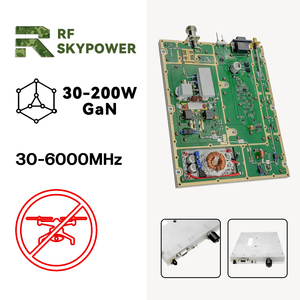
| 30 - 6000 MHz | Ultra-Wideband / Multi-Band Jamming | 30W / 50W / 100W / 200W | $\ge 45\%$ Typical | 28V - 48V DC | Pure Copper Base + Forced Air |
| 428 - 438 MHz | Tactical UHF / FPV Drone Command | 100W | $\ge 60\%$ | 28V / 32V DC | Integrated Aluminum Fin / Copper Core |
| 2400 - 2500 MHz | ISM Band / Wi-Fi Control & Video Link | 200W | $\ge 52\%$ | 48V DC | Heavy-Duty Copper Substrate |
| 5150 - 5850 MHz | 5.2G / 5.8G High-Band Video & C-UAS | 10W / 50W / 100W | $\ge 40\%$ | 28V / 48V DC | Precision CNC Anodized Copper/Alloy |
| 6500 - 7200 MHz | Extended High-Frequency FPV & UAV Links | 50W | $\ge 38\%$ | 28V DC | Micro-Channel Thermal Spreader |
Strategic insights for defense prime contractors, military procurement officers, and system integrators navigating the changing electronic warfare landscape.
Procurement agencies are moving away from fixed single-frequency narrowband blockers toward wideband modules spanning 30 MHz to 6000 MHz in a single chassis. Integrators demand instant bandwidth capabilities where modern digital signal processing (DSP) can dynamically sweep frequencies without re-tuning hardware. OEM suppliers who provide integrated RS485/CAN bus telemetry for monitoring temperature, VSWR, and forward/reflected power are winning long-term defense supply contracts.
Speed to market is now critical. Military procurement cycles have compressed from 5 years to 6 months. Defense contractors rely heavily on COTS (Commercial Off-The-Shelf) OEM RF power building blocks that can be modularly combined. Standardized form factors with blind-mate RF connectors and standardized DC power interface pinouts allow field units to be swapped out rapidly during maintenance operations.
Modern infantry survivability requires a dual-spectrum defense model: electronic mitigation paired with kinetic/stab personal body armor. Procurement tenders increasingly bundle portable drone defense shields, backpack-mounted FPV jammers, and lightweight stab-proof/anti-knife tactical vests. OEM partners capable of supplying both tactical textile protection and advanced electronic power modules streamline vendor management for global defense forces.
Global defense suppliers must validate performance using high-capacity test equipment—such as 150 kVA programmable AC power sources, precision power analyzers, and dynamic multi-channel DC electronic loads. Enterprise buyers demand factory-certified calibration data, spectral purity reports, harmonic distortion measurements, and VSWR load-mismatch immunity certificates prior to shipment batch release.
The rapid evolution of modern electronic warfare has initiated a new technological wave in RF power manufacturing. Key technical vectors shaping our factory R&D roadmap include:
In tactical field operations, counter-UAS antennas are frequently exposed to physical damage, environmental icing, or close-proximity metallic obstructions. Unfavorable antenna mismatch results in high Voltage Standing Wave Ratio (VSWR), reflecting massive RF power back into the transistor drain. Our OEM modules incorporate solid-state circulators and fast-acting analog/digital directional couplers that detect high reflected power within sub-microseconds, fold back drive power safely, and prevent device burnout.
Unfiltered high-power amplifiers generate significant 2nd and 3rd harmonic interference, which can unintentionally disrupt friendly military communications, GPS navigation, or tactical radar. Modern ODM manufacturing utilizes integrated microstrip low-pass and band-pass filters embedded directly within the amplifier housing, achieving harmonic suppression exceeding -35 dBc to -50 dBc.
While continuous jamming relies on CW power output, modern targeted electronic countermeasures (ECM) utilize high-peak pulse modulation to inject digital noise into specific packet headers of drone telemetry links. Our power modules support dual-mode operation: high-efficiency CW mode for perimeter defense shields and high-peak pulsed mode for long-range targeted directional arrays.
Clear, authoritative answers to common inquiries from defense buyers, system engineers, and procurement specialists.
We provide comprehensive OEM/ODM customization including frequency range tuning (e.g., 30MHz - 6000MHz, custom FPV bands), output power scaling from 10W to over 500W, DC operating voltage configuration (12V, 28V, 48V, 50V), custom CNC aluminum or copper housing geometries, heatsink/fan mounting, and digital telemetry protocols (RS485, CAN, Ethernet, analog voltage monitor).
Our defense-grade GaN modules feature oxygen-free copper baseplates and low-thermal-resistance TIMs designed to operate continuously (100% duty cycle CW) at ambient temperatures ranging from -40°C to +85°C. Integrated thermal sensors automatically trigger alarm alerts or smart fan speed control to maintain transistor junction temperatures well below maximum rated thresholds.
Yes. Our manufacturing facilities operate under strict ISO 9001 and AS9100 quality management systems. Product lines are engineered to meet applicable MIL-STD-810H environmental specs (vibration, shock, humidity), MIL-STD-461G EMC requirements, and CE/RoHS environmental directives. Full test report documentation is provided with batch shipments.
Standard prototype samples for existing module form factors are typically delivered within 1 to 2 weeks. Custom OEM/ODM designs requiring new PCB layouts, CNC housing machining, and thermal simulation take approximately 3 to 4 weeks. Serial production batch shipments depend on order volume, generally ranging between 4 to 6 weeks.
Absolutely. Modern FPV combat drones use non-standard control frequencies to bypass commercial jammers. We offer customized modules targeting specific frequency slots—including 428-438MHz, 868-915MHz, 1.2GHz, 2.4GHz, 5.2GHz, and 5.8GHz—as well as ultra-wideband 30-6000MHz modules capable of jamming wideband frequency-hopping threats simultaneously.
Every single unit undergoes automated testing utilizing precision programmable AC/DC power sources, dynamic load banks, and calibrated spectrum analyzers. We measure gain flatness, 1dB compression points ($P_{1dB}$), saturation power ($P_{sat}$), efficiency %, harmonic levels, and perform 100% VSWR mismatch stress tests before shipping.
Alongside our electronic defense systems, our textile manufacturing division produces customized stab-proof, knife-proof, and ballistic-compatible tactical vests. These vests are constructed using high-density UHMWPE or aramid materials, engineered for outdoor tactical operations, self-defense security personnel, and military field units.
You can click any "Get a Quote" button on this page to initiate an immediate inquiry with our defense technical sales team. Provide your desired frequency range, required RF output power, target application (C-UAS, FPV, Communication), quantity, and custom mechanical dimensions for a response within 24 hours.
Whether you require standard counter-drone RF modules, ultra-wideband power amplifiers, or full custom electronic warfare power subsystems, our application engineering team is ready to support your program from concept to combat-proven deployment.
Get a Quote