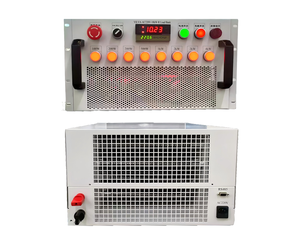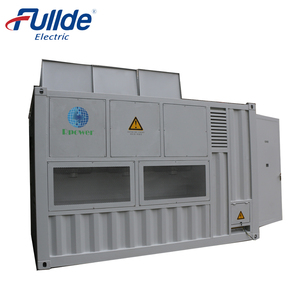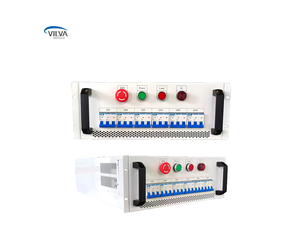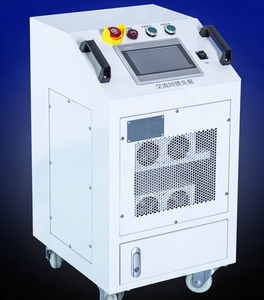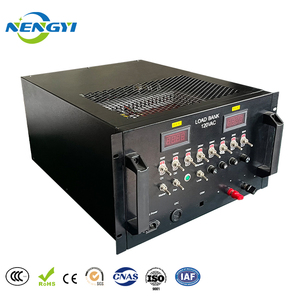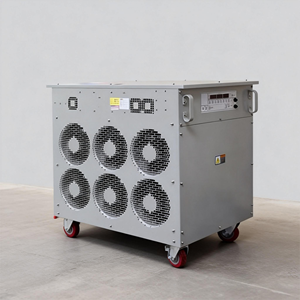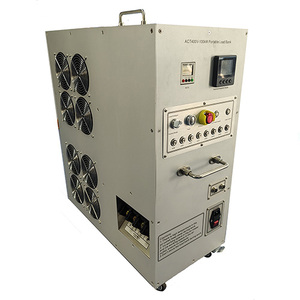
Explore our factory-direct OEM/ODM products engineered for extreme duty cycles, grid compliance testing, and high-capacity electrical power verification.
The global shift toward decentralized renewable energy microgrids, electric vehicle (EV) fleet electrification, and solid-state power electronics has exposed severe vulnerabilities in traditional power testing methodologies. Equipment manufacturers no longer have the luxury of testing grid-tied inverters, energy storage systems (ESS), or heavy industrial equipment against static utility lines. Modern standards—such as IEEE 1547-2018, UL 1741 SA/SB, IEC 61000-4-11, and MIL-STD-704F—mandate exhaustive verification under simulated grid anomalies, frequency drifts, voltage harmonics, and transient fault ride-through scenarios.
As a leading OEM/ODM Grid Simulator Factory & Exporter, Adaptive Power Systems engineers state-of-the-art programmable AC/DC power sources, solid-state frequency converters, and bi-directional electronic loads. By mimicking localized utility behaviors from 50Hz/60Hz commercial grids to 400Hz aerospace systems, our grid simulators deliver unmatched compliance testing depth, empowering R&D engineering laboratories and high-volume production facilities to achieve absolute operational certainty prior to field deployment.
From customized DSP firmware to multi-megawatt parallel chassis configurations, our factory provides complete end-to-end design, prototyping, and export-grade fabrication.
Our programmable grid simulators utilize high-frequency Silicon Carbide (SiC) switching topologies, enabling high power density, reduced acoustic noise, ultra-low total harmonic distortion (THD < 0.5%), and dynamic step response under zero-lag transient conditions.
Eliminate wasted thermal energy during burn-in and compliance tests. Our regenerative grid simulators capture energy from the Device Under Test (DUT) and backfeed clean, synchronized AC power directly to the facility mains at up to 95% efficiency.
We provide full OEM software branding and custom firmware tailored to specific regulatory test standards. Remote automation interfaces include SCPI via GPIB, USB, RS485, Ethernet, and CANbus protocol stacks for automated hardware-in-the-loop (HIL) environments.
Every custom system exported from our factory undergoes rigorous thermal imaging, insulation withstand testing, CE certification, and ISO 9001 compliance. We provide multi-voltage cabinet builds customized for North American, European, and Asian utility infrastructure.
Procurement teams often weigh the tradeoffs between conventional resistive/reactive load banks and bi-directional programmable grid simulators. The matrix below outlines how our OEM/ODM grid simulator platform provides exponential information gain and operational ROI across critical engineering criteria:
As power grids evolve toward digitalized smart microgrids and ultra-high voltage direct current (UHVDC) networks, grid simulation technology is undergoing four foundational shifts.
Silicon Carbide (SiC) and Gallium Nitride (GaN) switching components are rapidly replacing conventional silicon IGBTs in OEM grid simulator power stages. This transition enables switching frequencies beyond 50 kHz, drastically shrinking output filter dimensions while delivering unprecedented transient slew rates exceeding 500 V/ms.
Modern R&D centers require grid simulators to interface natively with real-time digital simulators (such as OPAL-RT or RTDS). Power Hardware-in-the-Loop (PHIL) integration allows power engineers to simulate complex multi-node distribution grids in software while the physical grid simulator drives real power into physical inverters under test.
With EV architecture transitioning from 400V to 800V and 1200V powertrains, and Megawatt Charging Systems (MCS) emerging for heavy commercial transit, load banks and grid simulators must support DC bus voltages over 1000 Vdc with master/slave paralleling capability reaching multi-megawatt capacities.
Sourcing power test infrastructure requires a 10-to-15-year operational perspective. Procurement executives must account for total cost of ownership (TCO), grid energy recapture, regulatory adaptation, and factory scalability. Based on enterprise purchasing data across North America, Europe, and East Asia, we identify four critical procurement vectors for the coming decade:
Historically, high-capacity load testing consumed massive electrical utility power while requiring auxiliary chillers to dissipate generated heat. Forward-thinking procurement teams now mandate bi-directional regenerative technology for all test stands exceeding 50 kW. By feeding back over 93% of consumed energy to the industrial facility grid, regenerative simulators reduce utility electricity costs and HVAC overhead, effectively amortizing the initial equipment purchase price within 18 to 24 months of continuous operation.
Rather than purchasing single static megawatt-class enclosures, global buyers are prioritizing modular 15 kVA to 60 kW power chassis capable of parallel synchronization. Sourcing modular architectures allows engineering teams to deploy small-scale benchtop setups today and combine units into multi-hundred-kilowatt cabinet clusters as production volume scales, maximizing capital allocation efficiency.
International buyers are demanding virtual Factory Acceptance Testing (FAT) supported by real-time data streaming and digital twin diagnostic reports. Our factory provides automated calibration logs, remotely witnessable burn-in procedures, and pre-configured software libraries that match specific DUT profile protocols prior to ocean freight dispatch.
Get expert answers regarding OEM customization, grid feedback compliance, aerospace frequencies, and high-voltage DC load configurations.
Our bi-directional grid simulators incorporate active front-end (AFE) IGBT/SiC converters with integrated galvanic isolation transformers and anti-islanding protection schemes compliant with IEEE 1547 standards. The system continuously monitors grid voltage, phase angle, and frequency. In the event of a facility grid trip or voltage collapse, the simulator isolates itself within milliseconds, preventing backfeeding into an unenergized utility line and protecting laboratory personnel.
Our standard and customized APF/CFS Series covers output voltages from 0 to 600 V line-to-neutral (up to 1039 V line-to-line) in single-phase and three-phase configurations. Operating frequency ranges extend from DC to 15 Hz – 1200 Hz continuous, enabling effortless switching between standard 50Hz/60Hz commercial grids, 400Hz avionics power systems (MIL-STD-704F / DO-160G), and 16.7Hz electric rail grids.
Yes. Our 5VPxC Series programmable high-power DC electronic loads are engineered explicitly for EV battery pack testing up to 1000 Vdc and 60 kW per chassis (scalable via parallel operation). Firmware includes five pre-programed automated battery discharge modes (Constant Current, Constant Power, Constant Resistance, Dynamic Pulse Stepping, and End-Voltage Cutoff profiling) with integrated CANbus telemetry monitoring cell temperatures and voltage balance.
To deliver an optimal OEM proposal, our engineering team requires: (1) Target Device Under Test details (e.g., PV inverter, EV charger, UPS), (2) Required power rating in kVA/kW, (3) Input/Output voltage and frequency boundaries, (4) Desired power flow direction (Unidirectional resistive dummy load vs. Bi-directional grid simulator), (5) Cooling requirements (Forced air vs. Liquid cooling), and (6) Preferred control interfaces (GPIB, Ethernet, RS485, CANbus).
Standard chassis delivery ranges from 2 to 4 weeks, while fully customized high-power OEM/ODM cabinet enclosures (100 kVA to 1.5 MW) are manufactured within 6 to 8 weeks. All export shipments are vacuum-sealed with desiccant packs, wrapped in anti-static protective film, and encased in heavy-duty ISPM 15 compliant fumigated wooden crates designed for ocean and air freight transit.
Speak directly with our senior application engineers. We evaluate your electrical testing parameters, recommend optimal instrument topologies, and provide factory-direct pricing tailored to your procurement scope.