Explore our OEM/ODM product lineup engineered for IEC compliance, high-voltage electrical safety, photovoltaic cell testing, and mechanical adhesion assessment.
In modern power conversion, renewable energy infrastructure, high-voltage traction systems, and civil construction, insulation integrity serves as the fundamental safety barrier preventing catastrophic dielectric breakdown, electrical shock, arc flashes, and structural delamination. As leading OEM/ODM Insulation Tester Manufacturers & Suppliers, our engineering teams provide specialized OEM co-development and ODM turnkey manufacturing services for precision electronic insulation resistance testers, high-potential (Hi-Pot) wet leakage analyzers, and hydraulic pull-off adhesion measurement devices.
Building upon over two decades of precision power test instrumentation experience (established in 2003), our product designs synthesize ultra-low leakage current sensing, micro-ampere precision measurement, programmable high-voltage step generators, and rugged industrial housings compliant with international standards including IEC 61010-1, IEC 61730-2, IEC 61215, IEEE 43, and ASTM C907.
Advanced noise-shielded guard terminals and active sub-nanoampere current measurement circuits ensure 50GΩ+ resistance accuracy even under 10kV stress.
Built-in DSP firmware automatically calculates Polarization Index (PI), Dielectric Absorption Ratio (DAR), and Dielectric Discharge (DD) for preventive maintenance.
Multi-stage hardware interlocks, automatic high-voltage capacitor discharge pathways, and IP67 weather-sealed field enclosures ensure operator protection.
When evaluating insulating materials—whether polymer backsheets on photovoltaic modules, stator winding insulation in 1000V electric motors, or ceramic wall cladding adhesives—static DC resistance measurements alone are insufficient. Dynamic diagnostic testing provides detailed insight into moisture ingress, insulation aging, and localized micro-fissures.
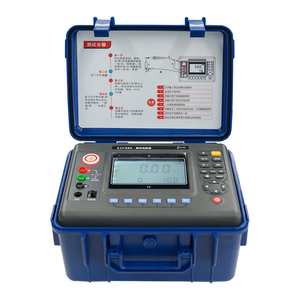
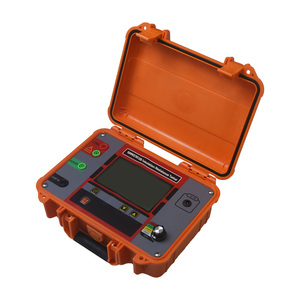
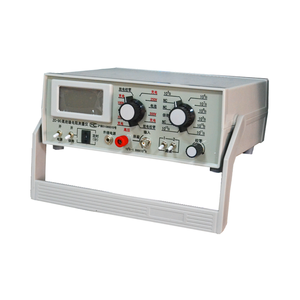
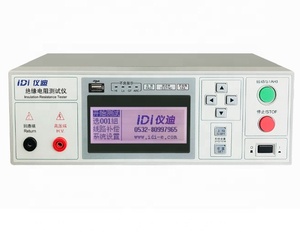
During insulation resistance (IR) stress testing, total current flow consists of capacitive charging current, dielectric absorption current, surface leakage current, and volume conduction current. Our OEM digital megohmmeters (such as the 1kV-10kV Series and IDI6135BH 3KV models) feature automated dual-timer monitoring:
Solar modules operate under extreme environmental stress, including rain, high humidity, dew, and snow melt. Moisture penetration into module junction boxes or backsheets leads to fatal ground faults or dangerous shock risks.
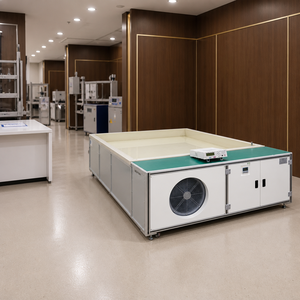
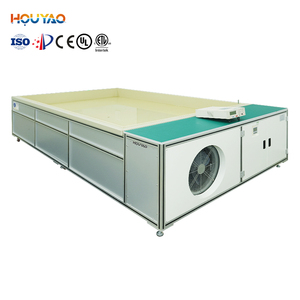
Our specialized Photovoltaic Module Wet Insulation Electrical Safety Test Systems submerge the module frame and edges in a conductive liquid solution (wetting agent with surface tension < 50 mN/m and resistivity < 3500 Ω·cm) while applying a DC voltage equivalent to the maximum system voltage (up to 1500V DC) plus double the safety margin for 2 minutes. The system monitors insulation resistance normalized to module surface area (Ω·m²), ensuring compliance with the stringent 40 MΩ·m² threshold required for commercial PV module certification.
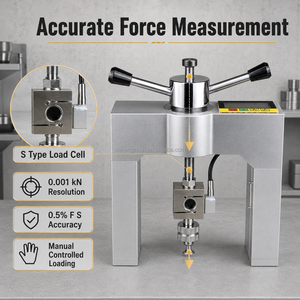
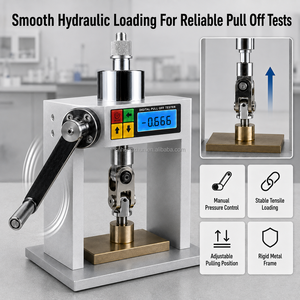
Electrical safety goes hand-in-hand with structural integrity. In modern green building design, external thermal insulation composite systems (ETICS) rely on mechanical rivets, ceramic tile adhesives, and specialized polymer coatings. Our 10KN Digital Pull-Off Adhesion Testers utilize precision hydraulic actuators coupled with high-resolution digital strain gauges to measure the tensile bond strength ($N/mm^2$ or $MPa$) of wall insulation fasteners and ceramic layers, preventing structural detachment caused by wind shear or thermal expansion.
We understand that global test equipment distributors, laboratory instrumentation brands, and industrial equipment OEMs require tailored solutions rather than standard catalog items. Our factory offers complete ODM co-design and contract OEM manufacturing capabilities:
| Customization Dimension | OEM White-Label Scope | ODM Engineering Co-Development |
|---|---|---|
| Voltage Generator Hardware | Pre-calibrated ranges (1kV, 2.5kV, 3kV, 5kV, 10kV) | Custom HV step-up transformers up to 15kV DC / 10kV AC Hi-Pot |
| Firmware & Communication | Custom splash screen, localized UI languages, branded software | Custom SCPI command sets, Modbus RTU/TCP, CANbus, integrated ATE SDKs |
| Enclosure & Mechanics | Custom colorway, silkscreen logo, custom carrying cases | IP67 ruggedized transit cases, 19-inch rackmount chassis, custom test fixtures |
| Calibration & Certification | Factory calibration certificate traceable to NIST / ISO 17025 | Third-party UL, CE, TÜV Rheinland, and CNAS laboratory type-test support |
As global industrial sectors accelerate toward electrification, renewable energy integration, and smart manufacturing, purchasing directors and procurement teams must anticipate several critical technology shifts:
Standard 500V/1000V megohmmeters are becoming obsolete for utility-scale PV plants and next-generation EV platforms. Procurement trends favor multi-function 3kV to 10kV testers capable of handling high capacitive loads inherent in EV battery packs and long PV string cabling.
Manual handheld insulation testing is rapidly giving way to automated test equipment (ATE) integrated directly into manufacturing execution systems (MES). Modern procurement specifications prioritize instruments with USB, RS485, LAN, and wireless Bluetooth data logging for zero-paper quality traceability.
In infrastructure and building insulation, asset managers require non-destructive mechanical pull testing combined with electrical moisture leakage detection to satisfy combined building envelope and electrical code requirements.
When auditing potential OEM/ODM Insulation Tester Suppliers, procurement officers should evaluate vendors against the following technical verification steps:
Insulation Resistance (IR) testing applies a continuous DC voltage (typically 500V to 10kV) to measure the exact electrical resistance in Megohms or Gigohms (MΩ/GΩ) without causing breakdown. Hi-Pot (High Potential) testing applies a higher stress AC or DC voltage for a brief duration to verify whether insulation breakdown or arcover occurs, measuring leakage current in milliamperes (mA) or microamperes (μA).
The system immerses the solar panel (including edges and junction boxes) in a conductive water bath. High voltage (1000V or 1500V DC) is applied between the shorted internal conductors (positive/negative output terminals) and the liquid bath. The system evaluates whether the insulation resistance meets or exceeds the mandatory safety cutoff threshold normalized per square meter of panel area.
Standard white-label OEM orders (custom logo, customized packaging, and standard firmware branding) typically require an MOQ of 50 to 100 units with a lead time of 3 to 4 weeks. Fully customized ODM projects involving custom circuit board development, enclosure tooling, and specialized software APIs carry lead times of 8 to 12 weeks depending on compliance testing requirements.
Yes. Our 10KN portable hydraulic pull tester is specifically engineered for on-site assessment of wall insulation anchor rivets, ceramic tile bonding, thermal insulation boards, and protective coatings in full compliance with ASTM C907, EN 1348, and related architectural quality control standards.
Our megohmmeters feature multi-tier protection including dual PRESS-TO-TEST safety switches, live voltage detection warnings (disabling HV output if external AC/DC voltage > 30V is sensed), automatic capacitive energy discharge upon test completion, and CAT III/IV rated safety lead connections.
Yes. We provide complete SCPI command documentation, LabVIEW drivers, C# / Python SDKs, and pre-built GUI software for remote control, automated test sequencing, and real-time pass/fail data logging into enterprise MES systems.
Need custom voltage ranges, specialized test fixtures, or branded laboratory instruments? Contact our application engineering team today for technical consultation, factory specifications, and wholesale quotation.