
Explore our factory-direct OEM/ODM equipment lineup, spanning high-voltage vacuum load circuit switches, programmable AC/DC resistive load banks, dynamic test equipment, and high-frequency power test systems engineered for industrial reliability.
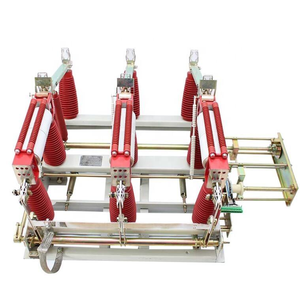
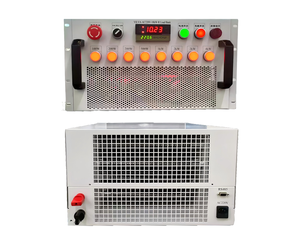
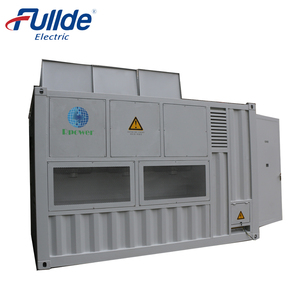
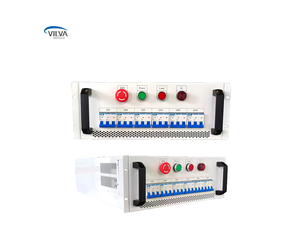
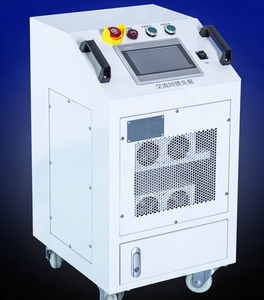
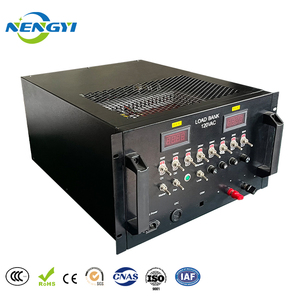
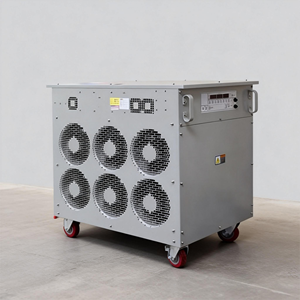
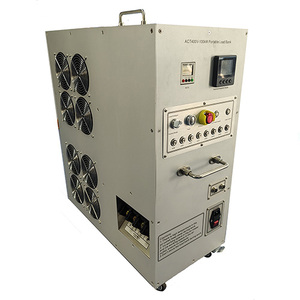
In an era defined by high-frequency semiconductor switching, 8K video bus architectures, automotive CAN/Ethernet protocols, and complex green-energy power conversion, precision in electrical signal capture is paramount. As a lead manufacturer and global distributor operating continuously since 2003, our engineering organization bridges the gap between hardware architecture design, custom firmware engineering, and scalable factory manufacturing for global Original Equipment Manufacturers (OEM) and Original Design Manufacturers (ODM).
Procuring industrial test instrumentation demands more than off-the-shelf catalog selections. It requires a trusted partner capable of integrating high-bandwidth analog front-ends, low-noise analog-to-digital converters (ADCs), real-time digital signal processing (DSP), and robust power load simulation into cohesive automated test equipment (ATE) environments. Whether your engineering team requires white-label digital storage oscilloscopes (DSOs), mixed-signal oscilloscopes (MSOs), high-power programmable AC/DC electronic load banks, or solid-state frequency converters, our OEM/ODM facilities provide verified end-to-end quality guarantees.
Legacy testing workflows segregated oscilloscope waveform analysis from high-power dummy load testing. Modern high-power electronics—such as EV traction inverters, solar microinverters, and data center UPS units—exhibit transient voltage spikes ($\Delta V/\Delta t$) and ground bounce during ultra-fast switching. Integrated OEM/ODM solutions combine high-bandwidth signal capture with dynamic AC/DC regenerative load banks to capture real-time waveforms under actual stress conditions without damaging test benches.
We combine rigorous hardware engineering with agile software customization, giving distributors, brand owners, and system integrators complete control over product specifications, chassis branding, and API software integration.
From low-noise analog input amplifiers and custom attenuator networks to FPGA-driven trigger engines, our engineering team designs customized hardware platforms optimized for target bandwidths, sampling rates, and memory depth requirements.
Integrate your corporate identity, custom SCPI command sets, LXI remote interfaces, and localized language packs into instrument firmware. Free Windows/Linux GUI software development is available for all white-label product lines.
Every instrument undergoes full-spectrum thermal cycling, drop testing, EMC compliance verification (CE, FCC, RoHS), and multi-point NIST-traceable calibration before dispatch, minimizing warranty claims in field deployments.
Complementing our oscilloscope and signal line, our high-power AC/DC load banks feature energy-saving regenerative feedback architectures up to 1500kW, allowing test facilities to recirculate power into grid systems safely.
With established sales engineering channels, independent representative networks, and authorized service centers across North America, Europe, and Asia-Pacific, local technical backup is always within reach.
Standardized physical Form factors—including bench-top, modular PXIe, portable rugged enclosures, and 19-inch rack-mount chassis—allow effortless drop-in deployment into existing automated production test lines.
Traditional digital oscilloscopes relied heavily on 8-bit Analog-to-Digital Converters (ADCs), offering 256 quantization levels. While adequate for basic low-frequency debugging, 8-bit resolution fails to capture small signal details overlaid on large voltage swings—such as ripple on a 48V power bus or subtle sensor anomalies. Modern OEM/ODM procurement is rapidly shifting toward 12-bit High Definition (HD) front-ends, providing 4,096 quantization levels (a 16-fold increase in vertical precision). Coupled with hardware digital filtering and ultra-low-noise preamplifiers, 12-bit oscilloscopes allow R&D engineers to measure sub-millivolt transients with laboratory-grade accuracy.
The rapid adoption of Silicon Carbide (SiC) and Gallium Nitride (GaN) power transistors in Electric Vehicle (EV) inverters, high-density server power supplies, and renewable energy converters has revolutionized power conversion efficiency. However, GaN and SiC devices exhibit extremely fast switching speeds ($\text{d}v/\text{d}t > 100 \text{ V/ns}$), introducing severe electromagnetic interference (EMI) risks, high-frequency ringing, and common-mode noise. Future-ready test labs demand oscilloscopes equipped with optically isolated differential probes, high bandwidth (>1 GHz), and integrated power measurement software packages (calculating switching loss, safe operating area SOA, and harmonic distortion in real time).
While traditional standalone bench-top oscilloscopes remain popular for general lab work, global manufacturing facilities are migrating toward compact, headless, USB/Ethernet-controlled modular oscilloscopes. These instruments offer multi-channel synchronization, low power consumption, and seamless software integration via LabVIEW, Python, MATLAB, and C/C++ APIs. By decoupling the hardware acquisition engine from the display unit, OEM/ODM buyers reduce capital expenditure (CapEx), minimize test bench physical footprints, and streamline automated test system upgrades without replacing instrument front-ends.
In manufacturing aging tests and long-term reliability screening for power supplies, UPS units, and EV battery packs, traditional resistive load banks dissipate massive amounts of electrical energy as heat, increasing factory HVAC loads and operational costs. Modern procurement mandates favor AC/DC Regenerative Load Banks. Featuring full-bridge inverter technology and power factor correction (PFC > 0.99), regenerative load banks feed up to 92%–95% of consumed test energy back into the local factory power grid, dramatically lowering electricity bills while supporting corporate carbon neutrality goals.
| Instrument Category | Core Architecture | Target Bandwidth / Load Range | Primary Application Scenarios | OEM/ODM Customization Options |
|---|---|---|---|---|
| Digital Storage Oscilloscope (DSO) | 8-bit / 12-bit Hardware ADC + FPGA Trigger | 50 MHz – 2 GHz Bandwidth | General Electronics, Serial Bus Decoding, Embedded R&D | Custom ASIC, Branded Enclosure, SDK/API Libraries |
| Mixed Signal Oscilloscope (MSO) | Analog Channels + 16/32 Digital Logic Inputs | 100 MHz – 1 GHz Bandwidth | MCU/FPGA Debugging, Mixed-Signal PCB Diagnostics | Custom Logic Probes, Specialized Protocol Decoders |
| Programmable AC/DC Load Banks | MOSFET / IGBT Active Loads with Air/Liquid Cooling | 1 kW – 1500 kW / Up to 1000 Vdc | UPS Testing, Data Center Burn-in, EV Battery Testing | Power Steps, Communication Interfaces (CAN/RS485), Cabinet Form Factor |
| Regenerative AC Load Banks | Bi-directional Active Front-End (AFE) Grid Feedback | 10 kVA – 500 kVA / 400Hz / 50/60Hz | Aviation Power Simulation, PV Inverter Reliability Testing | Energy Feedback Feedback Control, Multi-Unit Master/Slave Paralleling |
Detailed technical guidance for procurement directors, product managers, and engineering leads seeking factory-direct OEM/ODM partnerships.
Accelerate your product development cycle or launch your branded line of test equipment. Contact our senior application engineering team today to review technical drawings, request factory audits, or receive custom volume pricing.