
In critical power infrastructure, commissioning, and preventive maintenance, electrical stress testing cannot be left to chance. A load bank is a precision-engineered self-contained, active, operational device designed to deliver controllable electrical loads to power sources such as diesel generators, uninterruptible power supplies (UPS), solar inverters, wind turbines, and high-voltage switchgear systems. By artificially simulating real-world electrical demand without connecting to live building facilities, load banks validate operational integrity, thermal stability, voltage regulation, and governor performance.
This comprehensive industry whitepaper analyzes the Top 10 Load Bank Suppliers across global markets, focusing on technical innovation, manufacturing rigor, regulatory compliance (ISO 9001, CE, IEEE 1159, IEC 60947), and lifetime total cost of ownership (TCO). Whether evaluating portable 1kW bench-top dummy loads for edge data center server racks or megawatt-level high-voltage AC regenerative systems for grid-scale energy storage aging tests, selecting the right partner requires deep technical scrutiny.
Below is a curated selection of mission-critical electrical load testing equipment engineered for high duty-cycle validation, emergency power backup testing, dynamic transient response profiling, and factory acceptance testing (FAT).
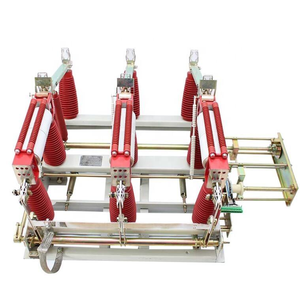
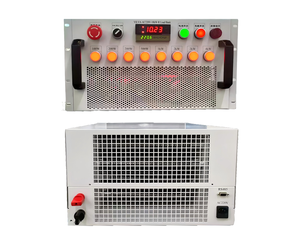
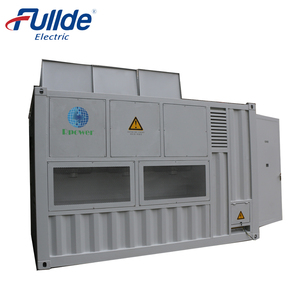
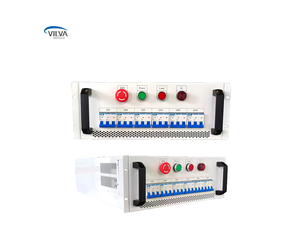
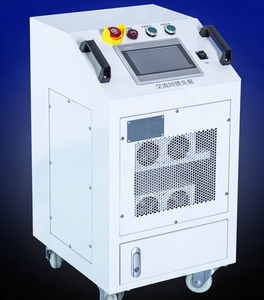
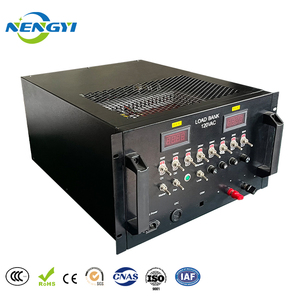
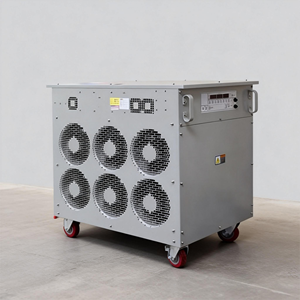
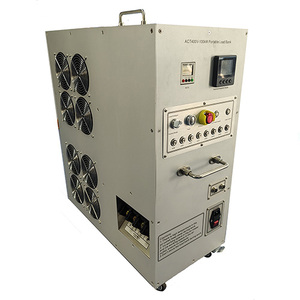
To perform effective power testing, electrical engineers must match the load bank topology to the specific operational profile of the prime mover or power backup system under test. The major classifications include:
Convert electrical energy entirely into thermal energy via high-grade resistor elements (typically corrosion-resistant stainless steel or NiCr alloy). Operating at unity power factor (PF = 1.0), resistive load banks subject engine governors, fuel systems, and exhaust manifolds to 100% rated electrical load, effectively stripping away "wet stacking" carbon deposits in diesel engines.
Utilize iron-core inductors to create a lagging power factor (typically PF = 0.8). Inductive loads simulate real-world inductive equipment such as commercial HVAC systems, electric motors, transformers, and industrial pumps, allowing engineers to test full kVA capacity, voltage regulation, and magnetic field saturation.
Represent the peak of eco-friendly energy efficiency. Instead of dissipating power as waste heat, regenerative loads invert DC or AC power back onto the local electrical grid with high power factor and low Total Harmonic Distortion (THD < 3%), dramatically slashing cooling costs during prolonged battery pack aging or inverter burn-in tests.
The table below provides a structured technical comparison between different load bank topologies to assist procurement teams in making informed capital equipment investment decisions.
| Load Bank Type | Power Factor Range | Primary Application | Heat Dissipation | Energy Efficiency |
|---|---|---|---|---|
| Pure Resistive (AC/DC) | 1.0 (Unity) | Genset testing, UPS capacity validation, battery discharge | High (Forced air/Liquid cooled) | Standard (Heat dissipated) |
| Combined Resistive / Inductive | 0.8 Lagging to 1.0 | Full kVA alternator testing, switchgear commissioning | High (Dual airflow channels) | Standard (Heat dissipated) |
| AC Capacitive | Leading PF | Datacenter server simulation, telecommunications UPS test | Moderate | Standard (Heat dissipated) |
| AC/DC Regenerative | 0.99 (Grid Synchronized) | EV battery pack discharge, PV inverter testing, factory aging | Very Low (<5% energy loss) | High (>95% power recycled) |
When vetting international load bank manufacturers and suppliers, technical buyers must look beyond headline price points. According to Google's Search Quality Rater Guidelines, establishing true E-E-A-T (Experience, Expertise, Authoritativeness, and Trustworthiness) requires evaluating manufacturers against rigorous engineering benchmarks:
Leading suppliers utilize non-hygroscopic, nickel-chromium (NiCr) or chromium-aluminum (CrAl) alloy resistance elements encased in stainless steel sheathing with ceramic insulation. This prevents thermal degradation, electrical leakage, and mechanical distortion under rapid step-load applications.
Modern commissioning requires automated data logging, sub-second transient capture, and integration with SCADA or Building Management Systems (BMS). Top-tier vendors equip their systems with touchscreen microprocessors, standard RS485/Modbus, Ethernet/LAN, and CANbus communication protocols, complemented by standalone GUI control platforms.
Industrial load testing involves extreme voltages and high power density. Essential protection features include automatic air-flow failure detection, over-temperature cutoffs, phase-reversal protection, over-voltage/over-current breakers, and emergency shutdown switches.
The global transition toward green energy, rapid expansion of hyperscale data centers driven by AI workloads, and the electrification of transportation are fundamentally changing load bank procurement requirements:
As commercial microgrids combine solar PV, wind, and Battery Energy Storage Systems (BESS), load banks are increasingly required to test bidirectional power flows. Suppliers are engineering multi-channel programmable AC & DC loads capable of simulating transient load spikes caused by renewable intermittency.
AI compute racks consume unprecedented power densities (30kW to 100kW per rack). Traditional floor load banks are being complemented by rack-mountable 1KW to 6KW portable server-simulator load banks that duplicate exact server fan airflow characteristics and localized heat generation during Level 4 & Level 5 data center commissioning.
To eliminate the requirement for heavy step-down transformers during utility generator testing, modern suppliers offer direct 4.16kV, 6.6kV, and 13.8kV high-voltage load banks. This reduces footprint, simplifies cable management, and minimizes site deployment time.
Procurement teams are prioritizing smart load banks equipped with IoT telemetry. Cloud integration allows remote engineering teams to monitor multi-site commissioning tests, generate automated compliance certificates, and run predictive maintenance diagnostic algorithms on resistance elements.
Backed by over 20 years of continuous innovation since 2003, our partner engineering organization—Adaptive Power Systems (APS)—delivers world-class power test equipment designed to meet demanding global standards:
Specializing exclusively in programmable AC & DC power sources, solid-state frequency converters, precision power analyzers, and electronic load banks. Engineered for long-term durability in aerospace, defense, and industrial facilities worldwide.
From 150W benchtop units to massive 150 kVA APF Series frequency converters and 60 kW 5VPxC high-power DC loads (scalable via master/slave paralleling up to multi-hundred kW configurations), we fulfill every power envelope.
Supported by independent sales representatives, certified calibration facilities, and local engineering service centers across North America, Europe, and Asia-Pacific to ensure rapid technical assistance and minimal downtime.
Diesel generators that run lightly loaded (under 30% rated capacity) frequently suffer from "wet stacking"—the accumulation of unburnt fuel and carbon deposits in the exhaust system. Periodic testing with a resistive load bank brings the engine up to optimal operating temperature, burning off carbon deposits, verifying governor response, and ensuring the generator will start reliably during an actual grid failure.
A static load test applies constant electrical power over a prolonged period (e.g., 2 to 8 hours) to verify thermal stability, cooling capacity, and continuous electrical output. A dynamic transient test applies rapid block load steps (e.g., 0% to 50%, 50% to 100%) to measure voltage dip, frequency overshoot, recovery time, and governor reaction rates in compliance with ISO 8528-5 standards.
Yes. High-power DC electronic loads (such as the 5VPxC Series) feature specialized battery discharge profiles, supporting voltages up to 1000 Vdc and currents up to thousands of amperes via master/slave paralleling. Additionally, 3C and 3D Series AC/DC loads incorporate dedicated firmware modes for testing solar PV inverters, UPS systems, and AC rectifiers.
Programmable AC sources and frequency converters can duplicate worldwide utility grid conditions, covering voltages up to 600 V line-to-neutral (1039 V line-to-line) and frequencies from standard 50 Hz / 60 Hz utility power up to 400 Hz for avionics and military applications.
Load bank capacity is calculated based on the maximum rated kW or kVA output of the power source under test, taking into account the desired test percentage (typically 100% rated capacity plus a 10% overload margin for 1 hour). Our application engineers are available to review your electrical single-line diagrams (SLD) and recommend the precise load configuration needed.
Speak directly with our power test application engineers to specify the exact load bank, AC/DC power source, or digital analyzer required for your project.