
Precision-engineered AC/DC electronic loads, outdoor high-voltage switches, and regenerative test systems engineered for critical infrastructure and laboratory deployment.
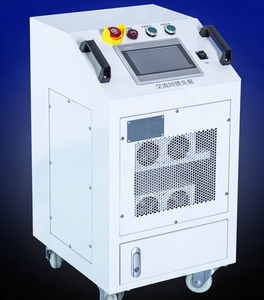
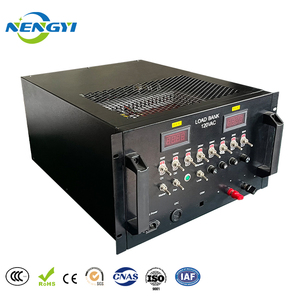
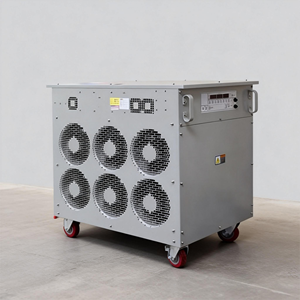
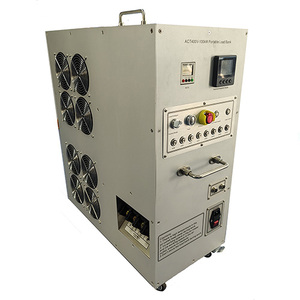
Analyzing key criteria for selecting power controller suppliers across aerospace, renewable grid integration, data center verification, and electric vehicle powertrain validation.
Modern electrical power testing and grid control require an unprecedented degree of flexibility, fidelity, and dynamic response speed. As global energy systems shift toward decentralized microgrids, high-density data centers, and high-voltage EV architectures (800V+ standard), electrical engineers and procurement directors are tasked with identifying top power controller suppliers capable of delivering robust hardware integrated with real-time digital feedback loops.
A power controller—spanning programmable AC/DC sources, electronic dummy loads, solid-state frequency converters, and high-voltage vacuum load switches—serves as the critical interface between primary energy input and device-under-test (DUT) validation. Selecting an equipment partner requires assessing not merely steady-state continuous power output, but dynamic transient response, Total Harmonic Distortion (THD), thermal management under forced air/liquid cooling, and compliance with IEEE, CE, and MIL-STD standards.
When conducting a procurement audit across leading international manufacturers, strategic intent mining highlights four foundational technical metrics:
Ability to handle sudden microsecond load steps (0 to 100%) without voltage overshoot or ringing, crucial for server power supply unit (PSU) dynamic stress testing and inverter grid-fault simulation.
Maintaining pure sine wave output (<0.5% THD) under non-linear dynamic loads to mimic pristine grid power or precisely synthesize distorted grid conditions for EMC compliance testing.
Bi-directional power capabilities that recycle absorbed electronic load energy back into the local facility grid at >90% efficiency, significantly cutting thermal dissipation and operational OPEX.
Comparative technical analysis of leading international suppliers, highlighting specialization, power density, and target application suitability.
| Supplier Category / Brand | Primary Voltage Range | Power Output Envelope | Core Architecture | Target Applications |
|---|---|---|---|---|
| Adaptive Power Systems (APS) | 0 – 600 Vln / 1039 Vll | 150 W to 150 kVA / 60 kW+ | Solid-State, Modular AC/DC, Regenerative | Avionics (400Hz), EV Battery Test, Grid Simulation |
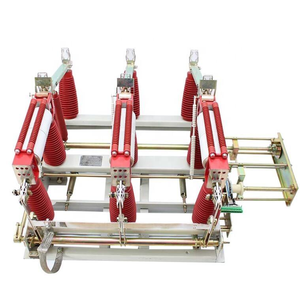
| CNXE High-Voltage Systems | 12 kV to 40.5 kV AC | 630A Continuous / 31.5kA Breaking | Vacuum Load Switching, Outdoor Circuit Breakers | Three-Phase AC Substation & Utility Switching |
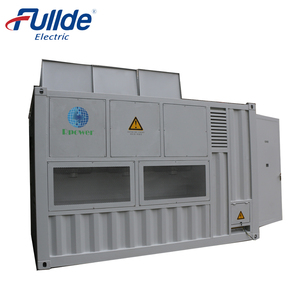
| Industrial Heavy Load Banks | 220V to 690V AC Three-Phase | 10 kW to 1500 kW Modular | Resistive / Inductive Forced-Air Cooled | Generator Set Burn-in, Large UPS Commissioning |
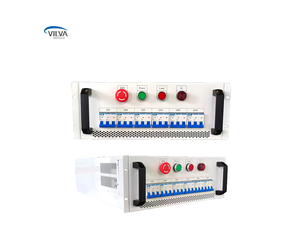
| Portable Service Test Suppliers | 120V / 220V / 380V AC | 1 kW to 100 kW Compact | Lightweight Portable Resistive Dummy Loads | On-site Data Center Maintenance & Field Service |
| High-Power Energy Saving Load Vendors | Up to 1000 Vdc / 480 Vac | Multi-Hundred kW Racked | Active Regenerative Grid Feedback (Energy Recovery) | Burn-in Aging Test, PV Inverter Manufacturing |
Key technological shifts reshaping the procurement and deployment of industrial power controllers over the next decade.
Traditional silicon-based IGBT switching networks are rapidly giving way to Silicon Carbide (SiC) and Gallium Nitride (GaN) power devices. Next-generation power controllers leverage SiC topologies to achieve switching speeds in excess of 100 kHz, reducing physical inductor and capacitor size by up to 40% while raising total system efficiency above 98%. Procurement teams must prioritize vendors transitioning to SiC architecture to reduce facility footprint and cooling requirements.
Isolated physical load banks are being replaced by smart, connected systems featuring native Modbus TCP, EtherCAT, and CANopen protocols. Future-ready power controllers broadcast real-time telemetry—including internal resistor junction temperatures, phase imbalance, and cumulative energy throughput—directly into cloud-based Digital Twin platforms. This enables predictive maintenance scheduling prior to hardware component degradation.
With commercial and passenger electric vehicles migrating to 800V and 1200V architecture, demand for DC load banks capable of operating up to 1000 Vdc continuous without thermal throttling has surged. Advanced electronic loads now incorporate programmable battery emulation profiles (CC, CV, CR, CP modes) capable of simulating dynamic charge/discharge profiles under extreme thermal conditions.
Grid modernization demands high-reliability outdoor AC vacuum load switches (such as the CNXE FZRN21 series) capable of switching three-phase 40.5kV systems under harsh environmental conditions. Vacuum arc extinguishing technology eliminates SF6 gas reliance, aligning procurement mandates with global environmental standards while securing zero-maintenance interruption performance.
For long-duration aging tests (e.g., 72-hour inverter burn-in cycles), heat-dissipating resistive load banks incur dual costs: electricity consumed and energy spent operating facility chillers. Regenerative AC/DC load banks convert test power back to clean grid-synchronized AC, returning up to 94% of consumed power and reducing total cost of ownership (TCO) within 18 months of continuous lab operation.
Modern test facilities require modular hardware that can operate standalone for low-power R&D (e.g., 10 kW) or parallel dynamically into mega-watt arrays (1500 kW+) for full-scale generator set acceptance testing. Automated master/slave synchronization protocols ensure load distribution without manual calibration.
Founded in 2003, Adaptive Power Systems (APS) has established itself as an authoritative global manufacturer and distributor of high-performance programmable AC power sources, AC and DC electronic loads, solid-state frequency converters, and precision digital power analyzers.
Engineered to serve demanding applications in aviation, defense, renewable energy, electric vehicles, and commercial power conversion laboratories, APS equipment covers an expansive power envelope from 150 W benchtop units to 150 kVA industrial floor cabinets. With independent sales representatives, specialized distributors, and certified service centers across North America, Europe, and Asia, APS delivers localized engineering consultation and rapid technical support worldwide.
Direct answers to critical technical questions asked by electrical engineers and procurement specialists during power hardware evaluation.
Industrial-grade programmable AC sources cover line-to-neutral voltages up to 600 Vln (1039 V line-to-line) with adjustable output frequencies ranging from 45 Hz up to 500 Hz (supporting standard 50/60 Hz commercial utility simulation as well as 400 Hz defense and avionics buses). Systems range from compact 150 W benchtop units like the FC300 series up to modular 150 kVA floor-standing cabinets (such as the APF3000 Series) capable of master/slave paralleling for multi-megawatt testing.
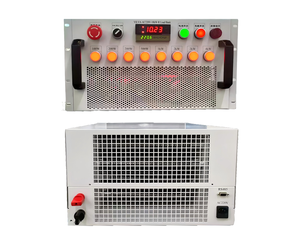
High-power DC electronic loads (such as the 5VPxC Series) feature specialized operating firmware containing built-in battery discharge algorithms. They can sink up to 60 kW per chassis at voltages up to 1000 Vdc. Controlled under Constant Current (CC), Constant Power (CP), or dynamic transient modes, these loads simulate real-world vehicle acceleration and regenerative braking cycles without requiring custom programming script layers.
A resistive load bank converts electrical test energy entirely into waste thermal energy using internal resistor grids and forced-air fan cooling. A regenerative load bank utilizes active front-end inverters to convert absorbed AC or DC energy back into high-quality grid-synchronized AC power (returning over 92-95% of energy back to the facility distribution panel). While resistive banks have a lower initial capital expenditure (CAPEX), regenerative banks significantly cut operating energy bills and cooling overhead (OPEX) in continuous high-duty environments.
Outdoor high-voltage vacuum switches operate within sealed vacuum interrupters where dielectric strength is extremely high. When electrical contacts separate under fault or normal switching conditions, electrical arcs are rapidly extinguished at current zero-crossing. The CNXE FZRN21-40.5D/T630-31.5 handles nominal rated currents up to 630A and short-circuit breaking currents up to 31.5kA in 60Hz 40.5kV three-phase utility lines, protecting transformer stations and heavy power equipment from line surges and grid short circuits.
Leading power equipment manufacturers equip their instruments with standard GPIB (IEEE-488), USB, RS-232, and LAN (Ethernet/LXI) interfaces. SCPI-compliant command sets enable seamless integration into National Instruments LabVIEW, Python automated test scripts, and facility SCADA systems. Proprietary GUI control software suite tools are also provided for direct data logging, waveform playback, and harmonics analysis without requiring custom driver development.
Procurement departments can request tailored system configurations—including multi-channel output racks, specialized input/output transformers, and ruggedized transport cases—by initiating a technical inquiry. Authorized global distributors and factory engineers assist in sizing system power safety margins, verifying compliance certifications (CE, UL, IEEE), and coordinating local commissioning and calibration service.
Consult with our senior application engineers to specify the exact power controller, electronic load bank, or frequency converter tailored to your project requirements.
Send an Inquiry