
Explore top-tier portable, handheld, benchtop, and real-time spectrum analyzers tailored for 5G NR deployment, EMC compliance testing, power quality assessment, and defense RF monitoring.
In an increasingly congested electromagnetic environment, the demand for precise frequency domain measurement has shifted from conventional swept-tuned superheterodyne architectures to ultra-fast, software-defined Real-Time Spectrum Analyzers (RTSA). As wireless communications transition toward 6G, Wi-Fi 7 (802.11be), satellite constellations (LEO), and complex automotive RADAR applications, procurement teams face a matrix of overlapping technical trade-offs. Choosing the right RF instrument requires understanding the fundamental relationships between Displayed Average Noise Level (DANL), Phase Noise, Probability of Intercept (POI), and processing bandwidth.
This industrial procurement benchmark provides test laboratory directors, RF system integrators, and electronics procurement officers with an objective, data-driven framework for selecting spectrum analyzer manufacturers. By evaluating both high-tier OEM manufacturers and specialized agile production facilities, enterprise buyers can optimize capital expenditure (CAPEX) while ensuring operational compliance with ISO/IEC 17025, CE, FCC, and MIL-STD-461 testing protocols.
The global market for RF measurement instrumentation is structured into tier-one laboratory precision vendors, specialized field telemetry manufacturers, and modular software-defined instrument developers. Below is an technical review of the top 10 global manufacturers dominating industrial R&D, field maintenance, and production line automated test equipment (ATE).
| Manufacturer / Brand | Primary Architecture | Max Freq. Range | Phase Noise @ 10kHz | Key Target Applications |
|---|---|---|---|---|
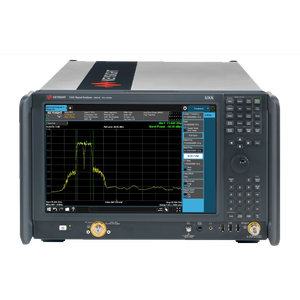
| 1. Keysight Technologies (USA) | Benchtop / RTSA / Modular | 2 Hz to 110 GHz+ | -136 dBc/Hz | 5G NR, Aerospace/Defense, Sub-THz R&D |
| 2. Rohde & Schwarz (Germany) | Benchtop / Handheld | 1 Hz to 90 GHz | -134 dBc/Hz | EMC Pre-compliance, Satellite, Base Station |
| 3. Anritsu (Japan) | Handheld / Field Master | 9 kHz to 54 GHz | -115 dBc/Hz | 5G Field Installation, Interference Hunting |
| 4. Ceyear Technologies (China) | Handheld / Laboratory | 10 Hz to 50 GHz | -120 dBc/Hz | Field Communication, Radar Maintenance |
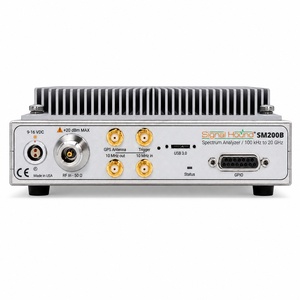
| 5. Signal Hound (USA) | USB Software-Defined RTSA | 100 kHz to 44 GHz | -133 dBc/Hz | Spectrum Monitoring, Automated Systems |
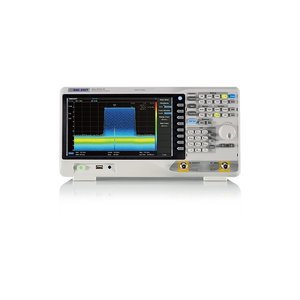
| 6. Siglent / Dingyang (China) | Real-Time Benchtop | 9 kHz to 7.5 GHz | -98 dBc/Hz | Industrial IoT, University Labs, EMI Debug |
| 7. Tektronix (USA) | Real-Time / Modular USB | 9 kHz to 26.5 GHz | -113 dBc/Hz | Transient Capture, RF Component Design |
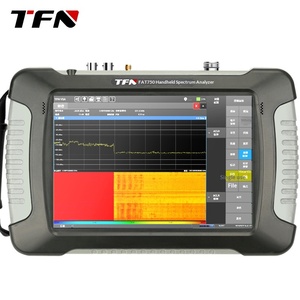
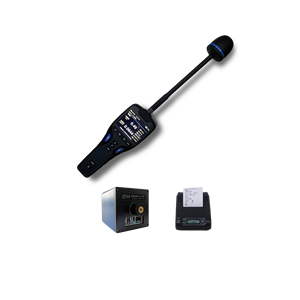
| 8. TFN Instruments (China) | Handheld / TSCM Wireless | 5 kHz to 20 GHz | -108 dBc/Hz | Wireless Security, Portable Field Testing |
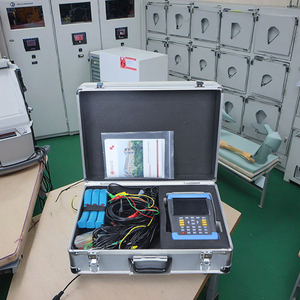
| 9. NCEL Test Instruments (Global) | 3-Phase Power / Spectrum | DC to 100 kHz / RF | N/A (Harmonics) | IEC 61000-4-30 Power Quality, Energy Grid |
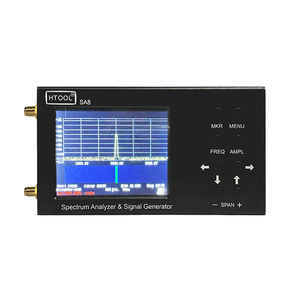
| 10. HTOOL Test Solutions | Compact Portable RF | 35 MHz to 6.2 GHz | -92 dBc/Hz | Wi-Fi 6E Debugging, Field Signal Generation |
When acquiring spectrum instrumentation, engineering teams must align instrument architecture with specific measurement challenges. The three dominant market topologies—Swept-Tuned Superheterodyne, Real-Time FFT, and Software-Defined USB Receivers—each deliver distinct performance trade-offs.
Swept-tuned instruments remain the gold standard for wideband, high-dynamic-range continuous wave (CW) measurements and spurious signal searches. By sweeping a local oscillator (LO) across a defined frequency span, these systems achieve an exceptional Spurious-Free Dynamic Range (SFDR) > 110 dB and an extremely clean noise floor (DANL < -165 dBm/Hz with preamplifiers enabled). However, swept analyzers struggle with transient signals, short-duration frequency-hopping burst events, and pulsed RF radars due to sweep time limitations.
Real-Time Analyzers digitize incoming signals in the time domain using high-speed Analog-to-Digital Converters (ADCs) and compute spectrums continuously using overlap Field Programmable Gate Array (FPGA) Fast Fourier Transforms (FFT). The key performance metric here is 100% Probability of Intercept (POI) duration—the minimum signal duration required for accurate amplitude measurement. Top-tier bench units like the Keysight UXA or Dingyang SSA3032X-R capture transients down to microsecond durations, making them essential for 5G NR beamforming verification and radar pulse profiling.
Disrupting traditional form factors, USB-based receivers such as the Signal Hound SM200B offload signal processing and display rendering to external host workstations over USB 3.0 or 10GbE interfaces. This architecture yields an exceptional performance-to-cost ratio, delivering a 20 GHz frequency sweep rate of 1 THz/s without incurring the overhead of integrated displays and internal power supplies. These units are increasingly deployed in automated spectrum monitoring arrays and remote SIGINT stations.
As enterprise organizations plan multi-year equipment upgrades, procurement strategies are shifting from purchasing single-function benchtop units toward adaptable, multi-mode test platforms. The following key trends define the future of RF spectrum measurement:
Beyond off-the-shelf instrument purchasing, large-scale industrial projects, defense contracts, and university research facilities frequently require customized spectrum analysis firmware, custom enclosure form factors, or white-label manufacturing. Selecting an experienced OEM partner guarantees long-term product lifecycle support, calibration security, and rapid technical customization.
Our manufacturing engineering teams specialize in delivering integrated RF test and power measurement ecosystems. With over two decades of dedicated industrial design experience, our facilities support end-to-end device development—from high-power frequency conversion systems to microvolt-sensitive spectrum measurement hardware.
Find authoritative answers to common engineering and commercial queries regarding spectrum analyzer selection, calibration standards, and system integration.
Need detailed RF specifications, custom frequency configurations, or high-volume enterprise quotes? Connect directly with our application engineering team to receive full documentation and tailored guidance.