
Direct factory supply featuring high-accuracy 3-phase power quality measurement, IEC 61000-4-30 Class A compliance, multi-channel transient analysis, and robust industrial communications.
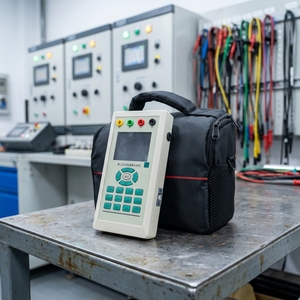
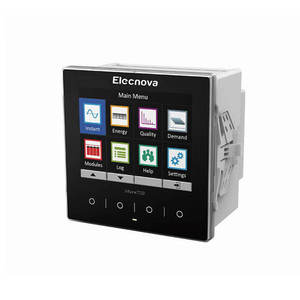
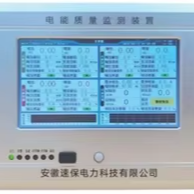
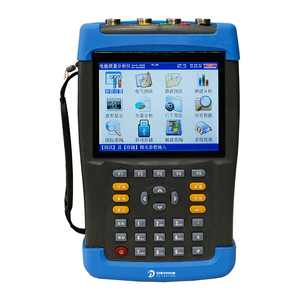
An authoritative engineering breakdown of electrical power distortion, compliance auditing under IEEE 519 and IEC 61000-4-30 Class A, and instrument deployment architecture for heavy industrial grids.
Harmonics are sinusoidal voltages or currents having frequencies that are integer multiples of the fundamental power frequency (50 Hz or 60 Hz). Driven by non-linear loads such as Variable Frequency Drives (VFDs), solar PV inverters, EV fast chargers, and switched-mode power supplies, non-sinusoidal currents distort grid voltage waveforms, provoking equipment overheating, transformer degradation, and protection relay nuisance tripping.
For contractual power quality disputes, utility interconnections, and critical facility verification, measurements must adhere to IEC 61000-4-30 Class A. Class A instruments guarantee identical measurement results when processing the same signal—regardless of manufacturer—demanding stringent time synchronization via GPS/PTP, precise 10/12-cycle aggregation windows, and zero gap processing.
As modern wide-bandgap semiconductors (SiC and GaN) raise power electronics switching frequencies, electrical networks experience interharmonics (non-integer frequencies) and high-order harmonics up to the 63rd order (3.15 kHz / 3.78 kHz). Advanced China-manufactured analyzers incorporate high-speed 16-bit to 24-bit ADCs to accurately map complex spectral profiles.
Selecting the appropriate instrument classification is essential for balancing capital expenditure against measurement rigour and legal compliance.
| Feature Parameter | Class A (IEC 61000-4-30 Ed 3) | Class S (Statistical / Survey) | Class B (General Purpose) |
|---|---|---|---|
| Primary Purpose | Legal compliance, contractual disputes, utility PCC auditing | Power quality surveys, troubleshooting, internal reporting | Basic energy monitoring, educational, non-critical testing |
| Voltage Accuracy | ±0.1% of Udin (10V to 150% of Udin) | ±0.5% of Udin | Manufacturer specified (typically ±1.0%) |
| Harmonic Order Range | Up to 50th / 63rd Order (IEC 61000-4-7 Class 1) | Up to 50th Order (IEC 61000-4-7 Class 2) | Up to 21st or 31st Order |
| Time Synchronization | Mandatory GPS/PTP (±1 second per 24 hrs relative to UTC) | Internal RTC (Periodic manually synced) | Internal Unsynchronized Clock |
| Aggregation Method | Strict 10-cycle (50Hz) / 12-cycle (60Hz) continuous window | Interval snapshot / averaged windows | Non-standard sampling windows |
| Dip / Swell Detection | 1-cycle sliding RMS updated every half-cycle | 1-cycle RMS updated per cycle | Multi-cycle threshold trigger |
How enterprise procurement teams, electrical engineering EPCs, and OEM panel builders are adapting their sourcing strategies for power diagnostic systems from 2025 onwards.
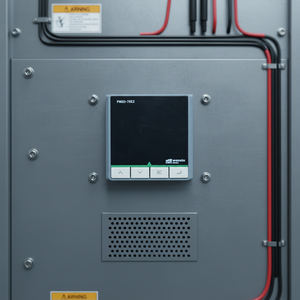
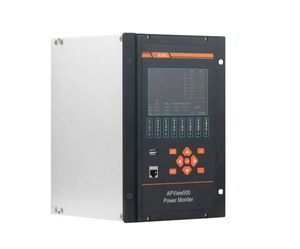
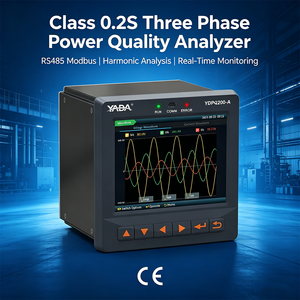
Industrial facilities are migrating from annual portable audits to permanently installed panel-mounted analyzers (like Acrel APView500 and Yada YDPQ200-A). Continuous telemetry captures random transient voltage dips, lightning surges, and harmonic resonance that portable audits miss.
Legacy RS485-only meters are being phased out in favour of multi-protocol instruments offering Dual Ethernet, Modbus TCP, MQTT, and HTTPS. Procurement managers prioritize analyzers that push high-frequency power data directly into cloud EMS or factory SCADA systems without gateway hardware.
With power grids experiencing increased volatility due to renewable integration, instruments with 32GB+ expandable storage are standard requirements. On-board flash memory ensures raw COMTRADE waveform logs remain intact during network outages.
Global buyers are bypassing intermediary rebranders to partner directly with premier Chinese manufacturers. Direct factory relationships yield 30%–50% cost efficiencies, tailored OEM firmware customization, and direct engineering technical support.
Key technological innovations transforming harmonic analysis instruments over the next decade.
Next-generation harmonic analyzers embed machine learning algorithms directly into microprocessors. Rather than raw COMTRADE file exports, modern units instantly diagnose failure modes—identifying whether a voltage dip was caused by induction motor starting, transformer inrush, or grid side faulting.
To detect sub-microsecond transients triggered by high-speed solid-state switching, high-end power quality analyzers now feature sampling rates exceeding 1024 samples per cycle (51.2 kHz at 50Hz). This captures sub-harmonics, high-frequency noise, and insulation-destroying impulse spikes.
Harmonic analyzers are evolving from passive diagnostic tools into active closed-loop controllers. By broadcasting real-time harmonic phase and magnitude vectors to Active Harmonic Filters (AHF) and STATCOMs, they enable instantaneous dynamic distortion mitigation.
Critical answers for electrical design engineers, facility managers, and international buyers evaluating Chinese harmonic analyzers.
Voltage THD (THD-U) measures the total harmonic distortion present in the system voltage waveform, reflecting overall grid health. Current THD (THD-I) quantifies the harmonic current drawn by non-linear connected loads. High THD-I indicates that connected equipment is injecting severe harmonic pollution back into the distribution transformer, which will eventually degrade THD-U if uncorrected.
Class A certification enforces strict mathematical algorithms, sampling windows, time synchronization (GPS/PTP), and accuracy bounds. When electrical utilities assess power quality penalties or investigate grid contamination disputes with industrial plants, Class A compliance ensures that readings from both parties are legally binding and 100% reproducible without measurement ambiguity.
Yes. All our analyzers support standardized open industrial protocols including Modbus RTU (via RS485), Modbus TCP (via Ethernet), and optional MQTT / RESTful HTTP APIs. Standardized register mapping ensures seamless integration into third-party software platforms such as Schneider EcoStruxure, Siemens Desigo, Johnson Controls Metasys, or custom web SCADA systems.
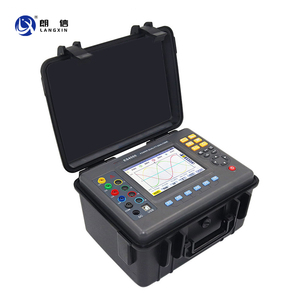
Our instruments support a wide range of current transformers (CTs) and sensors: traditional 1A/5A secondary current transformers for panel installations, 333mV voltage-output split-core CTs for retrofits, and flexible Rogowski coils (up to 6000A) for portable field auditing in cramped breaker cabinets.
Our standard multifunction power meters analyze up to the 31st or 51st harmonic order. Premium diagnostic instruments (such as the Yada YDPQ200-A and Acrel APView500) provide ultra-deep spectrum analysis up to the 63rd harmonic order, alongside interharmonic and sub-harmonic measurement capabilities per IEC 61000-4-7.
Every instrument undergoes rigorous automated testing and factory calibration against high-precision signal calibrators traceable to national metrology standards (CNAS/ILAC). Individual ISO 9001 calibration test certificates are provided with each unit. ISO 17025 third-party calibration reports are available upon request.
Absolutely. As a premier original manufacturer in China, we offer extensive OEM/ODM services for international brand owners, panel builders, and system integrators. Services include customized front-panel graphics, private label enclosures, custom firmware default settings, custom Modbus register mapping, and localized PC software GUIs.
We provide a standard 12 to 24-month factory replacement warranty depending on the product line. Our dedicated application engineering team offers lifetime remote technical assistance, firmware updates, instrument setup guidance, and diagnostic COMTRADE waveform analysis support.
Combining over 20 years of precision power engineering experience with advanced SMT automated production lines and international quality compliance standards.
Our state-of-the-art facility utilizes high-speed Yamaha SMT placement machines, automated optical inspection (AOI), and multi-point temperature-compensated calibration rigs. Every power analyzer undergoes 72-hour full-load thermal burn-in testing prior to dispatch.
Our products comply fully with international electrotechnical norms including CE, IEC 61000-4-30 Class A, IEC 61000-4-7, IEC 61000-4-15 (Flicker), and ISO 9001 quality management standards, ensuring trouble-free global grid deployment.
We provide full technical documentation, software development kits (SDKs), Modbus register maps, and direct consultation with senior power electronic engineers to streamline your facility integration or OEM development cycle.
Need custom OEM configurations, high-volume B2B price schedules, or Class A calibration documentation? Contact our engineering sales specialists today for instant technical guidance.