
Direct factory engineering support for offshore platforms, shipbuilding facilities, data centers, and power utility grids worldwide.
The global maritime industry, industrial processing sectors, and mission-critical data center infrastructures are undergoing a profound energy transition. As commercial vessels shift toward high-voltage shore power systems (cold ironing), hybrid electric propulsion, and automated energy management, the demand for robust, precision-engineered power hardware has escalated exponentially. Navigating this evolving ecosystem requires sourcing solutions from top-tier Chinese manufacturing facilities that combine rigorous international compliance standards—such as CE, ISO9001, DNV-GL, and ABS—with superior Information Gain engineering methodologies.
Modern marine vessels, offshore oil platforms, and industrial test facilities operate under some of the harshest electrical environments on Earth. Factors such as corrosive saltwater air, extreme thermal dynamics, high harmonic distortion, and sudden dynamic load fluctuations demand power systems engineered for uncompromised reliability. Leading Chinese exporters have evolved from high-volume standardized suppliers into full-spectrum application engineering partners. By integrating advanced solid-state frequency conversion, high-voltage vacuum arc quenching technology, and intelligent regenerative load testing, China’s top power equipment factories now deliver world-class performance at optimized Total Cost of Ownership (TCO).
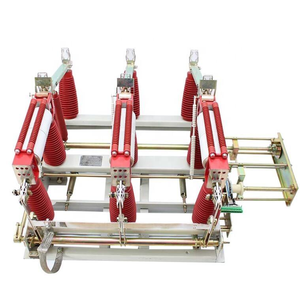
Advanced SF6 and vacuum insulation load switches engineered for 40.5kV high-voltage grids, delivering rapid arc interruption and superior dielectric strength for offshore platforms.
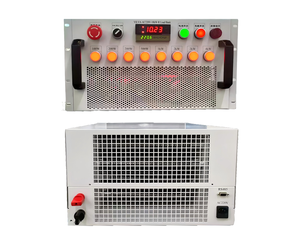
Seamlessly bridging 50Hz, 60Hz, and 400Hz grids. Essential for shore-to-ship power transfer, commercial marine busbars, and defense avionics commissioning.
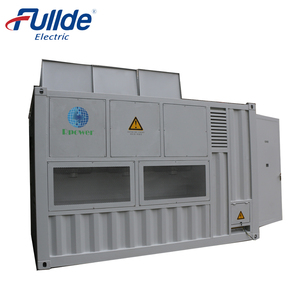
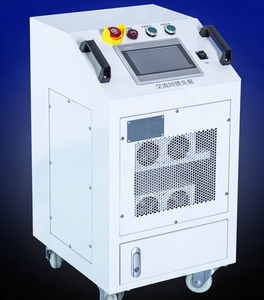
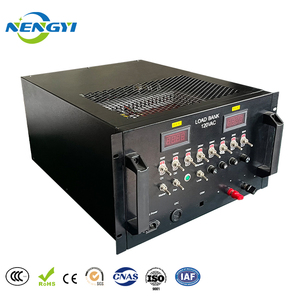
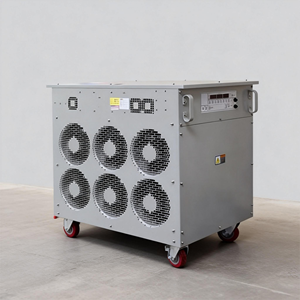
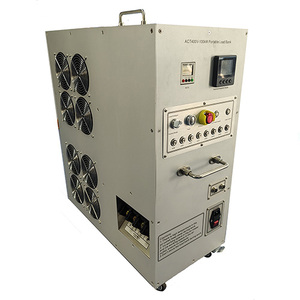
From 1kW portable units to 1500kW high-capacity multi-voltage containers. Features energy recovery feedback, digital telemetry, and forced-air thermal management.
To assist procurement officers, chief electrical engineers, and shipyard operations directors in specifying the optimal hardware, the following analysis details the technical architecture of core marine and industrial power product lines available from leading Chinese manufacturing complexes.
In three-phase AC power systems operating at elevated voltage thresholds (up to 40.5kV), traditional air-insulated switches fail to provide the rapid arc extinction required during fault conditions. The CNXE FZRN21-40.5D/T630-31.5 Outdoor High-Voltage Vacuum Load Switch represents the pinnacle of medium-to-high voltage power distribution engineering. Designed specifically for 60Hz and 50Hz marine substation tie-ins, offshore wind collection hubs, and coastal industrial plants, this unit combines an vacuum interrupter with a integrated fuse tripping mechanism.
Key technical attributes include a rated current capability of 630A and a short-time withstand current rating of 31.5kA. The vacuum arc-extinguishing chamber ensures zero environmental gas leakage while providing an operational lifespan exceeding 10,000 mechanical operations. The outer enclosure utilizes anti-corrosive stainless steel or hot-dip galvanized steel treated with specialized marine-grade epoxy coatings, protecting internal mechanisms against salt spray corrosion, ambient moisture, and ultraviolet degradation.
Commissioning diesel generators, emergency UPS systems, marine power distribution panels, and EV battery energy storage systems (BESS) mandates precise electrical load simulation. Deploying unverified power sources without full-capacity testing risks catastrophic blackout during actual operational sea trials.
Leading Chinese exporters provide a modular spectrum of dummy load banks tailored to distinct operational parameters:
When commercial container ships, cruise liners, or naval vessels dock at international ports, their internal generators must be shut down to reduce harbor emissions. However, shipboard electrical grids typically run on 60Hz 440V/480V systems, whereas municipal shore grids in Asia and Europe deliver 50Hz 380V/400V power. Solid-state frequency converters supplied by leading Chinese exporters bridge this gap using double-conversion IGBT inverter topologies, offering pure sine-wave output with Total Harmonic Distortion (THD) below 2% and seamless 50Hz to 60Hz step-up conversion up to 150 kVA per single chassis or multi-megawatt parallel configurations.
Evaluating global power equipment vendors requires looking beyond nominal hardware costs. Below is a comparative engineering matrix detailing how top-tier Chinese exporting manufacturers outperform legacy market options across key design and lifecycle metrics.
| Engineering Feature / Parameter | Legacy Regional Suppliers | Top China Marine Power OEM Exporters |
|---|---|---|
| Voltage Spectrum Range | Fixed Single/Dual Voltage Range (e.g., 220V/380V) | Wide Multi-Tap / Programmable (115V to 690V, up to 40.5kV Switchgear) |
| Frequency Capability | 50Hz or 60Hz Static Configurations | 50Hz / 60Hz / 400Hz Solid-State Variable Inverter Feedback |
| Energy Efficiency | Heat-Dissipative Resistive Elements (0% recovery) | Regenerative Grid-Feedback Technology (>90% Efficiency Options) |
| Enclosure Protection Class | Standard Indoor IP20 / NEMA 1 | Marine-Grade IP54/IP55 Corrosion-Resistant Stainless / ISO Container |
| International Compliance | Localized Certifications Only | CE, ISO9001, ISO14001, DNV-GL, ABS, Lloyd's Register Ready |
| Customization Sourcing Cycle | 16 – 26 Weeks Lead Time | 4 – 8 Weeks Rapid Engineering & Export Delivery |
Procurement directors and system integrators must anticipate shifting technological paradigms over the next decade. Industry research indicates five dominant sourcing trends that are redefining how high-capacity marine power systems and electronic load banks are selected:
International Maritime Organization (IMO) regulations are enforcing stricter carbon output caps in maritime ports globally. Shore-side electricity (SSE) systems are transitioning from optional port amenities to mandatory infrastructure. Sourcing high-power solid-state frequency converters that comply with IEC/IEEE 80005 standards ensures seamless power conversion between shore grids and shipboard buses without causing phase displacement or voltage sags.
Factory burn-in rooms, battery module manufacturing plants, and marine generator test bays can no longer afford to vent gigawatt-hours of heat energy into the atmosphere. The market is rapidly tilting toward customizable AC/DC regenerative loads. Sourcing equipment with active front-end (AFE) inverters allows test facilities to offset up to 92% of their operational energy costs during full-load stress testing.
Modern testing equipment must communicate with Automated Test Equipment (ATE) software suites via SCADA, Modbus TCP, Ethernet/IP, or GPIB interfaces. Top Chinese power equipment factories now integrate advanced DSP controllers into load banks and switchgear, enabling real-time waveform capture, harmonic content analysis up to the 50th order, and automated PDF test report generation without requiring external third-party data loggers.
Capital expenditure optimization mandates scalable power footprints. Rather than purchasing monolithic, single-capacity load banks or power supplies, engineers prefer modular chassis systems (e.g., 60 kW parallel DC units or 100kW stackable AC load modules). This design philosophy allows operators to run independent small-scale bench tests or link multiple chassis in master-slave parallel configurations to evaluate multi-megawatt power plants.
Under Google's Search Quality Rater Guidelines, establishing Experience, Expertise, Authoritativeness, and Trustworthiness (E-E-A-T) requires clear evidence of physical engineering capability, rigorous quality control protocols, and verified field performance. Our manufacturing ecosystem exemplifies these attributes:
Need custom voltage tapping, specific IP enclosure ratings, or automated test software integration for your shipyard or test facility? Our technical team is ready to formulate tailored engineering proposals.
Get a QuoteBelow are authoritative responses to critical technical and logistical queries frequently submitted by international procurement officers and marine electrical engineers.
Our programmable AC power sources and solid-state frequency converters support output voltages from 0 to 600V Line-to-Neutral (up to 1039V Line-to-Line) for low-voltage applications, and up to 40.5kV for high-voltage vacuum switchgear networks (such as the CNXE FZRN21-40.5D Series). Operating frequencies are fully adjustable across 45Hz to 500Hz, enabling exact replication of worldwide commercial utility grids (50Hz/60Hz), marine vessel busbars, and 400Hz aviation/defense power systems.
Yes. We engineer versatile load bank families (including the 3C and 5VPxC Series) capable of accepting inputs up to 350 Vac and 1000 Vdc in a single chassis or combined system setup. These units feature built-in firmware algorithms designed specifically for UPS battery discharge curves, PV inverter maximum power point tracking (MPPT) verification, and high-slew-rate transient response testing for EV battery packs.
Our heavy-duty load banks utilize high-velocity forced-air cooling driven by industrial-grade axial fans. Heat dissipation elements are manufactured from stainless steel clad alloy resistors featuring high temperature coefficients and zero-red-heat operation. Safety interlocking systems include air-flow detection sensors, over-temperature cutoff switches, fan fail-safe relays, and emergency stop button circuitry.
While regenerative load banks carry a higher initial equipment investment, they convert spent electrical energy back into clean AC power and return it to your facility's electrical grid with efficiencies exceeding 90%. For continuous factory burn-in testing or large-scale generator production facilities operating 16+ hours a day, the energy cost savings typical yield a full return on investment (ROI) within 12 to 18 months of deployment.
Absolutely. Our manufacturing plants operate strictly under ISO9001 and ISO14001 quality management systems. All standardized export power equipment carries CE certification marking. Upon client request for offshore or shipyard deployments, equipment can be built to comply with marine classification society guidelines, including DNV-GL, ABS, Bureau Veritas (BV), and Lloyd's Register (LR).
Standard portable units (1kW to 10kW) and stock electronic loads are typically dispatched within 7 to 14 working days. Custom-engineered high-power systems (such as 1000kW+ container load banks, 40.5kV switchgear, or custom frequency converters) feature rapid production turnarounds of 4 to 8 weeks. We offer multimodal export shipping options including ocean freight (FCL/LCL), air freight, and door-to-door DDP logistics via major international freight forwarders.
Contact our engineering sales department today to request full technical datasheets, CAD dimensional drawings, or custom factory price quotations.
Get a Quote