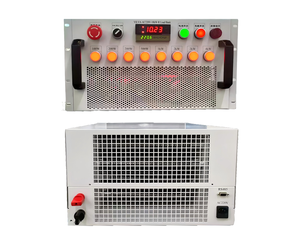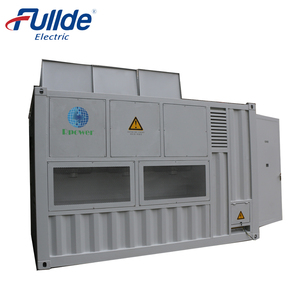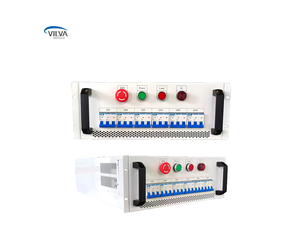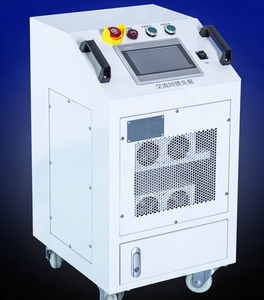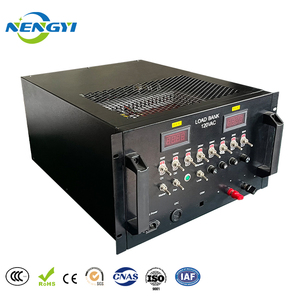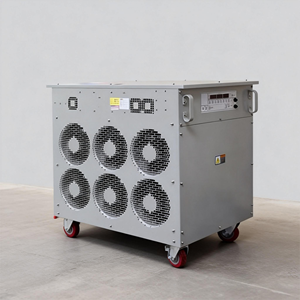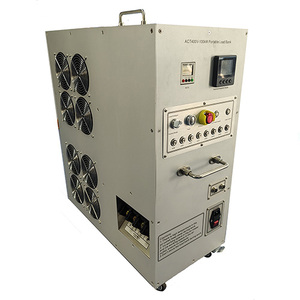
Engineered for mission-critical validation, grid simulation, and high-voltage industrial applications. Fully compliant with international electrical safety standards.
As industrial infrastructure transitions toward electrification, renewable integration, and high-density energy storage, selecting the optimal rectifier system manufacturer in China requires rigorous evaluation of power electronics architecture, thermal mitigation, and total harmonic distortion (THD) management.
Industrial rectifiers are the backbone of modern power conversion, converting alternating current (AC) from primary distribution grids into tightly regulated direct current (DC) for electro-chemical processing, heavy manufacturing, telecommunications power plants, and EV battery testing systems. Leading Chinese manufacturers have evolved from low-cost component assembly to pioneering state-of-the-art Silicon Carbide (SiC) and Insulated Gate Bipolar Transistor (IGBT) high-frequency switching rectifiers.
Traditional Silicon Controlled Rectifier (SCR) systems excel in extreme megawatt-scale applications such as chlor-alkali electrolysis and steel arc furnaces. However, modern switch-mode IGBT rectifiers offer superior power factor correction (PFC > 0.99), reduced low-order harmonics without bulky external filters, and millisecond-level dynamic response times necessary for precision lab-grade testing.
Non-linear rectifier loads induce current harmonics back into the utility grid, causing transformer overheating and line voltage drop. Tier-1 manufacturers integrate 12-pulse or 24-pulse phase-shifting transformers alongside Active Front End (AFE) technologies to drive Total Harmonic Distortion (THD-i) below 3%, fully satisfying stringent IEEE 519 and IEC 60146 standards.
Mission-critical operations demand uninterrupted DC uptime. Modern modular rectifier cabinets leverage hot-swappable power modules configured in N+1 or N+2 parallel arrangements. Should an individual power module experience thermal overload or device breakdown, internal busbar isolation guarantees uninterrupted operation without dropping the critical system load.
| Performance Parameter | Diode Bridge Rectifiers | SCR (Thyristor) Rectifiers | PWM IGBT Active Front End (AFE) |
|---|---|---|---|
| Typical Efficiency | 95.0% – 97.5% | 96.0% – 98.2% | 96.5% – 98.8% |
| Power Factor (Cos φ) | 0.70 – 0.85 (Uncompensated) | 0.50 – 0.92 (Varies with phase angle) | > 0.99 (Unity Power Factor across range) |
| Harmonic Distortion (THD-i) | High (> 30-40%) | Moderate to High (15% – 30%) | Ultra-Low (< 3% to 5%) |
| Dynamic Slew Rate | Slow (> 100ms) | Medium (20ms – 50ms) | Fast (< 1ms to 5ms) |
| Primary Target Applications | Unregulated DC Supplies, Basic Chargers | Heavy Galvanic Plating, Mining, Smelting | EV Battery Testing, Aerospace, Smart Grids |
Understanding tech shifts in China's power electronics ecosystem empowers procurement teams to lower Total Cost of Ownership (TCO) while locking in supply chain resilience.
The transition from legacy Silicon MOSFETs to Silicon Carbide (SiC) and Gallium Nitride (GaN) switching devices allows rectifiers to operate at switching frequencies exceeding 100 kHz. For global buyers, this delivers a 40% reduction in cabinet footprint, substantially lower shipping weight, and reduced heat dissipation energy overhead.
Traditional resistive load banks dissipate energy entirely as waste heat. Modern procurement policies prioritize AC Regenerative Load Systems that feedback over 92% of tested electrical power back into the facility power grid, directly reducing operational cost and assisting corporate ESG carbon offset metrics.
Modern Chinese power supply OEM manufacturers integrate industrial Modbus-TCP, CANopen, and EtherCAT interfaces directly onto controller DSPs. Procurement leads should ensure equipment supports real-time telemetry output for predictive thermal modeling and automated SCADA integration.
Combining over two decades of power instrument engineering with state-of-the-art test bays to solve the world's most demanding electrical load challenges.
From 150 W benchtop electronic loads to 150 kVA solid-state frequency converter cabinets and multi-megawatt load banks, engineered to duplicate worldwide utility grids, 400 Hz avionics buses, and 50/60 Hz marine shipboard installations.
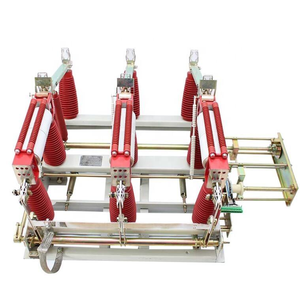
Specialized hardware profiles built into firmware for Electric Vehicle (EV) battery pack dynamic stepping (up to 1000 Vdc), photovoltaic (PV) inverter islanding simulation, UPS system discharge validation, and high-voltage vacuum switchgear testing.
Supported by a global network of independent technical sales representatives, certified calibration laboratories, and engineering field service centers across North America, Europe, and the Asia-Pacific region since 2003.