
Rigorous compliance testing equipment engineered for aerospace avionics, electric vehicle powertrain verification, mission-critical UPS systems, and renewable energy grid integration.
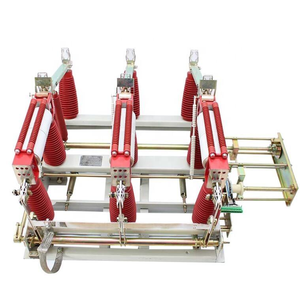
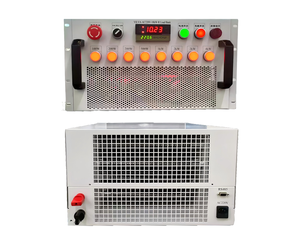
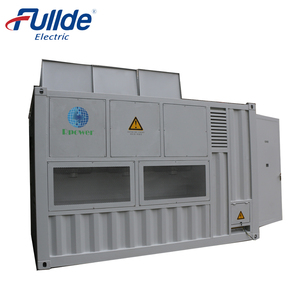
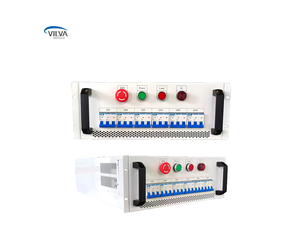
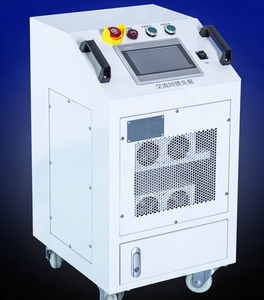
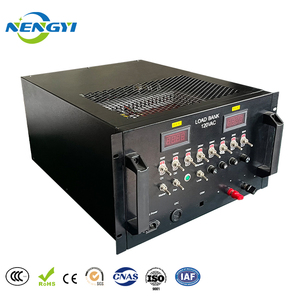
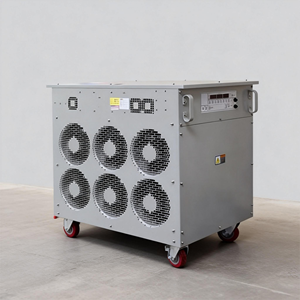
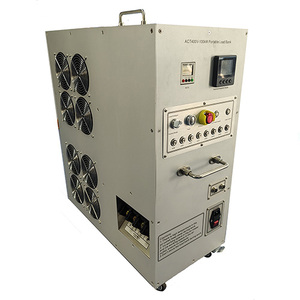
Adaptive Power Systems (APS) delivers end-to-end electrical test instrumentation, backed by decades of proven field performance in over 60 countries.
We provide seamless integration across AC Power Sources, Programmable Electronic Loads, and Precision Digital Power Analyzers, eliminating multi-vendor compatibility friction in automated test setups.
Engineered to meet stringent IEC 61000-4-x, MIL-STD-461, and RTCA/DO-160 avionics test standards. Fully traceable NIST/ISO 17025 calibration support ensures seamless global audit compliance.
Supported by dedicated application support teams, regional service hubs, and certified distribution channels across North America, Europe, and Asia-Pacific for rapid commissioning.
In modern industrial electronics, automotive electrification, and defense systems manufacturing, securing certified Electromagnetic Compatibility (EMC) and validating power factor compliance are non-negotiable thresholds for global market authorization. As a primary exporter and supplier of advanced EMC test instrumentation and high-capacity AC/DC load banks, Adaptive Power Systems bridges the critical gap between preliminary R&D design and final international compliance certification.
Electromagnetic interference (EMI) and immunity testing require highly stable, low-distortion clean power generation paired with dynamic load absorption capabilities. High-frequency switched-mode electronics produce high-order harmonics, dynamic transient surges, and voltage sags that can destabilize neighboring grid equipment unless properly decoupled and measured.
Our power testing systems utilize advanced Pulse Width Modulation (PWM) inverter stages alongside low-pass LC filter networks, achieving output Total Harmonic Distortion (THD) of under 0.5% at nominal rating. This pristine utility baseline is essential for executing precise immunity tests such as IEC 61000-4-11 (voltage dips, short interruptions) and IEC 61000-4-13 (harmonics and interharmonics immunity).
Achieving international export clearance requires adhering to strict regulatory frameworks established by global standardization bodies. The table below outlines key international standards serviced by our testing lineup:
| Standard | Industry Sector | Core Testing Requirement | APS Recommended Hardware |
|---|---|---|---|
| IEC 61000-3-2 / 3-12 | Commercial Electronics | Harmonic Current Emission Limits (≤16A & >16A per phase) | M2000 Power Analyzer + CFS300 AC Source |
| IEC 61000-4-11 / 4-34 | Industrial & Medical | Voltage Dips, Short Interruptions, & Voltage Variations Immunity | APF3000 Series High-Power AC Cabinet (to 150kVA) |
| MIL-STD-461G / MIL-STD-704F | Defense & Aerospace | Conducted Susceptibility, Transient Spikes & 400Hz Bus Simulation | FC300 Benchtop Converter & 3C Series AC/DC Load |
| ISO 16750-2 / UN ECE R10 | Automotive EV / HEV | DC Supply Voltage Dips, Reverse Polarity & Battery Discharge Profiles | 5VPxC High-Power DC Load (1000V / 60kW per chassis) |
| IEEE 1547 / UL 1741 | Renewable Solar & Storage | Inverter Anti-Islanding, Grid Support & Reactive Power Injection | Customizable AC Regenerative Load Bank System |
When operating ultra-high power load banks exceeding 500 kW, traditional resistive element switching creates massive current spikes and thermal hysteresis, introducing measurement errors in automated test environments (ATE). Modern engineering practice advocates for phase-shifted multi-pulse transformer topologies or Active Front End (AFE) semiconductor controls.
By incorporating microsecond-level digital signal processing (DSP), APS high-power load banks implement step-less current control. This allows test engineers to execute continuous sweep testing for continuous duty cycles without stepping relays out of calibration, preventing localized thermal stress and prolonging equipment lifespan by over 40% compared to legacy resistive switchboxes.
Anticipating engineering demand shifts in high-voltage EV architectures, renewable microgrids, and automated lab virtualization.
As electric vehicle OEMs move from 400V to 800V/1000V Silicon Carbide (SiC) inverter architectures to enable ultra-fast charging, procurement teams must prioritize high-voltage DC load banks equipped with dynamic master/slave paralleling up to 600 kW to guarantee future-proof lab expansion.
Physical load banks are increasingly integrated with real-time digital hardware-in-the-loop (HIL) simulations. Modern procurement criteria require native Ethernet, SCPI standard over LXI, and LabVIEW/Python drivers to seamlessly interface test hardware with software digital twins.
Corporate ESG goals and rising energy expenditures are driving global test facilities away from legacy air-cooled resistive burn-in racks toward bi-directional regenerative AC/DC load systems that recycle absorbed energy directly back into plant power grids.
To minimize downtime, enterprise buyers favor hot-swappable module chassis designs. Modular power drawers allow continuous operation during maintenance or routine recalibration without shutting down an entire production line.
Detailed technical answers to common questions asked by supply chain managers, lab directors, and test engineers.
Standard AC load banks act purely as energy sinks (absorbing power from a generator or UPS under test). In contrast, an EMC-compliant AC Power Source acts as a precision grid simulator that generates ultra-clean AC power with negligible total harmonic distortion (THD < 0.5%), precise phase displacement control (0-360°), and transient injection capabilities. This allows engineers to assess whether a Device Under Test (DUT) complies with stringent electromagnetic immunity standards like IEC 61000-4-11.
Yes. The APS 5VPxC Series High Power DC Electronic Loads are specifically engineered for EV battery pack testing up to 1000 Vdc and 60 kW per chassis (parallelable for higher power). They include built-in firmware profiles for continuous constant current (CC), constant voltage (CV), constant resistance (CR), and constant power (CP) modes, alongside fast transient step profiling to simulate real-world vehicle drive cycles (FUDS/WLTP).
Traditional resistive load banks dissipate 100% of absorbed electrical energy as heat, requiring massive air conditioning and cooling infrastructure. Regenerative AC load banks convert absorbed energy back into clean AC synchronous power and return up to 92% of it directly to your facility’s main distribution grid. This significantly lowers utility costs, reduces HVAC cooling demands, and lowers the overall carbon footprint during continuous 24/7 burn-in testing.
All Adaptive Power Systems equipment ships fully CE certified and complies with relevant global safety directives (LVD 2014/35/EU and EMC Directive 2014/30/EU). Standard factory shipments include a comprehensive factory calibration report traceable to NIST (National Institute of Standards and Technology) or ISO/IEC 17025 accredited standards, guaranteeing full compliance for international laboratory audits.
Standard catalog benchtop units and modular loads typically ship within 2 to 4 weeks. High-power custom systems (such as 1000kW to 1500kW AC load cabinets or specialized high-voltage switchgear) generally carry a manufacturing lead time of 6 to 10 weeks, inclusive of full factory acceptance testing (FAT) prior to global export shipping.
Modern automated test systems require remote computer interface capabilities. APS instruments come standard with or offer optional RS232, USB, GPIB (IEEE-488), and LAN Ethernet interfaces implementing standardized SCPI command syntax. Additionally, we provide free dedicated Windows GUI control software and native drivers for LabVIEW and Python integrations.
Need customized voltage step controls, dynamic regenerative feedback, or MIL-STD compliance verification? Our global engineering team is ready to analyze your device under test and recommend the exact test configuration required.