Sales & Engineering: +1 (866) 517-8400 [email protected]

Aviation Power Test Equipment Exporter & Exporters serving the Brazil market

Precision 400Hz GPU Sources, Regenerative AC/DC Load Banks & Tropicalized Avionics Testing Solutions

Aerospace Power Testing Portfolio

Mission-Critical Aviation & Military Load Testing Hardware

Engineered for extreme reliability, frequency precision (400Hz / 60Hz / 50Hz), and high-capacity electrical stress testing tailored for Brazilian defense, aerospace manufacturing, and civil aviation MRO hubs.
CNXE FZRN21-40.5D Outdoor High-Voltage Switch
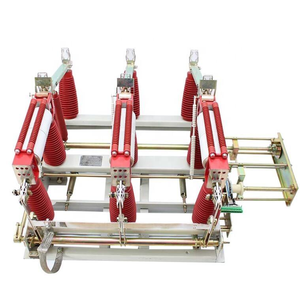
CNXE FZRN21-40.5D Outdoor HV Vacuum Load Switch Circuit Breaker 60Hz
High-voltage three-phase AC breaker designed for substation protection and industrial utility distribution in 60Hz regional grid environments.
Send an Inquiry
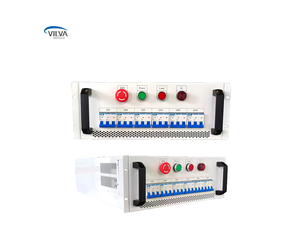
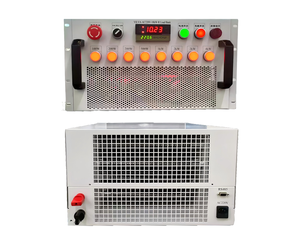
10KW Resistive Load Bank
10KW Resistive Load Bank (Indoor) - UPS & Avionics Test Use 220V 50/60Hz
Compact indoor dummy load bank for mission-critical UPS verification, flight control electronics, and auxiliary power units (APU).
Send an Inquiry
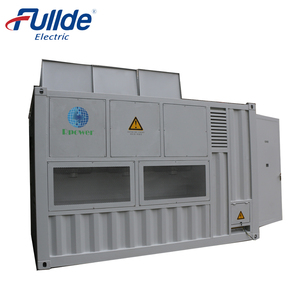
1000KW 3 Phase Load Bank
1000KW 3 Phase 440V/380V/220V AC Heavy-Duty Load Bank
Multi-voltage high-capacity load bank engineered for airfield ground generator commissioning and heavy defense facility load validation.
Send an Inquiry
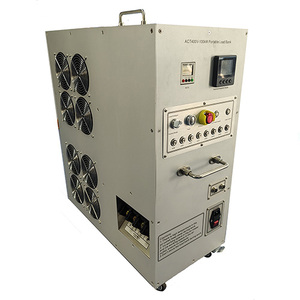
1KW Portable AC Load Bank
1KW Portable Resistive AC Load Bank - 380V Mobile Test Equipment
Ultra-portable electrical load tester optimized for field service technicians, avionics rack verification, and localized server maintenance.
Send an Inquiry
AC Regenerative Load Bank
High Power AC Regenerative Load Bank with Energy-Saving Communication
Advanced grid-tied feedback load system that recycles test energy during long-duration burn-in trials of aviation frequency converters.
Send an Inquiry
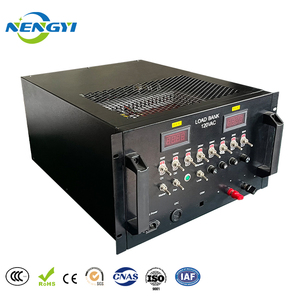
6KW 120VAC Load Bank
6KW 120VAC Load Bank - Precision Avionics & Data Center AC Tester
Single-phase benchtop dummy load with fine power resolution steps, tailored for aircraft cabin power systems and instrument testing.
Send an Inquiry
1500KW CE Certified AC Load Bank
1500KW CE Certified Multi-Voltage AC Load Bank (115V to 690V)
Industrial-grade flagship load bank featuring forced-air cooling, local touchscreen controls, and remote automation via SCPI/GPIB/LAN.
Send an Inquiry
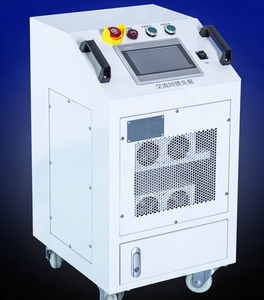
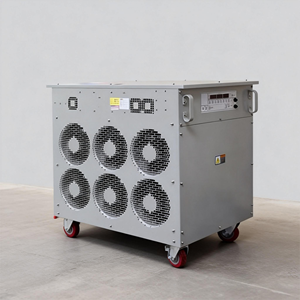
Portable 100kW AC Load Bank
Portable 100kW AC Load Bank 380V Resistive Forced Air Cooling
Ruggedized caster-mounted load bank engineered for airport apron Ground Power Unit (GPU) maintenance and diesel generator testing.
Send an Inquiry
400 Hz
Avionics Frequency Standard
1500 kW
Max Continuous Capacity
MIL-STD
704F / 1399-300B Compliant
IP55 / IP65
Tropical Salt Spray Protection

Strategic Engineering Blueprint: Aviation Power Test Infrastructure in the Brazilian Aerospace Ecosystem

As Latin America’s undisputed aerospace leader, Brazil presents a highly complex, technologically demanding landscape for electrical testing hardware. Home to the world's third-largest civil aircraft manufacturer (Embraer), an expanding Brazilian Air Force (Força Aérea Brasileira - FAB) modernization program, and an extensive offshore helicopter supply line servicing the Santos and Campos pre-salt oil basins, the requirement for ultra-precise, high-reliability Aviation Power Test Equipment has never been more vital. International exporters serving the Brazil market must move beyond standard catalog offerings to provide highly customized, tropicalized, multi-frequency test systems capable of bridging global aerospace protocols with local grid infrastructure.

Key Engineering Reality: Testing ground power units (GPUs), transformer rectifier units (TRUs), and flight deck electronics in Brazil requires seamless operational flexibility across 60Hz utility grids, 400Hz fixed/mobile avionics systems, 28VDC continuous aircraft buses, and wide-ranging primary voltages (115V, 220V, 380V, 440V, and 13.8kV distribution systems).

1. Deconstructing the Brazilian Aviation Power Architecture

Aviation test protocols differ fundamentally from standard industrial power testing due to the non-negotiable tolerances demanded by flight safety regulations. When exporting test equipment to Brazil, engineering teams must evaluate three main power domains:

  • 400Hz Intermediate Frequency Systems: Modern commercial airliners (such as the Embraer E-Jets E2 family) and military aircraft (such as the KC-390 Millennium) utilize 115V/200V AC at 400Hz to drastically reduce transformer component weight onboard. Power test equipment—specifically programmable solid-state AC sources and resistive/reactive 400Hz load banks—must maintain total harmonic distortion (THD) below 1.5% under dynamic step-loading to accurately simulate flight bus stability.
  • 28.5V DC Ground Power & Engine Starting: Auxiliary Power Units (APUs) and turboprop engines rely heavily on 28.5V DC ground carts during airport turnarounds. Test equipment must feature sub-millisecond dynamic transient response to verify peak current output during turbine cranking cycles without voltage collapse.
  • Offshore & Helideck Support Buses: Floating Production Storage and Offloading (FPSO) vessels operated by Petrobras and international energy consortia off the coast of Rio de Janeiro and São Paulo utilize 440V 60Hz marine buses. Aviation power equipment installed on these platforms requires rigorous galvanically isolated transformers and IP56-rated enclosures to withstand humid, saline-laden marine atmospheres.

2. Localized Application Scenarios Across Brazilian Industrial Hubs

São José dos Campos Aerospace Cluster

Verification of assembly-line power systems, flight simulator power supplies, and avionics test benches for commercial and defense OEM production facilities.

Major Airport MRO Facilities (GRU, VCP, GIG)

Routine maintenance, annual commissioning, and load testing of mobile diesel GPUs, frequency converters, and airport hangar apron central power distribution networks.

Pre-Salt Offshore Helidecks (Santos Basin)

Compact, salt-corrosion-resistant load banks designed for onboard helicopter starting power units and emergency backup power system stress testing.

3. Environmental Tropicalization: Overcoming Thermal & Humidity Challenges

A primary failure mode for imported electrical testing equipment in Brazil stems from inadequate thermal management design. Facilities located in northern, northeastern, and coastal regions routinely encounter ambient temperatures exceeding 40°C alongside relative humidity levels exceeding 90%.

To ensure long-term operational reliability and maintain precision calibration, professional exporters must integrate advanced thermal and environmental protective measures:

  1. Forced-Air Cooling Architecture with Hydrophobic Coated Resistors: Standard nickel-chromium alloy heating elements can suffer oxidation in damp tropical environments. Utilizing high-grade stainless steel sheath resistors encapsulated in moisture-repellent ceramic insulation ensures zero insulation breakdown during cold start-ups in humid weather.
  2. Conformal-Coated Control Electronics: Internal PCB assemblies, microprocessor control boards, and communication modems (CANbus, RS485, Ethernet) must undergo automated IPC-CC-830 certified conformal coating to prevent moisture condensation and corrosion-induced micro-short circuits.
  3. Variable-Speed Intelligent Fan Management: Duct-designed axial fans regulated by real-time thermistor sensors reduce dust ingestion during low-load operations while delivering up to 15,000 CFM airflow during continuous 1000kW+ full-load testing.

4. Future Trends: Urban Air Mobility (eVTOL) & SAF Integration in Brazil

Brazil is emerging as a world pioneer in Urban Air Mobility (UAM). With Eve Air Mobility developing next-generation eVTOL (electric vertical takeoff and landing) aircraft and major Brazilian operators preparing infrastructure in São Paulo—the helicopter capital of the world—the demand for high-power DC fast-charging test platforms and high-voltage regenerative electronic loads is skyrocketing.

Regenerative AC/DC load banks play a transformative role in this transition. Instead of dissipating hundreds of kilowatts of test energy as waste heat into the atmosphere, grid-tied regenerative systems convert absorbed DC power from aircraft battery modules back into clean 60Hz AC current fed directly into the municipal building grid with over 92% efficiency. This aligns perfectly with Brazil's strict ESG directives and corporate decarbonization goals across the aerospace sector.

5. Technical Matrix: Standard Industrial vs. Aviation-Grade Load Testing Equipment

Understanding the strict engineering variances between standard commercial electrical test banks and aerospace-grade power test platforms is critical for procurement managers serving the Brazilian market:

Engineering Feature Standard Commercial Load Bank Aviation-Grade Power Test System
Fundamental Frequencies 50 Hz / 60 Hz fixed 400 Hz Fixed, 30-500 Hz Variable, 28.5 VDC
Voltage Step Resolution Coarse steps (10 kW / 50 kW) Fine resolution (0.1 kW / 100 W micro-stepping)
Transient Response Speed > 100 milliseconds < 5 milliseconds (MIL-STD-704F transient capture)
Environmental Protection Standard IP21 / IP23 indoor IP55/IP65 Tropicalized, Anti-Saline Coated
Automation Protocol Manual switches or basic Modbus SCPI, GPIB, LabVIEW Drivers, Ethernet ATE Integration

6. Enterprise Strengths: Why Leading Aerospace Entities Trust Our Export Capability

Backed by over two decades of dedicated power equipment innovation (since 2003), our enterprise has built a global reputation for manufacturing programmable AC power sources, high-capacity AC/DC electronic loads, and solid-state frequency converters that set benchmark standards in precision and durability.

  • Proven Global Delivery & Compliance: Our equipment strictly complies with international standards including CE, ISO 9001, IEEE, MIL-STD-704F, MIL-STD-1399, and ISO 6858 (Aircraft ground support electrical requirements).
  • Direct Logistics & Customs Expertise for Brazil: Exporting capital equipment into Brazil requires navigated expertise in Siscomex registration, NCM tax classification, and INMETRO compliance documentation. We provide complete technical dossier support to streamline customs clearance.
  • End-to-End Application Engineering: We do not simply sell off-the-shelf equipment. Our engineering team works directly with your facility managers to specify exact power envelopes, interface requirements, and safety interlocks.
Buyer Guidance & Regulatory FAQ

Frequently Asked Questions: Purchasing Aviation Power Test Equipment for Brazil

What electrical frequency standards do your aviation power test systems support in Brazil?
Our systems seamlessly bridge Brazil’s standard 60Hz utility grid with all international aviation standards. Our programmable sources and load banks support 400Hz nominal aircraft power, 50Hz/60Hz ground power, and variable frequencies up to 800Hz for advanced wild-frequency aircraft generators, alongside 28.5V DC systems.
How do your export products comply with ANAC and ABNT NBR standards in Brazil?
All equipment exported to Brazil is designed in compliance with ABNT NBR 5410 (Low Voltage Electrical Installations) and safety guidelines specified by the National Civil Aviation Agency of Brazil (ANAC). CE and ISO certifications are backed by comprehensive factory calibration certificates traceable to international measurement standards.
Can your load banks withstand high ambient heat and humidity in coastal Brazilian airfields?
Yes. We offer fully tropicalized packages featuring stainless steel resistor elements, conformal-coated internal electronics, anti-corrosive powder coating, and optional IP55/IP65 protective enclosures designed specifically for intense tropical heat, rain, and coastal salt mist.
Do you support remote software control for automated hangar ATE systems?
Absolutely. Every programmable unit features standard Ethernet (TCP/IP), USB, and RS485 interfaces with full SCPI command sets and native LabVIEW software drivers. This allows easy integration into existing automated test equipment (ATE) racks and SCADA facility monitoring networks.
What lead times and logistical support are provided for shipments to Brazilian ports?
We offer flexible Incoterms including FOB, CIF, and DDP to major Brazilian sea and air ports such as Santos, Viracopos (Campinas), and Guarulhos (São Paulo). Standard manufacturing lead times range from 2 to 6 weeks depending on custom power ratings and tropicalization options.

Consult an Aerospace Power Engineer Today

Need custom power test specifications, localized pricing for Brazil, or technical documentation for your upcoming MRO project? Our specialized engineering team is standing by to evaluate your power requirements.