
Precision electrical test instrumentation engineered for battery pack aging, cell formation, dynamic load validation, and high-voltage AC/DC power simulation.
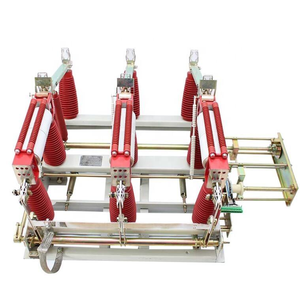
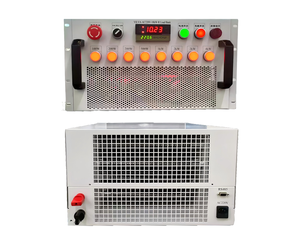
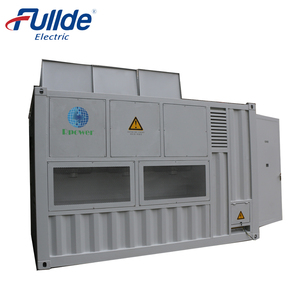
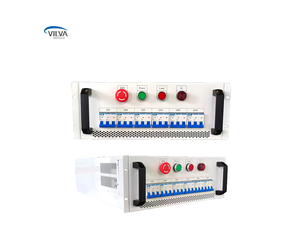
The Netherlands has established itself as a premier epicenter for advanced clean technology, electrification research, and energy storage integration across the European Union. Supported by the nation’s National Growth Fund (Nationaal Groeifonds) and strategic technological corridors like Brainport Eindhoven, TU Delft Clean Energy Institute, and the Port of Rotterdam Maritime Decarbonization Hub, Dutch manufacturers, R&D laboratories, and system integrators require state-of-the-art battery cycling and testing infrastructure.
Sourcing industrial-grade battery cyclers in the Netherlands is no longer strictly about verifying voltage and capacity. Under the newly implemented EU Battery Regulation (2023/1542), battery equipment manufacturers and battery pack assembly plants operating within the Netherlands must meet stringent mandates regarding digital battery passports, state-of-health (SoH) traceabilities, carbon footprint declarations, and electrochemical safety performance across the entire cell lifecycle—from initial electrochemistry formation to end-of-life second-life repurposing.
Our advanced battery cycling systems and regenerative electronic loads provide Dutch battery factories, automotive OEMs, and grid-scale BESS (Battery Energy Storage System) developers with high-precision formation, dynamic charge/discharge profiling, sub-millisecond response switching, and integrated Electrochemical Impedance Spectroscopy (EIS). By pairing bi-directional Silicon Carbide (SiC) power electronics with grid-synchronized energy recovery, our cycling hardware reduces operational electricity expenditure by up to 95.4%, directly neutralizing high local utility tariffs in the Netherlands.
Engineered to solve complex testing challenges across battery cells, modules, high-voltage vehicle packs, and stationary storage containers.
Conventional resistive cyclers dissipate battery energy as waste heat, burdening facility HVAC and inflating operational cost. Our SiC MOSFET regenerative technology feeds up to 95.4% of discharge energy back into the Dutch 3-phase grid (400V/480V AC) with THD <3%.
Low Operational TCOFeaturing 16-bit DAC/ADC converters delivering current/voltage setting and measurement accuracy of ±0.02% F.S. Slew rates under 1ms enable precise execution of dynamic drive cycles including WLTP, US06, and customized micro-grid peak-shaving profiles.
±0.02% F.S. AccuracyEquipped with dual-channel voltage sense, over-voltage/current/temperature protections, isolation monitoring, and direct fire-suppression interface hooks. Certified to meet CE and Dutch industrial safety directives (NEN 3140 / NEN-EN 50110).
NEN 3140 Electrical SafetyCompare channel density, voltage windows, and power ratings tailored for Dutch battery laboratories and manufacturing plants.
| System Series | Voltage Range | Current Per Channel | Power Density / Chassis | Energy Regeneration | Primary Application Scenario |
|---|---|---|---|---|---|
| Cell Cycler Series (Formation & R&D) | 0V – 6V DC (Zero-Volt Capable) | 5A – 300A Dual Range | Up to 128 Channels / Cabinet | Regenerative (>92%) | Lithium-ion, Sodium-ion & Solid-State Cell Research (TU Delft / Eindhoven) |
| Module Cycler Series (Industrial OEM) | 10V – 100V DC | 60A – 600A Parallelable | 12kW – 60kW Modular | Regenerative (>94%) | Automotive Battery Module Assembly & AGV Power Pack Validation |
| High-Voltage Pack Cycler (EV / Storage) | 50V – 1000V DC (1500V Option) | 200A – 1200A System level | 100kW – 1.2MW Containerized | Regenerative (>95.4%) | Electric Vessel Swapping Batteries (Rotterdam Port) & Grid BESS (Zeeland) |
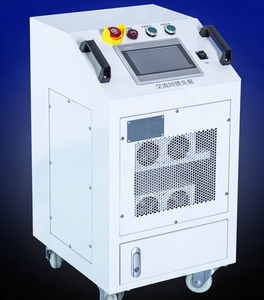
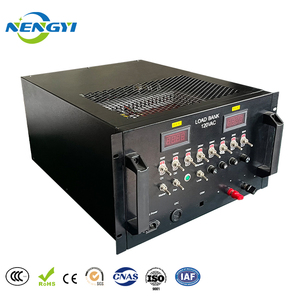
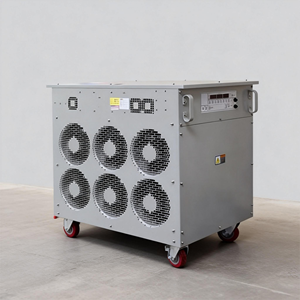
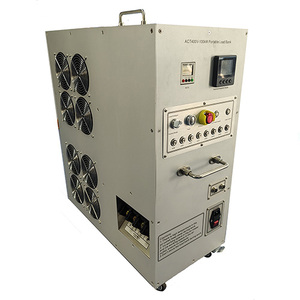
| AC/DC Dummy & Burn-in Load Banks | 115V – 690V AC / 500V DC | Up to 3000A AC/DC | 10kW – 1.5MW Racked/Trailer | Resistive / Regenerative Optional | UPS Backup, Data Center Commissioning & Marine Power System Testing |
Detailed technical case studies showcasing how our battery cyclers and power test benches solve localized engineering bottlenecks.
In the high-tech Brainport region of Eindhoven, automotive developers and advanced battery startups require sub-millisecond dynamic cycling to simulate real-world driving conditions (WLTP, dynamic braking regen pulses).
Our ultra-high precision cell and module cyclers feature EtherCAT microsecond synchronization with external climate chambers, enabling researchers to correlate thermal runaway risks with high-current charging dynamics down to individual tab impedance variations.
Decarbonization of inland shipping along the Rhine-Meuse-Scheldt delta relies heavily on heavy-duty containerized ZESpack (Zero Emission Services) battery swapping systems.
Testing multi-megawatt maritime packs requires rugged cyclers capable of continuous high C-rate discharge in harsh, high-humidity marine atmospheres. Our 1000V/1500V high-power cabinets incorporate corrosion-resistant internal air channels and direct grid-tie switches for seamless shore-side battery validation.
Large-scale battery energy storage facilities connected to TenneT’s high-voltage transmission grid in Zeeland and North Groningen undergo rigorous factory acceptance testing (FAT) and site acceptance testing (SAT).
Deploying our 1000KW to 1500KW multi-tap load banks and regenerative pack cyclers enables turn-key verification of frequency response regulation, black-start capabilities, and islanding protection compliance prior to commercial grid synchronization.
As retired EV batteries enter recycling and repurposing centers across the Netherlands, fast automated characterization of residual capacity and internal resistance (SOH assessment) is vital.
Our cyclers integrate automated multi-channel pulse discharge algorithms that rapidly grade used cells in minutes, separating reusable modules suitable for stationary energy storage from degraded cells destined for hydrometallurgical recycling.
With over two decades of dedicated power electronics innovation, our manufacturing facilities adhere to strict global quality benchmarks, combining lean production principles with rigorous ISO 9001, ISO 14001, and ISO 45001 operational standards.
Each channel undergoes multi-point temperature-compensated calibration against Keysight & Fluke reference standards, ensuring ISO/IEC 17025 laboratory traceability.
Before leaving our factory, every high-power cabinet undergoes 100% full-load continuous burn-in testing under elevated ambient thermal stress to eliminate early component infant mortality.
From custom voltage rails (up to 1500V) to specialized CANbus / Modbus TCP communication protocols, our engineering team tailors hardware to your exact facility layout.
Addressing essential technical, regulatory, grid connection, and logistical questions for procurement managers in the Netherlands.
Discuss your exact cell format, voltage window, module configuration, or facility power constraints with our senior application engineers today.
Send an Inquiry