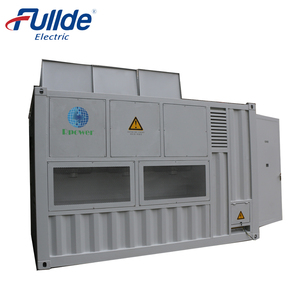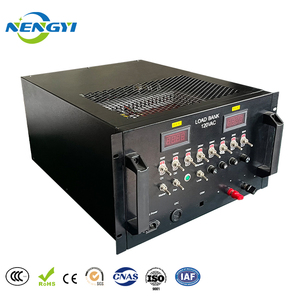
Engineered to withstand rigorous EU electrical compliance standards, delivering operational precision across German industrial, automotive, and grid testing infrastructures.
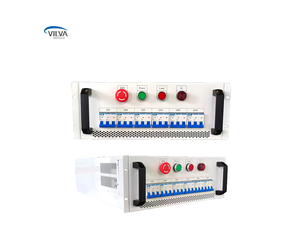
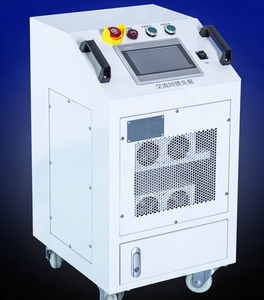
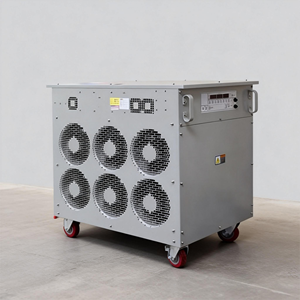
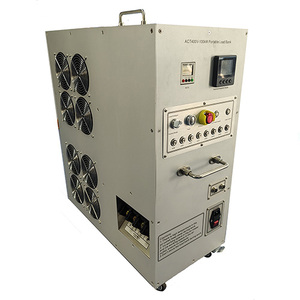
As Germany advances its high-tech industrial manufacturing and green energy transition (Energiewende), importing high-voltage switching power supply equipment and programmable electronic load systems requires rigorous adherence to European Union directives and German national engineering standards (DIN EN). A compliant CE certified switching power exporter must satisfy multi-layered safety, electromagnetic compatibility, and environmental impact requirements before equipment deployment across German industrial grids.
Navigating the German market entails establishing verified alignment with the European Union's harmonized standards framework. The technical specifications must address key structural directives:
Ensures electrical equipment operating within 50–1000 VAC or 75–1500 VDC provides total dielectric safety, enforced creepage distances, clearance protection, and robust insulation structures under DIN EN 62368-1 standard protocols.
Mandates strict limits on radiated and conducted electromagnetic emissions while verifying high immunity against transient surge currents, fast electrical transients (EFT), and electrostatic discharge (ESD) pursuant to EN 61204-3.
Compliance with Directive 2015/863/EU limiting heavy metals (Lead, Cadmium, Hexavalent Chromium) and phthalates, backed by full SVHC declarations required for German customs clearance through Hamburg and Bremerhaven hubs.
When selecting switching power supply exporters for Germany, procurement teams must ensure that power switching modules incorporate galvanic isolation, advanced thermal dissipation topologies, and dynamic power factor correction (PFC cos φ ≥ 0.99). Equipment designed for three-phase German grids (230V phase-to-neutral / 400V line-to-line at 50 Hz) must comfortably tolerate line fluctuation margins up to ±15% while keeping Total Harmonic Distortion (THD) below 3% under full load condition.
| Regulatory Directive | Harmonized EN / DIN Standard | Engineering Testing Standard | Export Technical Requirement |
|---|---|---|---|
| Low Voltage (2014/35/EU) | DIN EN 62368-1 / DIN EN 61010-1 | Dielectric Strength 3750 VAC / 1 Min | Enforced Creepage & Overvoltage Category III/IV |
| EMC (2014/30/EU) | DIN EN 61204-3 Class A / B | CISPR 32 Conducted & Radiated Emissions | Active Line Filters & Shielded Enclosures |
| Grid Connection Safety | DIN VDE AR-N 4105 / AR-N 4110 | Voltage Fluctuation & Flicker (EN 61000-3-3) | Anti-Islanding Protection & Phase Synchronization |
| Environmental Safety | Directive 2011/65/EU (RoHS 3) | XRF Material Spectrometry Analysis | Lead-Free Solder Alloys & Recyclable Housings |
Germany’s industrial footprint relies heavily on uncompromising power stability and ultra-reliable test equipment. From the automotive powerhouse regions of Baden-Württemberg and Bavaria to the digital hubs in Hesse and industrial manufacturing complexes in North Rhine-Westphalia, certified switching power solutions and electronic load systems fulfill vital roles across critical infrastructure.
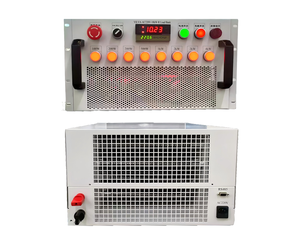
German OEM automakers and Tier-1 suppliers require heavy-duty AC regenerative load banks and programmable DC electronic loads for stress-testing high-voltage EV battery packs, onboard chargers (OBC), and inverter modules. Dynamic switching power testing platforms simulate real-world driving load cycles, evaluating battery thermal management and energy regeneration under extreme duty cycles up to 1000 Vdc.
The Frankfurt metro zone hosts Europe’s largest cluster of hyperscale data centers. Prior to server rack installation, facility engineers execute rigorous commissioning protocols using portable 1kW to 1000kW dummy load banks. These units simulate server heat generation and electrical load profiles to stress-test Uninterruptible Power Supply (UPS) systems, diesel generator backup grids, and precision air cooling infrastructure.
Under Germany’s expanded Renewable Energy Act (EEG), solar inverter manufacturers and wind turbine operators mandate customizable high-power regenerative load banks to validate power quality, low-voltage ride-through (LVRT) capabilities, and harmonic compliance under DIN VDE AR-N 4110 medium-voltage grid requirements.
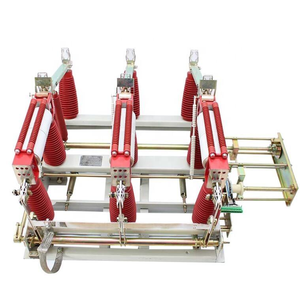
Local municipal utilities (Stadtwerke) across Berlin, Hamburg, and Leipzig rely on outdoor high-voltage vacuum load switch circuit breakers (such as the CNXE FZRN21 series) for medium-voltage grid switching, feeder protection, and fault isolation in 36kV–40.5kV three-phase distribution networks.
Procurement directors and chief engineers in Germany are shifting their focus toward sustainable energy efficiency, digital twin communication protocols, and modular power scaling. Understanding these macro trends allows suppliers to provide substantial information gain and tailor engineering proposals to German buyers’ long-term roadmaps.
Traditional resistive load banks dissipate 100% of tested electrical energy as waste heat. German industrial facilities are rapidly upgrading to AC/DC regenerative load banks that feed up to 95% of absorbed testing power back into the local factory grid, dramatically cutting operational carbon footprints and utility bills.
Stand-alone bench instruments are being replaced by automated test systems (ATE). German procurement specifications increasingly require integrated Modbus-TCP, Profinet, CANopen, or EtherCAT interfaces to enable seamless handshakes with Siemens S7 PLCs and automated factory control systems.
To avoid single-point capacity bottlenecks, engineering teams favor modular chassis designs. Master/slave bus architectures allow combining multiple 10kW or 60kW modules into high-capacity 1500kW test banks on demand, offering high scalability for expanding production lines.
With over two decades of dedicated manufacturing experience in programmable switching power supplies, solid-state frequency converters, and electronic load banks, our engineering organization stands out as a Premier CE Certified Switching Power Exporter to Germany and the wider European Union market.
Our state-of-the-art production facility incorporates end-to-end quality assurance systems aligned with DIN EN ISO 9001:2015 standards. Every power unit undergoes rigorous 100% full-load thermal burn-in testing for 72 consecutive hours prior to shipment, coupled with automated safety flash testing up to 4000 VDC to guarantee zero-defect operational readiness upon arrival at German customer sites.
We provide full technical customization ranging from specialized multi-phase output voltages (115V/220V/380V/400V/415V/690V) to custom enclosure protection classes (IP21 indoor up to IP55 rugged outdoor weatherproof containers with forced-air cooling systems).
Our streamlined export logistics protocol provides complete customs documentation, including CE Declaration of Conformity (DoC), Certificates of Origin, custom HS tariff coding, and Delivered Duty Paid (DDP) door-to-door delivery throughout Germany, Austria, and Switzerland (DACH region).
To assist German electrical buyers, system integrators, and technical procurement officers in evaluating switching power systems, we have compiled detailed answers to essential technical and regulatory inquiries.
Consult with our senior application engineers to specify your customized switching power, high-voltage breaker, or regenerative load bank system engineered for European compliance.
Get Catalog