
CE-certified, export-grade AC/DC load banks and high-voltage switchgear engineered for full-scale load testing, battery discharge analysis, and mission-critical power commissioning in Seoul.
As the Greater Seoul Metropolitan Area (including Pangyo Techno Valley, Sangam DMC, and the Gyeonggi Semiconductor Corridor) consolidates its position as East Asia's premier hyper-scale data hub and advanced electronics manufacturing cluster, the demand for absolute power continuity has reached an unprecedented peak. Enterprise Uninterruptible Power Supply (UPS) architecture, backed by high-voltage generator backups, represents the primary line of defense against sub-cycle voltage sags, power surges, and complete utility grid blackouts.
Validating modern transformerless double-conversion online UPS topology requires testing equipment capable of replicating complex dynamic loads, non-linear harmonic conditions, and step-function power draws without introducing parasitic inductance or thermal instability. Industrial factories and exporters supplying Seoul's critical facilities must comply with rigorous international testing frameworks, most notably IEC 62040-3 (Uninterruptible Power Systems - Method of specifying the performance and test requirements) and IEEE 1188 for stationary battery bank discharge validation.
Traditional legacy wire-wound dummy loads suffer from severe thermal coefficient resistance drift. As internal temperatures rise during high-power soak testing, resistive values shift, leading to fluctuating current draw and invalid performance data. Advanced engineering solutions utilize alloy resistive elements with near-zero temperature coefficients, combined with forced-air micro-channel heat sinks or active regenerative power feedback loops to maintain tight current tolerance across hours of continuous full-capacity commissioning.
Tailored electrical testing implementations customized for South Korea's regional grid voltage specifications (380V Wye / 220V Delta, 60Hz frequency standard).
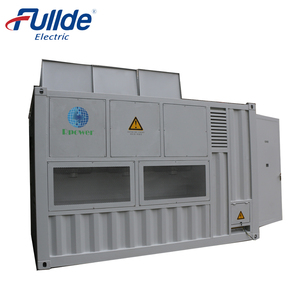
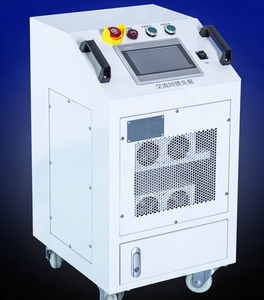
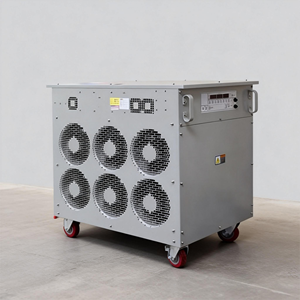
Deploying 1000kW to 1500KW 380V/60Hz AC load bank arrays for integrated heat load and power commissioning prior to high-density server rack installation in Korean cloud server farms.
Supplying precision DC dynamic load banks (up to 1000 Vdc) for battery energy storage system (BESS) degradation testing across Gyeonggi-do fabs, protecting zero-tolerance silicon wafer fabrication lines.
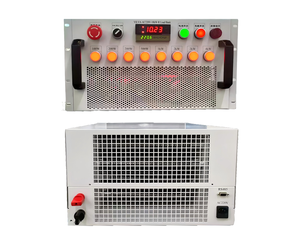
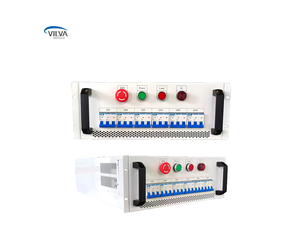
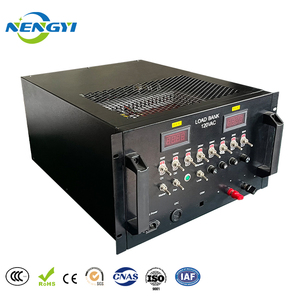
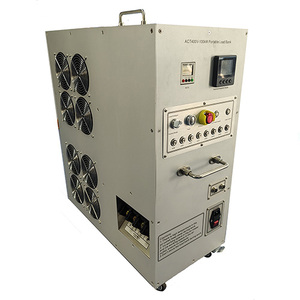
Utilizing low-noise indoor 10KW to 100kW portable resistive load banks for periodic automated maintenance and battery impedance evaluation in underground banking server rooms.
Integrating high-power AC regenerative load banks with automated CAN/RS485 communications to feedback aging-test energy into facility grids, reducing operational carbon footprint.
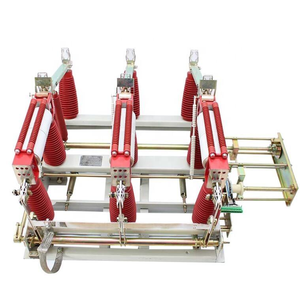
Employing outdoor CNXE 40.5kV high-voltage vacuum load switch circuit breakers for municipal power grid sub-station protection and high-voltage AC phase synchronization.
Conducting monthly preventative full-load stress testing for diesel backup generators in Seoul CBD skyscrapers to prevent wet-stacking and ensure immediate cold-start pickup.
With South Korea's aggressive national carbon-neutrality targets and strict RE100 guidelines for tech conglomerates, traditional load banks that convert megawatts of testing energy entirely into waste heat are rapidly being phased out. Seoul tech facilities increasingly mandate Regenerative AC Load Banks capable of feeding upwards of 92% of consumed power back into the factory's internal medium-voltage grid, drastically lowering electricity costs during burn-in quality cycles.
Unlike standard European 50Hz infrastructure, South Korea operates primarily on a 60Hz nominal utility grid with standard three-phase low voltage delivered at 380V Wye or 220V Delta. Exporters supplying testing gear into Incheon Port or Gimpo Freight Terminals must ensure their control units, forced-cooling fan blowers, and digital metering systems are native 60Hz compatible and optimized for Korean nominal voltage thresholds.
Seoul’s real estate costs are among the highest in Asia, driving data centers toward compact, high-power-density rack footprints. Modern procurement mandates modular AC/DC load banks that can be stacked or paralleled via master-slave control buses. A system consisting of multiple 60kW chassis can operate as a unified 600kW or 1.2MW load array through a single central touch screen or automated SCADA interface via Modbus-TCP/IP.
Backed by over two decades of dedicated R&D in high-power electronic loads, programmable AC power sources, and precision power analyzers, our manufacturing facilities deliver direct-from-factory equipment tailored to international commissioning criteria.
Every single unit—from 1kW portable rack testers to 1500kW heavy-duty containerized load banks—undergoes 100% full-capacity burn-in verification, insulation resistance testing, and safety compliance checks before dispatch.
Our engineering team designs custom resistor elements, high-speed insulated-gate bipolar transistor (IGBT) switches, and firmware control algorithm adjustments to match any target duty cycle or surge waveform.
Direct export capabilities with specialized timber crating, rapid freight logistics to Busan/Incheon ports, and dedicated remote engineering assistance for fast commissioning in South Korea.
Addressing technical, regulatory, and shipping considerations for South Korean electrical engineers and procurement managers.
Consult with our senior application engineers to configure the exact AC/DC load bank, frequency converter, or switchgear setup required for your Seoul project environment.