
Engineered for strict European electrical safety standards (PN-EN / IEC), high-voltage withstand compliance, and industrial grid resilience.
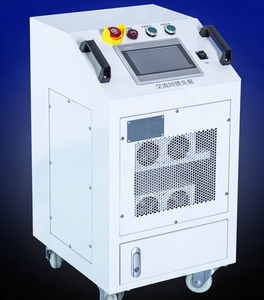
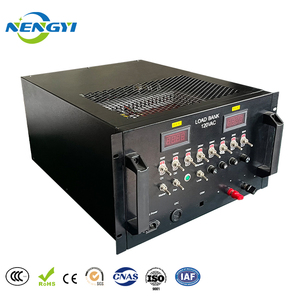
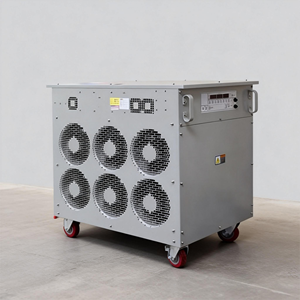
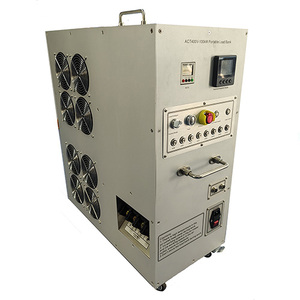
In the rapidly evolving industrial landscape of Central and Eastern Europe, Poland has established itself as the premier manufacturing power house for electromobility (EV), renewable energy systems, consumer electronics, and heavy electrical switchgear. Ensuring absolute electrical insulation integrity, user safety, and grid compliance requires rigorous dielectric strength verification—commonly executed via High Potential (Hipot) Testing and total system load simulation.
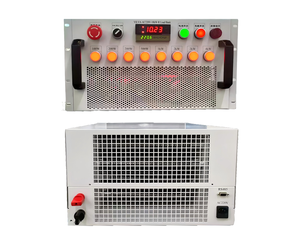
As a leading original equipment manufacturer (OEM) and direct factory exporter in China, our engineering division has designed and delivered state-of-the-art AC/DC Hipot Testers, Insulation Resistance (IR) Analyzers, and High-Power Load Banks specifically configured to meet the stringent technical expectations of Polish quality control engineers, compliance officers, and plant procurement directors.
Hipot testing applies an elevated high-voltage stress across an electrical component’s current-carrying conductors and its ground reference chassis for a predefined dwell time. The primary objective is to verify that the internal dielectric insulation, electrical clearances, and creepage distances are sufficient to prevent catastrophic electrical breakdown, insulation puncture, flashover, or dangerous leakage currents during real-world operational transients.
When specifying high-voltage testing equipment for Polish factories, understanding the difference between alternating current (AC) and direct current (DC) hipot execution is vital for valid compliance reporting under European Harmonized Standards:
| Testing Parameter | AC Hipot (Dielectric Withstand) | DC Hipot (Dielectric Withstand) | Insulation Resistance (IR / Megohmmeter) |
|---|---|---|---|
| Primary Stress Mode | Reverses polarity at 50Hz grid frequency; tests peak stress in both directions. | Unidirectional constant DC potential; charges total system capacitance. | Low-to-medium DC voltage (typically 500V to 5000V DC). |
| Leakage Current Component | Measures combined capacitive current ($I_c$) and resistive leakage ($I_r$). | Measures pure resistive leakage current once capacitance is charged. | Calculates insulation resistance value in Megohms ($M\Omega$) or Gigohms ($G\Omega$). |
| Destructive Risk | Higher thermal stress on insulation; ideal for final factory QA line safety checks. | Non-destructive when ramped smoothly; optimal for high-capacitance DUTs. | Completely non-destructive preliminary test prior to hipot stress. |
| Relevant EU/Polish Standards | PN-EN 61010-1, PN-EN 60335-1, PN-EN 60204-1, LVD 2014/35/EU | PN-EN 60950-1, IEC 60502-2 (High-Voltage Power Cable Testing) | PN-EN 60034-27 (Rotating Electrical Machines Insulation) |
Poland's industrial topology features specialized regional manufacturing ecosystems. Our technical equipment is engineered to solve localized operational challenges across these prominent economic zones:
As one of Europe's largest EV battery manufacturing centers (featuring major investments in Kobierzyce and Świdnica), Polish battery module assembly lines demand high-voltage DC Hipot testing up to 5,000V DC to verify module-to-chassis isolation, busbar dielectric integrity, and liquid cooling channel insulation under dynamic temperature ramping.
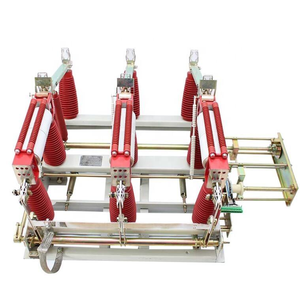
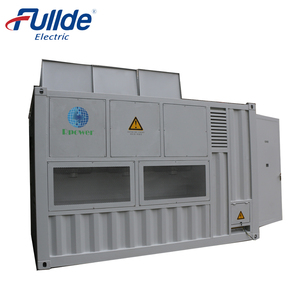
With massive investments in Baltic offshore wind farms and solar PV expansion in Northern Poland, high-capacity switchgear (like the CNXE FZRN21-40.5kV outdoor vacuum load switch) and 1500kW containerized load banks are mandatory for field acceptance testing, grid synchronization, and high-voltage insulation breakdown safety compliance.
Hyperscale data center installations in Poland rely on portable 10kW to 1000kW resistive/reactive AC load banks to simulate actual server thermal loads, verify emergency generator governor stability, and stress-test uninterruptible power supplies (UPS) under standard Polish 230V/400V 50Hz utility conditions.
Poland is Europe’s leading manufacturer of household appliances (washing machines, heat pumps, ovens). Automated multi-channel flash Hipot testers integrated directly into conveyor lines provide sub-second high-potential verification, ensuring 100% compliance with CE LVD Directive 2014/35/EU prior to packaging.
To maintain competitive positioning, Polish original equipment manufacturers are rapidly upgrading their factory testing laboratories in response to several key industrial shifts:
Instead of dissipating heavy electrical load test energy as wasted heat, Polish clean-tech plants are adopting AC Regenerative Load Banks that feed up to 92% of tested electrical energy back into the internal plant grid, directly cutting carbon emissions and operational utility costs.
Manual paper testing logs are obsolete. Modern Polish quality assurance workflows demand SCPI command interfaces, Modbus/CAN bus integration, and automated digital test certificate generation linked directly to plant ERP/MES databases for ISO 9001 compliance.
Standard Hipot breakdown protection only triggers after major flashover. Next-generation Chinese factory Hipot units incorporate high-frequency micro-arc detection (up to 100kHz) to identify subtle insulation defects before total insulation failure occurs.
Since our establishment in 2003, our engineering foundation has been built upon precision, safety, and transparent global technical service. When Polish procurement teams partner with our Chinese manufacturing facilities, they gain distinct structural advantages:
Everything you need to know about compliance, grid compatibility, warranty, and importing Chinese high-voltage equipment to Poland.
Yes. All standard equipment is engineered to operate natively on Poland’s nominal grid voltage of 230V single-phase or 400V three-phase AC at 50Hz. Portable and load bank equipment can also be customized for multi-voltage selection (115V up to 690V) to support Polish export manufacturers producing equipment for North American or marine markets.
Absolute transparency is guaranteed. Every unit exported to Poland is accompanied by an official CE Declaration of Conformity (covering LVD 2014/35/EU and EMC 2014/30/EU). Furthermore, instruments undergo factory calibration traceable to international measurement standards, and can be supplied with factory calibration reports required for Polish ISO/IEC 17025 accredited labs.
We back our instruments with a standard 12 to 24-month comprehensive warranty. In case of operational inquiries or component needs, our international application engineers provide 24/7 remote diagnostics, firmware updates, and rapid express dispatch of replacement modules via DHL/FedEx directly to your facility in Poland.
Standard catalog models are typically dispatched within 7 to 14 business days. For freight to Poland, clients can select Air Freight (3-7 days to Warsaw Chopin Airport), Railway Express via the Silk Road (14-18 days to Małaszewicze intermodal terminal), or Sea Freight (28-35 days directly to Port of Gdańsk).
Yes. Our high potential safety testers feature dedicated signal I/O ports, RS232/RS485, USB, and LAN interfaces supporting standard SCPI or Modbus protocols. This allows seamless start/stop control, PASS/FAIL signal relay outputs, and real-time voltage/current measurement telemetry directly to your automated line PLC.
Speak directly with our senior power test application engineers. We provide customized quotes, technical datasheets, and compliance documentation for Polish procurement projects.