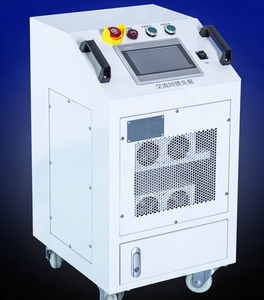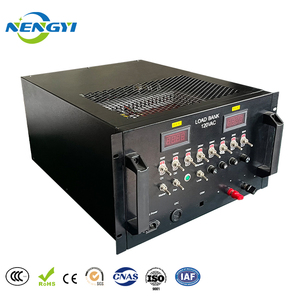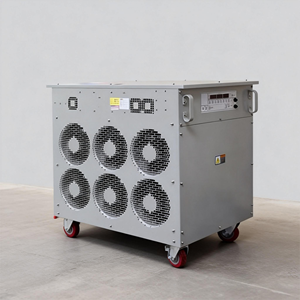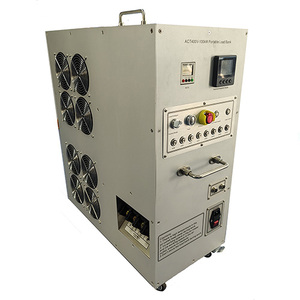
Rigorous dielectric testing equipment and high-power load systems manufactured to IEC/IEEE standards for Chilean mining grids, renewable plants, and industrial substations.
High Potential testing, universally designated as Hipot testing or dielectric withstand testing, represents a non-negotiable stress test executed on electrical insulation systems, high-voltage switchgear, power transformers, industrial generators, and cabling assemblies. The core objective of Hipot testing is to verify that the insulation integrity of electrical equipment exceeds normal operating voltages by a substantial safety margin, guaranteeing that operational transients, switching surges, and lightning impulses will not precipitate catastrophic breakdown or hazardous ground faults.
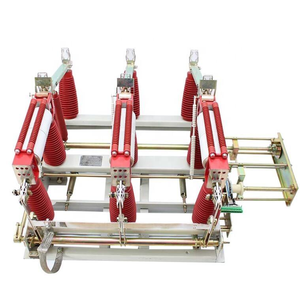
In modern industrial grid deployment, particularly within demanding Latin American terrain such as Chile's northern mining districts, dielectric failure carries extreme financial and operational risks. Standard factory testing at sea level is fundamentally insufficient when equipment is commissioned at extreme altitudes in the Andes range. As a premier global manufacturer and direct exporter of Hipot test systems, programmable AC/DC electronic loads, and medium/high-voltage switchgear (such as the CNXE FZRN21-40.5D Series), our engineering framework integrates continuous insulation degradation monitoring, real-time leakage current detection, and microsecond arc interruption algorithms.
Technical Insight: Insulation breakdown is not merely a voltage threshold event—it is a time-dependent dielectric stress phenomenon governed by electric field intensity (E-field), atmospheric density, thermal dissipation rates, and partial discharge inception voltage (PDIV).
Selecting between Alternating Current (AC) and Direct Current (DC) Hipot testing depends on the capacitive reactance of the Device Under Test (DUT) and specific compliance standards (IEC 60950, IEC 61010-1, IEEE C37.20.2):
AC Hipot Testing: Applies sinusoidal voltage at line frequency (50 Hz or 60 Hz). AC testing stresses insulation in both polarities, matching actual operational stress. Because AC drives continuous capacitive charging current ($I_c = 2\pi f C V$), high-capacitance DUTs (e.g., long underground power cables or large stator windings) require high kilovolt-ampere (kVA) test equipment. AC Hipot is widely required by Chilean energy utilities under the Coordinador Eléctrico Nacional (CEN) grid standards for switchgear acceptance.
DC Hipot Testing: Charges the capacitive component during initial ramp-up, leaving only true resistive leakage current ($I_r = V / R_{insulation}$) at steady state. This permits lightweight, ultra-portable test equipment capable of reaching 100 kV DC while drawing minimal supply power. DC Hipot is essential for field maintenance across Chilean solar PV parks and remote sub-stations where transporting multi-kVA AC test sets is unfeasible.
Chile represents one of the world's most unique geographical and industrial environments. Extending over 4,300 kilometers with altitudes rising from sea level to over 4,500 meters in the Andes, the country requires specialized electrical testing infrastructure. Our exported Hipot testers, dummy load banks, and vacuum circuit breakers are tailored specifically for Chilean industrial verticals:
Mining complexes operating above 3,000 meters experience reduced air density, which dramatically lowers dielectric breakdown thresholds (Paschen's Law). Our custom Hipot units feature high-altitude derating software algorithms and enhanced creepage isolation, enabling mining electrical engineers to test heavy-duty haulage motor windings, 40.5kV outdoor vacuum switches, and substation transformers without false arc tripping.
Chile's National Energy Strategy aims for 100% clean energy. Utility-scale PV installations utilize 1500V DC string architectures. Our high-power DC load banks (such as the 5VPxC Series up to 60kW per chassis) and DC Hipot insulation analyzers validate string inverter isolation, DC combiner boxes, and step-up transformer withstand capabilities prior to grid synchronization with the National Electrical System (SEN).
Southern Chile is rapidly developing gigawatt-scale Green Hydrogen and Green Ammonia production facilities powered by extreme wind resources. Electrolyzer stacks require stringent galvanic isolation testing under explosive atmospheric risk profiles. Our explosion-proof, remotely controlled Hipot testing units and regenerative AC load banks support continuous factory acceptance testing (FAT) for MW-scale power converters.
Santiago has emerged as the premier cloud data center hub in South America. Commissioning Tier III and Tier IV facilities demands zero-downtime reliability. Our portable resistive AC load banks (1kW to 1500kW) paired with automated Hipot insulation testers provide full load bank thermal burn-in and dielectric breakdown prevention for critical UPS systems, emergency generators, and power distribution units (PDUs).
A critical engineering consideration for importing Hipot equipment into Chile is adjusting dielectric withstand parameters according to altitude. As atmospheric density decreases with altitude above sea level ($H > 1000\text{ m}$), the breakdown voltage of air drops proportionally. To prevent flashover during field testing at elevation, test voltages must be adjusted using the atmospheric correction factor $K_a$:
| Altitude above Sea Level (Meters) | Air Pressure Relative Ratio ($m$) | Dielectric Withstand Derating Factor ($K_a$) | Recommended Clearance Increase (%) | Chilean Location Example |
|---|---|---|---|---|
| 0 m (Sea Level) | 1.000 | 1.000 | 0% | Valparaíso / San Antonio Ports |
| 1,000 m | 0.886 | 0.895 | +11.7% | Santiago Suburbs |
| 2,000 m | 0.784 | 0.795 | +25.8% | El Teniente Mine Sector |
| 3,000 m | 0.692 | 0.705 | +41.8% | Calama Industrial Area |
| 4,000 m | 0.608 | 0.620 | +61.3% | Atacama High Plateau (Lithium Operations) |
According to data from the Chilean Ministry of Energy and international trade analytics, the market for high-voltage testing instruments and dynamic load systems in Chile is accelerating due to three main macroeconomic drivers:
Decarbonization & Grid Integration: Chile's National Energy Plan targets the phase-out of coal-fired generation by 2035. Replacing synchronous thermal generation with inverter-based renewable energy creates grid frequency volatility and harmonic distortion. Consequently, utilities demand advanced AC/DC electronic load systems capable of simulating complex non-linear dynamics alongside rigorous Hipot insulation auditing of legacy substations.
Expansion of Mining Electrification: Open-pit and underground copper mines are transitioning haul fleets and heavy excavators from diesel to all-electric or hydrogen fuel-cell power packs. Fast-charging infrastructure operating at up to 1000V DC requires specialized dielectric integrity verification and high-power discharge load bank testing prior to heavy mining deployment.
Regulatory Compliance Standards: Chilean electrical installers must adhere strictly to SEC (Superintendencia de Electricidad y Combustibles) regulations and international IEC standards. Importing certified, factory-calibrated Hipot testers equipped with automated compliance report generation (USB/LAN export) is essential for engineering procurement firms operating in Iquique, Antofagasta, and Concepción.
Since our founding in 2003, our global manufacturing ecosystem (combining legacy engineering excellence from Adaptive Power Systems and advanced switchgear production capabilities) has delivered reliable high-voltage testing solutions across four continents. When partnering with Chilean industrial buyers, engineering contractors, and machinery exporters, we offer unmatched advantages:
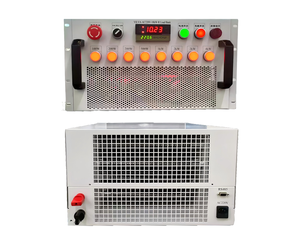
Our industrial Hipot tester family covers AC test voltages up to 50kV and DC voltages up to 100kV, with programmable leakage current trip thresholds ranging from 0.001mA (1µA resolution) up to 200mA. Units feature programmable voltage ramp rates, dwell timers, and instantaneous arc detection circuits compliant with IEC 61010-1 safety requirements.
All outdoor switchgear (including the CNXE FZRN21-40.5D Series) and portable load banks intended for Northern Chile feature heavy-duty corrosion-resistant enclosures, UV-stabilized insulation coatings, sand/dust filtration, and wide operational temperature specs (-20°C to +55°C). High-altitude insulation clearance compensation is factory configured based on your site's elevation above sea level.
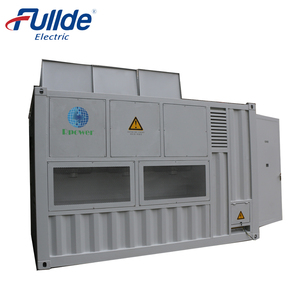
Yes. Our AC resistive and reactive load banks (ranging from 1kW portable units to 1500kW heavy-duty industrial systems) support dual-frequency operation (50Hz / 60Hz) and wide nominal line voltages (115V, 220V, 380V, 400V, 440V, up to 690V AC). This flexibility is ideal for testing equipment imported from diverse international manufacturing hubs into Chile.
Standard Hipot testing units and bench-top electronic loads are stocked for immediate dispatch (typically shipping within 1 to 2 weeks). Custom high-power load banks (1000kW+) or medium-voltage vacuum switchgear require a 4 to 6 week manufacturing window. We handle complete export documentation, Certificate of Origin, and shipping coordination to major ports including Valparaíso, San Antonio, or direct air freight to Santiago (SCL).
Consult with our senior high-voltage application engineers to select the optimal Hipot tester, programmable load bank, or switchgear for your project in Chile.
Contact Us