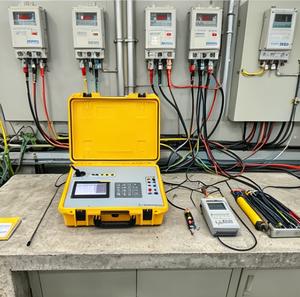
Explore our industrial-grade single-phase, three-phase, LoRaWAN, and DIN-rail smart energy meters customized for South Korean power grids, high-density IT data centers, and advanced manufacturing plants.
South Korea’s modern electrical topology presents one of the most sophisticated, tightly regulated energy ecosystems in Asia. Managed predominantly under the stringent transmission and distribution frameworks of Korea Electric Power Corporation (KEPCO), industrial and commercial facilities across South Korea demand phase meters capable of handling unique voltage stability standards, complex harmonic environments, and dynamic power quality monitoring. As South Korean industrial facilities accelerate their adoption of Smart Factory 4.0 standards and pivot toward RE100 zero-carbon targets, selecting the right phase meter factory and supplier becomes a paramount operational decision.
Unlike standard commercial markets, South Korea relies extensively on a nominal grid distribution standard of 220V single-phase and 380V three-phase at 60Hz. Facilities operating in key industrial hubs—such as the semiconductor clusters in Yongin and Pyeongtaek, automated automotive plants in Ulsan, and high-density data centers in Pangyo Techno Valley—require specialized single-phase metered PDUs, DIN-rail mounted bidirectional three-phase meters, and high-precision power quality analyzers. Suppliers serving this market must demonstrate technical mastery over standards such as KS C IEC 62053, offer robust Modbus-RTU, Ethernet, or LoRaWAN telecommunications, and ensure high operational immunity against total harmonic distortion (THD).
| Grid Configuration (Korea) | Phase Meter Architecture | Primary Industrial Application | Key Communication Protocols |
|---|---|---|---|
| Single Phase 220V / 60Hz | Hot-Swappable Metered PDU / Panel Meter | Server Racks, Edge Data Centers, Telecom Hubs | RS485 Modbus, SNMP, Ethernet TCP/IP |
| Three Phase 380V / 60Hz | DIN-Rail TH35 MID Class B / Class 1 | Commercial Real Estate, Solar Microgrids | LoRaWAN (KR920/EU868), M-Bus, Pulse Output |
| High-Voltage Industrial 380V-600V | Panel-Mounted Ethernet Power Quality Analyzer | Semiconductor Fabs, Heavy Automation, Smelters | Modbus-TCP, BACnet IP, High-Speed Loggers |
| Variable Portable Field Testing | High-Stability 120A/300VA Portable 3-Phase Meter | On-Site Calibration, Grid Audit, Substation Testing | USB, Bluetooth, Direct PC Diagnostic Suite |
Selecting a phase meter supplier for South Korean deployment demands deep contextual awareness of local sub-tier application environments. Below are four key technical deployment profiles where phase meters provide vital baseline metrics for energy metering, preventive maintenance, and regulatory carbon compliance.
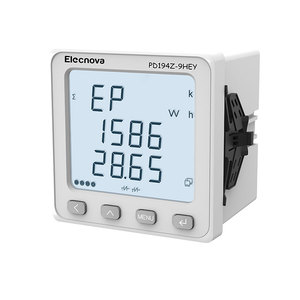
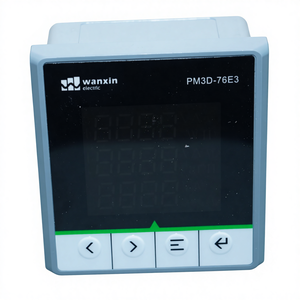
In facilities operated by global semiconductor leaders in Pyeongtaek and Yongin, cleanroom downtime equates to millions of dollars in continuous line losses. Our PD194Z-9HYE Ethernet Power Analyzers and YDKZ Panel Meters measure micro-fluctuations, phase angle deviations, and voltage sag/swell parameters in real time, preventing transformer overload and safeguarding photolithography equipment.
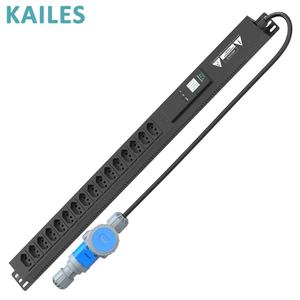
With the rapid proliferation of high-density AI data centers in the Seoul Capital Area (SCA), power density per rack frequently exceeds 15kW to 30kW. Utilizing KAILES K33 Series 32A Single-Phase Metered PDUs allows server technicians to monitor branch circuit power consumption live, perform hot-swappable meter unit replacements without interrupting IT loads, and maintain strict thermal-power balance.
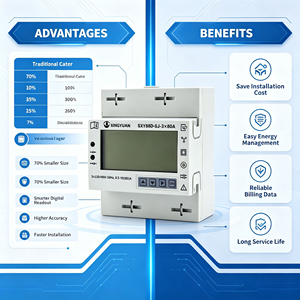
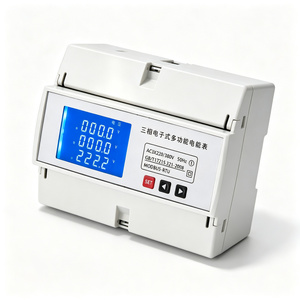
Large-scale office complexes and multi-tenant commercial towers in Gangnam and Yeouido rely on MID Certified Three Phase Smart Energy Meters connected directly via Modbus or RS485 to central BMS software. This setup allows exact sub-metering, accurate tenant cost allocation, dynamic peak-shaving, and automated reporting required by Korean commercial building energy efficiency standards.
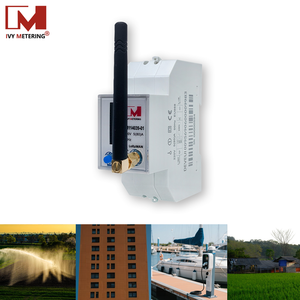
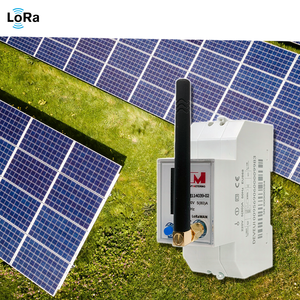
South Korea’s green energy expansion on Jeju Island and coastal solar-wind microgrids utilizes LoRaWAN Smart Energy Meters with Prepaid & Bidirectional Modes. These meters track dual-direction power flows—recording solar energy feed-in versus grid draw-down—while transmitting data over long distances via LoRaWAN KR920 spectrums without expensive cabling infrastructure.
Data mined from procurement search queries and industrial policy documents reveals three critical trends driving the demand for phase meters, power analyzers, and digital energy monitors in South Korea:
South Korea's Ministry of Environment and financial regulators are enforcing strict ESG reporting. Factories must now install certified Class 1 or Class B bidirectional phase meters on every line feeder to prove accurate green energy consumption and carbon offset credits.
Retrofitting wired RS485 communication in existing industrial complexes is cost-prohibitive. South Korean system integrators are actively prioritizing sub-meters equipped with integrated LoRaWAN, NB-IoT, and M-Bus wireless transceivers to stream telemetry data directly to cloud dashboards.
To avoid operational shutdowns during maintenance, Korean mission-critical facilities are mandating phase meters with hot-swappable measurement modules. This design ensures that metered PDUs and main panels can undergo calibration or display replacements without disconnecting downstream power.
Backed by over 20 years of dedicated power testing, electrical engineering, and precision metering innovation, our manufacturing facilities serve as trusted OEM/ODM partners for international distributors and Korean engineering firms. From 150W benchtop electronic loads to multi-channel phase quality analyzers, our hardware engineering adheres to rigorous quality control protocols.
Key OEM/ODM & Manufacturing Competencies:
Yes, absolutely. Our single-phase and three-phase meters are engineered specifically to operate within 200V-240VAC single-phase and 380V-600VAC line-to-line three-phase parameters at 60Hz frequency. They maintain full operational stability across KEPCO grid voltage fluctuations.
Our meter series carry comprehensive international certifications including MID (Measuring Instruments Directive) Class B/Class 1 approvals, CE compliance, RoHS, and ISO 9001 factory standardizations. They comply directly with KS C IEC 62053 testing criteria required for industrial sub-metering projects across South Korea.
Yes. All meters feature standardized industrial communication interfaces including RS485 Modbus-RTU, Ethernet Modbus-TCP, M-Bus, and LoRaWAN wireless telemetry. They seamlessly interface with standard SCADA software, Schneider EcoStruxure, Siemens Desigo, or custom local Korean cloud IoT platforms.
We accommodate both pilot project trial runs and large-scale enterprise shipments. Standard models are typically dispatched within 7 to 14 business days. Express air shipping to major Korean hubs (Incheon/Gimpo) or sea freight to Busan port can be arranged with complete export customs documentation.
Yes. As a primary manufacturer, we provide turnkey OEM/ODM services including custom label printing, localized Korean language documentation, custom terminal layouts, pre-configured communication baud rates, and specialized enclosure color choices.
Consult with our engineering team today to receive direct factory quotes, technical datasheets, and sample units tailored to your project requirements in South Korea.