
Engineered for rigorous compliance with US national standards, New York State grid codes, and severe municipal operational requirements. Explore our flagship export models below.
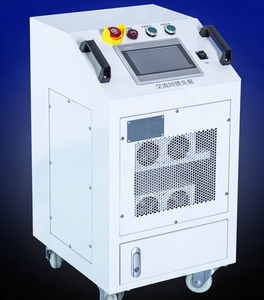
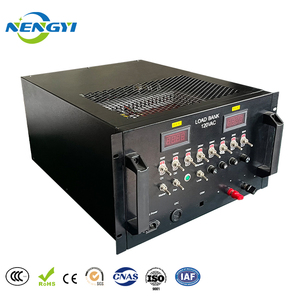
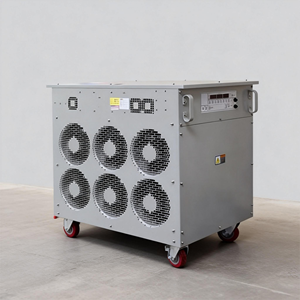
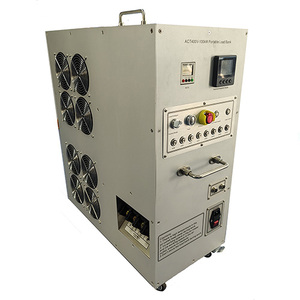
Since 2003, our manufacturing facilities have engineered advanced programmable AC and DC power sources, high-capacity electronic loads, solid-state frequency converters, and high-voltage circuit protection equipment. Serving the critical requirements of the Metropolitan New York area, our production lines operate under strict ISO 9001 quality management standards.
Every piece of hardware exported to the New York market undergoes 100% full-load burn-in testing, high-potential voltage isolation verification, and electromagnetic compatibility (EMC) validation. By offering instrumentation spanning from compact 150W bench-top units to massive 150kVA integrated cabinet systems and megawatt-scale load banks, we empower field engineers to recreate complex electrical disturbances with extreme fidelity.
The electrical grid architecture of New York state presents distinct regulatory and physical demands—from Con Edison's dense underground secondary network distribution in Manhattan to complex 60Hz high-voltage transmission interconnects upstate. Our factory specializes in customized OEM/ODM engineering modifications designed specifically for North American power engineers.
We provide full electrical customizability: multi-voltage tap configurations (115V, 208V, 220V, 380V, 400V, 415V, 480V, 690V, up to 40.5kV vacuum switches), custom dynamic slew-rate controls, and native SCPI, RS485, Modbus, GPIB, and Ethernet interfaces for automated test environments (ATE).
How our power monitoring, vacuum circuit breakers, and dynamic load banks drive reliability across New York's commercial, transportation, and energy sectors.
New York City's Local Law 97 places strict greenhouse gas emissions caps on commercial buildings over 25,000 square feet. To meet these targets, real estate facilities in Manhattan and Brooklyn are undergoing massive electrification retrofits—replacing fossil-fuel heating with high-capacity heat pumps, VRF systems, and rooftop solar microgrids.
Our 1000KW 3-Phase AC Load Banks and Precision Power Analyzers provide engineers with the accurate load verification needed during commissioning. They simulate real-world building energy spikes, test backup diesel/battery generators under peak demand, and analyze total harmonic distortion (THD) to prevent network trips on Con Edison service lines.
From Wall Street high-frequency trading servers to data center hubs in Northern New Jersey and Long Island, power continuity is paramount. Unplanned outages cost millions per minute. Rigorous, recurring battery and UPS testing is mandated by financial compliance protocols.
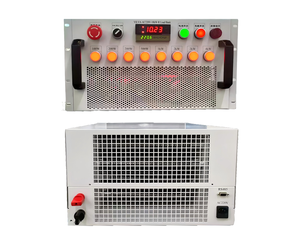
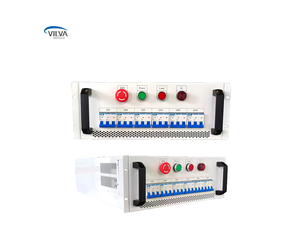
Deploying our compact 1KW Portable Resistive AC Load Banks and high-power 5VPxC Series DC Electronic Loads (up to 60kW per chassis) allows data center technicians to validate UPS autonomy, perform battery discharge profiling up to 1000 Vdc, and simulate server rack heat loads during thermal commissioning without risking production infrastructure.
With major offshore wind farms developing off Long Island Sound and utility-scale solar farms proliferating across Upstate New York, clean energy grid tie-ins require robust switching and power quality validation. Inverter back-feed and transient grid fluctuations must be isolated instantly.
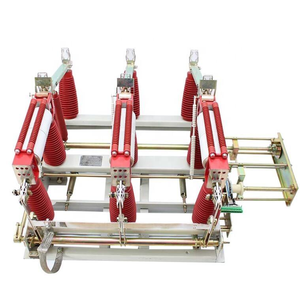
Our CNXE FZRN21-40.5D/T630-31.5 Outdoor High-Voltage Vacuum Switch Circuit Breakers provide medium-to-high voltage switching for substation protection. Paired with Customizable AC Regenerative Load Banks, project developers can burn-in grid-tied inverters while recycling over 90% of tested energy back to the local grid, drastically reducing testing overhead.
The Metropolitan Transportation Authority (MTA) operates one of the world's largest subway and commuter rail networks. As third-rail power substations upgrade to handle increased traffic and new electric bus fleets roll out across NYC boroughs, transient electrical stress on substations is at an all-time high.
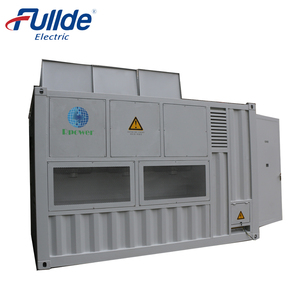
Our heavy-duty 1500KW Multi-Voltage Factory-Direct Load Banks and APF Series Programmable AC Power Sources allow transit engineers to stress-test rectifier transformers, simulate rapid traction power draws, and verify sub-station breaker performance under controlled fault scenarios.
Key technological shifts and state regulatory drivers transforming power monitoring and testing demands across the Empire State.
New York State's landmark Climate Leadership and Community Protection Act (CLCPA) mandates 70% renewable energy by 2030 and a 100% zero-emission electricity grid by 2040. Crucially, it sets a target of 6 GW of energy storage by 2030.
This massive influx of Battery Energy Storage Systems (BESS) demands advanced power monitoring hardware capable of tracking fast dynamic charge/discharge transitions. Facilities require programmable load banks that can handle high DC voltage inputs (up to 1000Vdc) with precise communication feedback (CANbus, Modbus) to evaluate battery state-of-health (SoH) and thermal management performance in real time.
Unlike sprawling overhead grid networks, NYC relies heavily on high-density underground low-voltage network grids managed by Con Edison. Connecting new distributed energy resources (DERs) to this network involves stringent compliance with IEEE 519 standards for harmonic control.
Non-linear loads from variable frequency drives (VFDs), EV fast chargers, and server power supplies generate harmonic currents that overheat neutral conductors and trip sensitive distribution transformers. New York exporters and facilities managers are increasingly specifying precision digital power analyzers and programmable AC sources with harmonic synthesis to pre-test equipment before connecting to municipal grids.
Historically, factory acceptance testing (FAT) for large UPS systems and generators relied on traditional resistive load banks that dissipated megawatts of energy as waste heat into the atmosphere. In environmental-conscious urban markets like NYC, this energy waste is increasingly unacceptable.
The market is shifting rapidly toward AC Regenerative Load Banks. These systems capture the energy supplied by the device under test (DUT) and invert it back to the facility grid with higher than 90% efficiency, drastically lowering cooling utility costs and supporting corporate ESG initiatives.
As microgrids proliferate in hospitals, university campuses, and municipal utility districts across New York, automated medium-voltage switching is replacing manual switchgear. Modern vacuum load switches utilize environmentally friendly vacuum interrupters, completely eliminating harmful SF6 greenhouse gases.
Products like our CNXE FZRN21-40.5D Outdoor High-Voltage Vacuum Switch lead this trend, offering zero SF6 emissions, 60Hz line frequency design, and long mechanical endurance rated for tens of thousands of operations under severe outdoor ambient temperature swings.
An in-depth analysis of load testing dynamics, harmonic evaluation, and vacuum circuit protection in modern industrial power systems.
In critical power infrastructure commissioning, selecting the correct load profile determines whether potential fault modes are uncovered prior to live operations. Industrial testing typically utilizes three distinct load bank architectures:
Modern power monitoring goes far beyond measuring basic voltage (V) and current (A). In complex NYC facilities, non-linear switching power supplies distort voltage waveforms, introducing high-order harmonics that degrade equipment efficiency.
To ensure full compliance with IEEE 519 guidelines, our precision digital power analyzers utilize high-speed simultaneous sampling (up to 1 MS/s per channel) and fast Fourier transform (FFT) algorithms to calculate:
Total Harmonic Distortion (THD-V & THD-I):
\( \text{THD} = \frac{\sqrt{\sum_{n=2}^{\infty} V_n^2}}{V_1} \times 100\% \)
Ensuring THD remains below strict utility threshold limits (typically < 5% for low voltage distribution networks) prevents transformer overheating, nuisance breaker trips, and neutral line overloading.
High-voltage switching in dense municipal networks requires rapid arc extinction to prevent catastrophic phase-to-phase faults. Vacuum switchgear, such as the CNXE FZRN21-40.5D, utilizes sealed ceramic vacuum interrupters.
When the contacts separate during a fault condition, an electric arc forms within metal vapor. Due to the high dielectric strength of the vacuum environment, the current arc is extinguished at the first current zero transition. The metal vapor rapidly condenses on the contact surfaces, restoring full dielectric isolation within milliseconds. This rapid interruption prevents voltage surges from propagating back into sensitive building equipment.
Direct answers to technical, regulatory, and logistics questions from local engineers, facility managers, and export procurement teams.
Yes. All products engineered for export to New York and the broader US market are manufactured specifically for standard 60Hz electrical frequencies. Our AC load banks, vacuum switch breakers (such as the CNXE FZRN21 series), and programmable AC power sources support standard US single-phase and three-phase voltage lines, including 120V, 208V, 240V, 480V, 600V, and medium-voltage 40.5kV systems.
Local Law 97 mandates strict carbon limits on NYC buildings. Replacing fossil-fuel infrastructure with electric heat pumps and solar microgrids requires rigorous commissioning. Our load banks allow building engineers to conduct precise full-load testing on new standby power systems, verify peak demand management, and ensure solar inverter grid-interconnect compliance without putting live building loads at risk.
Absolutely. Our 5VPxC Series high-power DC electronic loads feature up to 60 kW per chassis (with master/slave paralleling capability for multi-hundred-kilowatt arrays) and support pack voltages up to 1000 Vdc. They include five built-in dynamic battery discharge profiles, allow automated constant current (CC), constant power (CP), and constant resistance (CR) testing, and export live telemetry via RS485, CANbus, or Ethernet.
Our manufacturing plant operates under ISO 9001 quality standards. Individual power test hardware lines carry CE certification, meet IEEE 519 harmonic standards, and are designed in accordance with UL, IEC, and NEMA guidelines. Comprehensive factory test reports, schematic diagrams, and calibration certificates are supplied with every export shipment to clear local New York municipal building inspections.
Standard catalog units maintain typical manufacturing-to-dispatch timelines of 2 to 3 weeks. Custom OEM configurations (e.g., customized multi-tap voltages, specialized enclosures, or custom software integration) generally ship within 4 to 6 weeks. Shipments to the Port of New York and New Jersey (Port Newark/Elizabeth) are handled with full ISF filing, DDP/CIF commercial documentation, and local logistics coordination straight to your facility jobsite.
Yes. Our programmable power sources and electronic loads come standard with SCPI command sets and dedicated instrument control GUI software. We provide LabVIEW drivers, Python API support, and standard Ethernet/GPIB/USB communications, making it seamless to integrate our hardware into automated factory acceptance test setups or remote facility monitoring systems.
Whether you require a single portable 1KW rack-mount load bank for server testing or a customized multi-megawatt regenerative power test bay for New York grid commissioning, our engineering team is ready to assist.