
Precision test instrumentation and electrical protection systems calibrated for North African utility grids, industrial manufacturing, and mega solar projects.
As Egypt accelerates its transformation into a regional energy hub connecting Africa, the Middle East, and Europe, the demand for high-reliability electrical test equipment, regenerative power exporters, and grid-tied load simulation systems has reached an unprecedented high. Under the strategic banner of Egypt Vision 2030 and the national Integrated Sustainable Energy Strategy (ISES), the Arab Republic of Egypt is targeting 42% of its electricity generation from renewable sources by 2030. This massive grid expansion—anchored by gigawatt-scale developments such as the Benban Solar Park in Aswan, massive wind corridors along the Gulf of Suez, and high-density industrial zones in the Suez Canal Economic Zone (SCZONE)—requires ultra-precise power testing equipment capable of validating inverter performance, emergency backup systems, and heavy-duty switchgear.
Historically, industrial test bays and power conditioning facilities relied on passive resistive load banks that dissipated test energy entirely as waste heat. In high ambient temperature environments like Upper Egypt and desert industrial complexes, where summer temperatures routinely exceed 45°C, thermal waste load testing places severe strain on facility HVAC, inflates carbon emissions, and incurs enormous operational expenditures (OpEx).
The introduction of modern AC Regenerative Load Banks and Power Exporters fundamentally alters this paradigm. By incorporating Active Front End (AFE) PWM inverter technology, regenerative power systems capture the electrical energy from equipment under test (EUT)—such as PV inverters, diesel generators, UPS systems, and battery storage modules—and feed up to 95% of that electrical power cleanly back into the local industrial AC distribution grid. This whitepaper analyzes the engineering mechanics, economic return on investment (ROI), grid code compliance, and practical deployment considerations for exporters and engineering procurement teams serving the Egyptian market.
To evaluate why global engineering teams and Egyptian EPC contractors are migrating toward regenerative load banks, one must compare the active electromagnetic topology of modern power exporters against traditional passive resistor arrays.
In a standard resistive dummy load bank, electrical energy generated by a power source under test is converted entirely into thermal energy via resistor elements (typically nickel-chromium or stainless steel heating coils). This thermal energy must be continuously vented using high-power axial cooling fans. In contrast, an AC Regenerative Power Exporter acts as a bi-directional grid-tied converter. It utilizes high-frequency Insulated Gate Bipolar Transistors (IGBTs) controlled by digital signal processors (DSPs) to dynamically synchronize with the utility voltage and phase, pumping real active power back into the plant power system.
| Performance Benchmark | Traditional Resistive Load Bank | Regenerative Power Exporter System | Impact on Egyptian Operations |
|---|---|---|---|
| Primary Energy Destination | 100% Converted to Waste Thermal Energy | >95% Recycled Back to Facility/Utility Grid | Enormous Reduction in Plant Electricity Bills |
| Heat Dissipation & Airflow | Extremely High (Requires Heavy Forced-Air Ventilation) | Minimal Heat Losses (<5% System Thermal Losses) | Prevents Facility Thermal Overload in Desert Climates |
| Harmonic Distortion (THD) | Linear (Resistive) / Non-Linear (Inductive) | Active Filtering (THDi < 3%) | Ensures Compliance with EEHC Grid Codes |
| Power Factor (PF) Adjustment | Fixed Unity (1.0) or Fixed Lagging | Fully Programmable (-1.00 to +1.00 Bi-directional) | Simulates Complex Inductive/Capacitive Grid Loads |
| Carbon Footprint Impact | High Indirect CO2 Emissions from Wasted Power | Drastic Reduction in Scope 1 & Scope 2 Footprint | Supports Green Hydrogen & Clean Industrial Audits |
| Operational ROI Period | Zero Direct Financial Return (Pure OpEx Loss) | 12 to 18 Months Return via Recycled Energy | High Capital Expenditure Justification for Procurement |
The Egyptian market presents unique geographical, environmental, and grid characteristics that dictate how regenerative power equipment and high-voltage electrical hardware are specified and deployed.
Spanning over 37 square kilometers in the Aswan Governorate, the Benban Solar Park is one of the largest photovoltaic installations in the world, feeding over 1.8 GW of clean energy into the Egyptian national grid. Commissioning, aging, and routine maintenance of central string inverters require continuous full-load testing under high solar irradiance conditions.
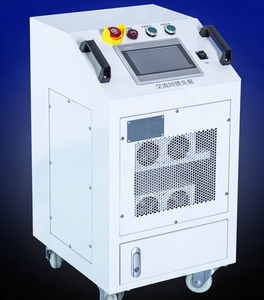
Deploying a High Power Energy Saving AC Regenerative Load Bank (Product 5) at solar power facilities enables EPC operators to run multi-hour burn-in cycles on megawatt-class central inverters without wasting clean electricity. The generated power during testing is fed directly back into the 220V/380V site distribution grid, powering facility infrastructure and dramatically lowering field operational costs.
The industrial corridors around Port Said, Ain Sokhna, and the Suez Canal require robust shore-to-ship power equipment and high-voltage circuit protection. Vessels, offshore platforms, and container terminal cranes utilize heavy-duty 60Hz and 50Hz electrical buses.
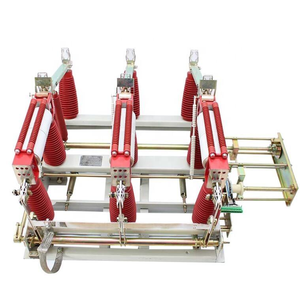
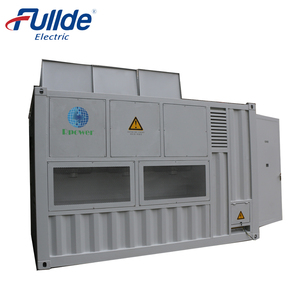
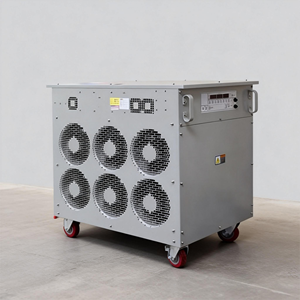
Hardware such as the CNXE FZRN21-40.5D Outdoor High-Voltage Vacuum Switch Circuit Breaker (Product 1) provides critical breaking capacity (31.5kA) and overcurrent protection for medium-to-high voltage transformer stations serving port terminals. Combined with mobile 1000KW 3 Phase AC Load Banks (Product 3), maritime engineers can perform full-capacity load testing on marine auxiliary diesel generators during dockside vessel overhauls.
Egypt's ambitious digital transformation has spurred massive construction of hyperscale data centers in the New Administrative Capital (NAC) and Smart Village Cairo. Tier III and Tier IV data facilities require zero-downtime power resilience, supported by large Uninterruptible Power Supply (UPS) topologies and standby diesel generator banks.
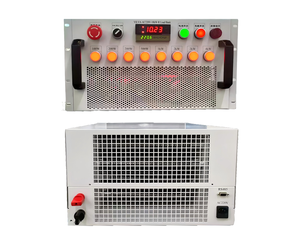
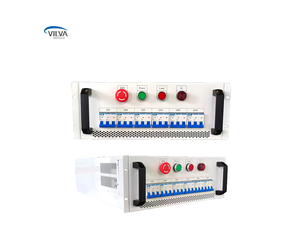
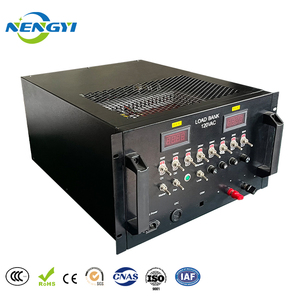
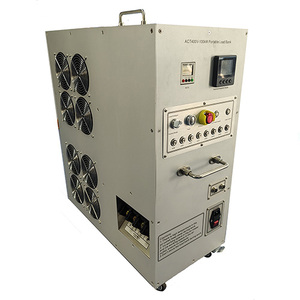
For indoor commissioning in tight server rooms, compact units like the 10KW Resistive Load Bank (Product 2) and the 1KW Portable Resistive AC Load Bank (Product 4) allow technical service teams to simulate server rack thermal profiles and verify UPS transient response without risking operational equipment. For facility-level generator acceptance testing, the 1500KW CE Certified AC Load Bank (Product 7) offers wide voltage selection (115V up to 690V) to validate multi-megawatt backup systems.
Understanding local regulatory frameworks and industrial growth vectors is critical for machinery exporters and local procurement directors. Key drivers shaping the market in Egypt include:
Since 2003, Adaptive Power Systems (APS) and its technical engineering partners have specialized in the design, manufacturing, and global distribution of programmable AC power sources, electronic AC/DC loads, solid-state frequency converters, and precision digital power analyzers.
When partner vendors export power test equipment to the Egyptian market, end customers benefit from an unyielding commitment to engineering precision, international compliance, and comprehensive customer support:
Egypt's standard national low-voltage utility grid operates at 220V single-phase and 380V/400V three-phase at 50Hz. Our line of load banks and AC regenerative power exporters (such as Product 3, 5, 7, and 8) offer multi-voltage switching capabilities covering 220V, 380V, 400V, 415V, and up to 690V AC at dual 50Hz/60Hz frequencies. This allows seamless integration into local Egyptian manufacturing facilities, marine ports, and international export testing facilities.
Our AC Regenerative Load Banks (Product 5) feature an integrated Active Front End (AFE) inverter. The system continuously senses the grid voltage, frequency, and phase angle of the facility line. Once synchronized, it converts the test load energy from the device under test (EUT) into low-distortion AC current (THD < 3%) and pushes it back into the local distribution panel. Built-in anti-islanding protection, over-voltage, under-voltage, and reverse power protection immediately disconnect the unit if grid anomalies occur, satisfying international IEEE 519 and Egyptian utility safety regulations.
Yes. All portable and high-power industrial load banks engineered for North African export feature heavy-duty forced-air cooling systems, high-temperature ceramic or stainless-steel resistor elements (for passive units), and thermal cutout safety switches. For regenerative systems, liquid cooling or high-CFM industrial fans ensure full-capacity operation even in ambient temperatures up to 50°C.
For facility test bays running burn-in tests, motor testing, or inverter aging 8 to 16 hours a day, a regenerative power exporter recovers up to 95% of consumed electricity. In Egypt, where industrial electricity tariffs have undergone gradual subsidy rationalization, energy savings typically cover the price differential between a passive load bank and a regenerative exporter within 12 to 18 months of continuous operation.
All export machinery ships with comprehensive CE certification, Factory Acceptance Test (FAT) reports, ISO quality documentation, and detailed technical user manuals in English. Equipment is packaged in export-grade seaworthy wooden cases compliant with ISPM-15 fumigation standards to clear Egyptian customs smoothly at ports such as Alexandria, Port Said, or Ain Sokhna.
Whether you are specifying megawatt load banks for solar commissioning in Aswan, upgrading high-voltage vacuum switchgear in the Suez Canal zone, or deploying regenerative power exporters for factory burn-in testing, our technical application engineers are ready to assist.