
Precision Engineering Instruments Configured for Saudi Arabia's Harsh Desert Operating Environments
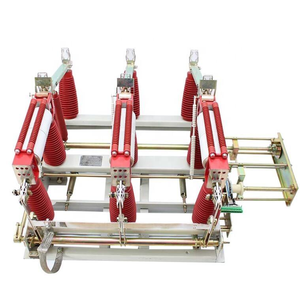
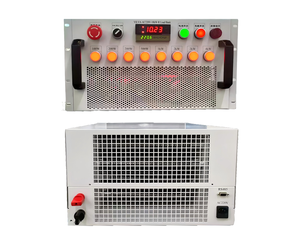
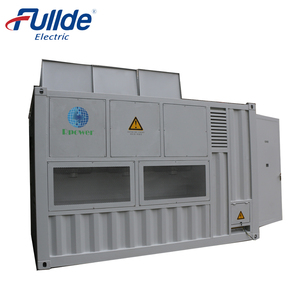
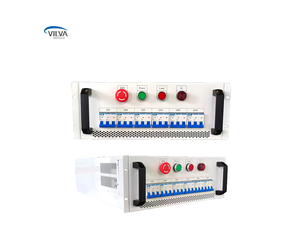
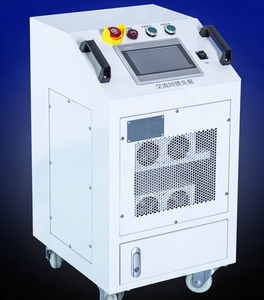
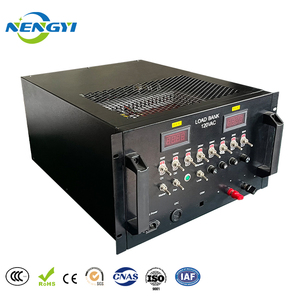
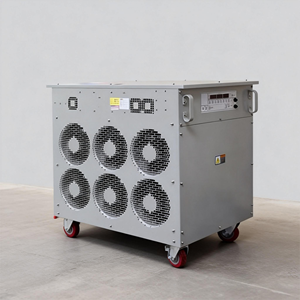
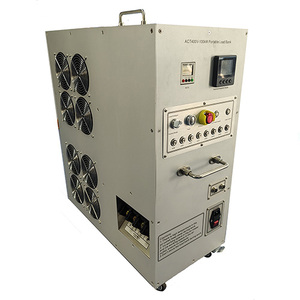
The Kingdom of Saudi Arabia (KSA) is undergoing an unmatched industrial transformation driven by Vision 2030. From the gigaprojects of NEOM, Qiddiya, and the Red Sea Development to the expansion of petrochemical mega-complexes in Jubail and Yanbu, electrical infrastructure reliability has become a primary national imperative. In hot, arid climates where ambient temperatures regularly exceed 50°C and severe atmospheric lightning strikes combine with rapid grid switching transients from massive solar photovoltaic integration, electrical equipment faces extreme stress. Ensuring that industrial power electronics, smart grid meters, switchgear, and UPS systems withstand high-energy voltage transients requires rigorous Electromagnetic Compatibility (EMC) and surge immunity testing.
As a leading international designer and supplier of precision test systems, our surge generator architectures are specifically engineered to synthesize standardized impulse waveforms (1.2/50 μs combination voltage pulses and 8/20 μs current pulses) according to international standards such as IEC/EN 61000-4-5, ANSI/IEEE C62.41, and SASO (Saudi Standards, Metrology and Quality Organization) technical regulations. Providing high information gain and robust operational longevity, our surge generator platforms and complementary high-power AC/DC load banks serve as the cornerstone of electrical verification for Saudi manufacturers, utility contractors, and testing laboratories.
Technical Insight for Saudi Engineers: Grid instability caused by rapid high-voltage solar PV penetration into the Saudi Electricity Company (SEC) network creates unique transient overvoltage conditions. Our surge test generators feature programmable phase angle synchronization (0° to 360°) and integrated Coupler/Decoupler Networks (CDN) capable of handling high-current three-phase AC distribution up to 690V, ensuring true-to-life stress testing for desert-hardened switchgear.
Deploying electrical hardware in Saudi Arabia demands equipment capable of enduring localized environmental and operational anomalies. Unlike mild temperate regions, the Middle Eastern desert environment introduces compounding failure vectors that must be simulated during product design and quality control:
Electrical test equipment and surge suppression devices (SPDs) operating in outdoor sub-stations across Riyadh, Dammam, or Mecca must maintain dielectric integrity under elevated thermal baseline temperatures. A surge generator used for type testing must deliver repeatable, drift-free impulse voltages even when ambient test lab conditions fluctuate. Our pulse-forming networks (PFN) utilize precision oil-filled or high-grade solid-state film capacitors calibrated for minimal thermal coefficients, ensuring that 1.2/50 μs voltage surge peaks do not degrade under continuous testing cycles.
Fine desert sand and airborne particulates (silica dust) build up inside electrical enclosure creepage paths, drastically lowering the breakdown threshold of insulation materials. When switching operations occur on heavy industrial grid lines—such as starting massive compressor motors in Aramco oil refineries or switching heavy load banks during grid frequency stabilization—transient overvoltages occur. Surge generators must deliver combination wave pulses up to 6 kV or 10 kV into low-impedance pathways to ensure that internal insulating barriers hold firm despite dust contamination.
Under Vision 2030 renewable targets, gigawatt-scale solar fields (e.g., Sudair Solar PV) feed high-power inverters into the grid. Fast switching frequencies of central inverters generate ringing surges and high-frequency damped oscillatory transients. Manufacturers of inverter components and smart grid equipment in KSA must perform surge immunity testing using generators equipped with customizable impulse parameters, ensuring compliance with both IEC 61000-4-5 and IEC 61000-4-12 (ring wave surges).
Tailored EMC and Power Testing Deployment Modules for Regional Industrial Sector Demands
Verification of high-voltage vacuum load switches, protection relays, and transformer control units against lightning impulses and grid switching surges per SEC specs.
Surge withstand testing for explosion-proof electronics, motor control centers (MCC), and uninterruptible power supplies operating in harsh hydrocarbon processing environments.
Deploying portable 1KW to 1500KW resistive/reactive load banks alongside surge generators to validate UPS transient responses and surge protection devices in Riyadh & Jeddah data hubs.
Advanced testing of regenerative power systems, EV charging station power electronics, and bidirectional grid-tie inverters for zero-carbon smart city grids.
Equipping third-party certification laboratories across KSA with fully automated combination wave surge generators, ring wave attachments, and power quality analyzers.
Evaluating surge immunity on high-tonnage desert air conditioning compressors, industrial pumps, and refrigeration units subject to severe line voltage fluctuations.
A true industrial surge generator is not merely a high-voltage discharge circuit; it is a masterwork of high-speed high-voltage switching, pulse shaping network design, and safety isolation. When selecting a surge generator supplier for projects in Saudi Arabia, technical evaluation committees must analyze several critical engineering metrics:
Per IEC 61000-4-5, a combination wave generator must deliver two precise open-circuit and short-circuit waveform outputs from the same output terminals:
Our instruments utilize high-speed semiconductor switches (solid-state thyristor structures) rather than legacy spark gaps. Solid-state switching eliminates jitter, reduces maintenance caused by electrode erosion, and ensures identical impulse waveforms over tens of thousands of consecutive discharges.
To inject high-voltage surge impulses into active equipment under test (EUT) connected to the power grid, an integrated CDN is mandatory. The decoupling network prevents high-energy surge impulses from traveling back into the laboratory mains power line, protecting upstream transformers and test bench operators.
For Saudi Arabian applications where 3-phase 380V/400V/415V 60Hz power lines are standard (with legacy 220V/127V systems still operating in certain regions), our surge test systems offer integrated 3-phase 5-wire CDNs rated up to 32A, 63A, or 125A per phase, with automatic line phase synchronization from 0° to 360° in 1° increments.
High-energy surge testing carries inherent electrical hazards. Our surge testing platforms incorporate multi-layer hardware safety interlocks, automatic high-voltage capacitor discharge circuits upon test stop or emergency cut-off, visual warning lamps, and software-enforced safety isolation boundaries. All safety enclosures meet stringent CE and international safety standards.
Addressing Common Technical, Certification, and Logistics Inquiries for KSA Engineers
Since 2003, Adaptive Power Systems (APS) and our manufacturing network have engineered state-of-the-art programmable AC/DC power sources, electronic load banks, and surge test instrumentation. Trusted by aerospace manufacturers, defense contractors, utility companies, and independent certification laboratories across four continents, we close your test loop with uncompromised accuracy, safety, and reliability.
Selecting the right surge generator supplier for your Saudi Arabian facility or project is a critical decision that impacts long-term product compliance, grid acceptance, and operational safety. Our application engineering team is ready to evaluate your specific test specifications—whether you require a benchtop combination wave surge generator, a high-power AC regenerative load bank, or a complete turn-key EMC immunity testing bay.
Contact our senior technical team today to discuss your testing requirements, request official datasheets, or schedule a technical consultation for your project in Saudi Arabia.