Sales & Engineering: +1 (866) 517-8400 [email protected]

Voltage Stabilizer Factories & Exporters Serving the Thailand Market

High-Capacity Servo & Static AVR Systems, Isolation Transformers & Precision Load Testing Infrastructure Engineered for Thailand’s Industrial Hubs

Featured Industrial Voltage Regulation & Testing Equipment

Explore our certified export line of high-voltage switches, programmable load banks, and custom AC/DC power test systems utilized by plant engineers and power utility contractors across Thailand.
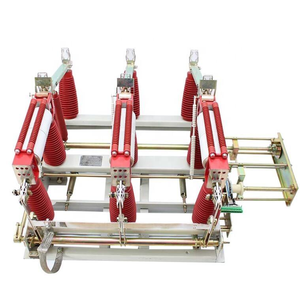
Outdoor High-voltage Vacuum Load Switch Circuit Breaker
CNXE FZRN21-40.5D/T630-31.5 Outdoor High-voltage Vacuum Load Switch Circuit Breaker 60Hz for Three-phase AC Power System
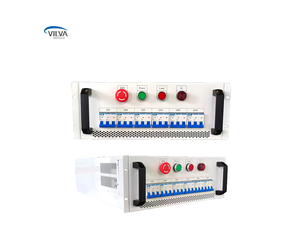
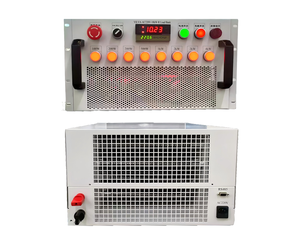
10KW Resistive Load Bank Indoor
10KW Resistive Load Bank (Indoor) - UPS Test Use, 220V 50/60Hz Dummy Load, Available For Sale
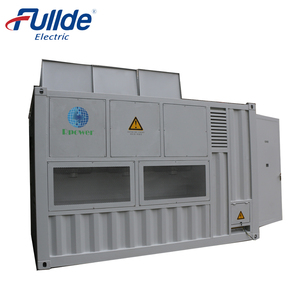
1000KW 3 Phase Load Bank
1000KW 3 Phase 440V/380V/220V AC Load Bank
1KW Portable Resistive AC Load Bank
1KW Portable Resistive AC Load Bank - 380V Dummy Load for Data Center Service Testing, Efficient & Reliable Electrical Equipment
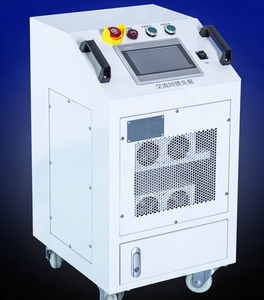
AC Regenerative Load Bank
High Power Energy Saving Customizable AC Regenerative Load Bank with Communication Feedback for Aging Test Applications
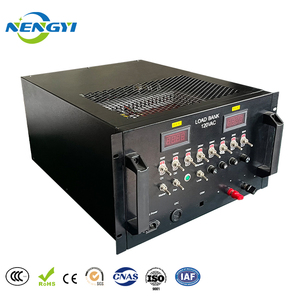
6kw 120vac Load Bank Data Center
6kw 120vac Load Bank Data Center test AC Load Bank
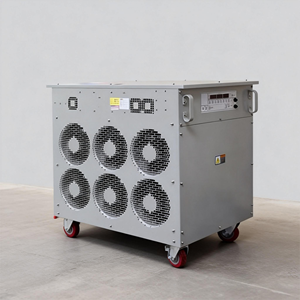
1500KW AC Load Bank
1500KW Factory Direct Support Equipment CE Certified & Rigorously Tested AC Load Bank 115V/220V/380V/400V/415V/690V
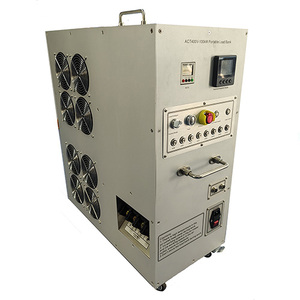
Portable 100kW AC Load Bank
Portable 100kW AC Load Bank 380V Resistive Load For Generator & UPS Testing With Forced Air Cooling

Industrial Grid Metrics & Stabilization Performance in Thailand

Thailand’s industrial corridors—spanning the Metropolitan Electricity Authority (MEA) zone in Greater Bangkok and the Provincial Electricity Authority (PEA) networks in the Eastern Economic Corridor (EEC)—present unique electrical dynamics requiring industrial-grade Automatic Voltage Regulators (AVR).

±22%
Peak PEA Grid Fluctuation
<10 ms
Static AVR Response Speed
98.5%
Full-Load Energy Efficiency
2500 kVA
Max Heavy Industrial Capacity

Navigating Thailand’s Industrial Power Landscape: A Technical Procurement Guide

Thailand has positioned itself as Southeast Asia’s advanced manufacturing epicenter under the national "Thailand 4.0" economic model. Industrial zones across Chonburi, Rayong, Samut Prakan, Pathum Thani, and Ayutthaya host mega-tier manufacturing facilities spanning automotive assembly, semiconductor packaging, plastic injection molding, and automated food processing. However, operating sophisticated, automated machinery within Thailand’s grid infrastructure introduces severe operational risks if electrical voltage quality is not actively managed.

Information Gain Insight: Unlike standard Western electrical grids operating with narrow variance bands, Thailand's distribution networks experience drastic seasonal voltage swings. During the tropical monsoon season (May to October), lightning strikes and localized distribution feeder trips cause extreme voltage sags down to 160V AC. Conversely, off-peak hours during the dry season witness voltage swells exceeding 250V L-N (435V L-L) on PEA rural lines due to high solar farm grid penetration.

1. Thailand’s Electrical Grid Standards: MEA vs. PEA Network Profile

Industrial consumers importing machinery into Thailand must align their power conditioning equipment with two distinct utility bodies:

  • Metropolitan Electricity Authority (MEA): Serves Bangkok, Nonthaburi, and Samut Prakan. The network operates nominally at 230V Single-Phase / 400V Three-Phase 50Hz. While urban MEA feeder lines offer high stability, heavy commercial high-rise loads introduce significant 3rd, 5th, and 7th harmonic distortions.
  • Provincial Electricity Authority (PEA): Regulates all remaining 74 provinces, including the Eastern Economic Corridor (EEC). PEA nominal transmission is rated at 220V Single-Phase / 380V Three-Phase 50Hz. Due to vast geographical distribution lines and heavy industrial clusters in Rayong and Chonburi operating concurrently, line drops of up to -20% during daytime shift starts are routine.

2. Comparative Architecture: Servo-Motor AVR vs. Static Solid-State Stabilizers

Choosing between servo-driven automatic voltage regulators (AVR) and solid-state static stabilizers (SCR/IGBT switching) depends entirely on the sensitivity of the facility's equipment and local environmental conditions.

Performance Characteristic High-Power Servo Motor AVR Static Solid-State AVR (SCR/IGBT) Isolation Transformer AVR Combination
Correction Speed 20V to 40V per second (Slower) <10 milliseconds (Instantaneous) Depends on primary stage (<20ms)
Voltage Regulation Accuracy ±1.0% to ±1.5% ±0.5% to ±1.0% ±1.0%
Overload Capability 200% for 10 seconds (Extremely Rugged) 150% for 1 second 250% for 30 seconds
Harmonic Distortion (THD) Zero THD Addition (Pure Sine Wave) Zero THD Addition Attenuates Common & Differential Noise
Tropical Environmental Suitability High (Requires dust-filtered enclosure) Ultra-High (No moving mechanical parts) Maximum (VPI Epoxy Impregnated)
Primary Application in Thailand Heavy Machinery, CNC Motors, Injection Molding SMT Electronics Assembly, Medical, Data Centers Export Machinery with Voltage Step-Down (440V to 380V)

Localized Application Scenarios across Thailand’s Industrial Zones

Voltage stabilizer factories and international exporters serving Thailand must custom-engineer their power equipment to survive high ambient humidity (exceeding 90% RH) and ambient temperatures rising above 42°C inside unconditioned factory bays.

Automotive & EV Hubs (Rayong & Chonburi)
Robotic welding cells and CNC machining centers in the Eastern Seaboard experience extreme inductive current spikes during startup. High-kVA column-type servo stabilizers prevent micro-controller reset trips and tool-head positioning errors.
Semiconductor & SMT Assembly (Pathum Thani)
High-speed surface mount technology (SMT) pick-and-place machines require static voltage regulators with sub-cycle response times (<10ms) to prevent optical inspection camera dropouts and feeder calibration loss.
Solar PV Farm Grid Integration
As Thailand expands solar energy generation under the PDP2018 revision, localized solar reverse power flow raises grid line voltages beyond standard operating limits. Custom bi-directional AVRs level solar back-feed spikes.
Data Centers & Telecommunications (Bangkok)
Hyperscale data centers require zero-break power conditioning. Static AVRs working in tandem with high-capacity dummy load banks enable mandatory commission burn-in tests without risking live transformer infrastructure.

Factory Excellence & Export Quality Assurance for Thai Importers

Importing industrial voltage stabilizers into Thailand requires partnering with a qualified manufacturer possessing proven engineering oversight, strict quality management systems (QMS), and comprehensive technical support.

Vacuum Pressure Impregnation (VPI)

All transformer copper/aluminum windings undergo Class H resin VPI processing, protecting internal insulation against high moisture, tropical mold, and salt air exposure common in coastal regions like Rayong and Samut Prakan.

Full-Load Dummy Testing prior to Shipment

Every unit produced is subjected to 100% capacity thermal burn-in testing utilizing high-power resistive/reactive load banks (from 100kW up to 1500kW capacity) to verify temperature rise parameters and dynamic correction speed.

Harmonic Mitigation & Filtering Options

Optional integrated passive LC filters and active harmonic suppressors can be retrofitted directly into the stabilizer cabinet, keeping total harmonic distortion (THDi) under 3% in accordance with IEEE 519 standards.

Frequently Asked Questions by Thai Electrical Procurement Teams

Q1: What are the standard input voltage tolerance options required for factory stabilizers in Thailand?
For factory operations within PEA industrial areas (such as EEC Chonburi/Rayong), we strongly recommend specifying a wide input voltage window of 380V Three-Phase ±20% (304V to 456V) or ±25%. Standard ±10% regulators often fail or switch to bypass during peak summer afternoon hours when grid voltages drop significantly due to massive air conditioning and heavy motor loading across nearby plants.
Q2: How do Thai importers benefit from Form E Certificates of Origin under the ASEAN-China Free Trade Area (ACFTA)?
By sourcing voltage stabilizers and electrical distribution equipment from qualified Chinese exporter factories, Thai procurement teams can request a Form E Certificate of Origin. Under ACFTA regulations, eligible automatic voltage regulators (HS Code 9032.89) enjoy reduced or 0% import tariff rates upon entering Thailand customs at Laem Chabang Port or Suvarnabhumi Cargo Complex, saving buyers significant capital compared to European or US imports.
Q3: How does ambient humidity and heat in Thailand affect kVA derating?
Standard stabilizer ratings are usually calculated at an ambient reference temperature of 25°C. However, in non-air-conditioned Thai factory bays where temperatures routinely reach 40°C to 45°C with 90% humidity, thermal dissipation slows down. We recommend sizing stabilizers with a 20% to 25% safety margin (e.g., specifying a 500kVA stabilizer for a 400kVA actual plant load) or choosing models equipped with forced-air cooling systems and heat pipes.
Q4: Are TISI standards mandatory for industrial 3-phase voltage stabilizers imported into Thailand?
The Thai Industrial Standards Institute (TISI) regulates specific consumer appliances, but heavy industrial 3-phase automatic voltage regulators (AVR) and high-voltage circuit breakers primarily adhere to international standards such as IEC 60076 (Power Transformers), IEC 61439 (Low-voltage Switchgear), and CE / ISO9001 certification. Providing full IEC factory test reports facilitates rapid customs clearance and Thai factory inspector sign-offs.
Q5: Why is on-site testing with portable AC Load Banks recommended after installing AVR systems?
Installing a high-capacity AVR (e.g., 1000kVA+) for a critical factory line without load testing carries hidden risks. Utilizing dummy AC Load Banks (100kW to 1500kW) allows commissioning engineers to simulate step-load changes, measure voltage recovery time, verify transient response, and test thermal performance under controlled full-load conditions before connecting expensive operational machinery.
Q6: What spare parts and maintenance provisions should be requested from the exporting manufacturer?
To ensure zero factory downtime, importers should request a 2-year recommended spare parts package. For servo-motor stabilizers, this includes replacement carbon brushes, micro-limit switches, control PCBs, and drive motors. For static solid-state AVRs, spare thyristor/SCR modules and main controller cards should be stocked on-site at the Thai plant.

Request Engineering Datasheets & Direct Factory Quotations

Consult with our technical application team to calculate your exact kVA capacity requirements, configure customized input voltage windows, and receive OEM export pricing for the Thailand market.

Get Catalog